
Lieferung heute & morgen

Qualitätsgarantie

Willkommens-Angebote freischalten: KOSTENLOSE Lieferung | Bis zu 80 % RABATT | Kostenlose 30-Tage-JoyPlus-Testphase
App herunterladen
A 28 cm induction frying pan is a practical choice for many British households. Its size provides plenty of room for vegetables, fish, meat or one-pan dishes for several people, without taking up unnecessary space on a standard hob. However, 28 cm pans can vary considerably in terms of coating, base construction, rim height and care requirements.
If you only look for terms such as “non-stick”, “scratch-resistant” or “suitable for all hob types”, it is easy to overlook important details. Our selection shows which technical specifications matter before you buy and which type of pan suits different cooking habits.
An induction-compatible frying pan needs a magnetic base that sits sufficiently flat on the hob. The phrase “suitable for all hob types” should explicitly mention induction, gas, electric and ceramic or glass-ceramic hobs. For specialist hobs such as halogen or infrared, additional approval from the manufacturer may be required.
The base diameter is also important. A 28 cm pan may have a considerably smaller contact base. If this does not match the cooking zone, the heat may be distributed less evenly.
A 28 cm non-stick frying pan makes it easier to fry with little oil. However, coated pans require suitable care: use low to medium heat, do not heat the pan empty for long periods and preferably use wooden, silicone or plastic utensils. Even if a dishwasher-safe frying pan is advertised, regular washing in the dishwasher may put more strain on the surface than washing by hand.
A ceramic frying pan is not automatically made from solid ceramic. It is often an aluminium or stainless steel body with a ceramic coating. This distinction affects the weight, heat performance and care requirements.
A shallow frying pan is well suited to searing and turning food. For sauces, braised dishes or larger quantities, a 28 cm sauté pan with a higher rim may be more practical. A glass lid lets you keep an eye on food while it is braising, but it must be suitable for the temperature specifications of the particular pan.
A wok frying pan with a curved shape is useful for stir-frying and one-pan dishes. On induction hobs, however, it should have a stable, flat base. A traditional round-bottomed wok cannot be used optimally on every hob.
With an uncoated stainless steel frying pan, the heating technique is particularly important. Stainless steel is robust and resistant to many kitchen utensils, but food can stick if the temperature is not right. Heating the pan first and adding cold oil afterwards, together with medium heat, can help reduce this effect.
Multi-layer models with an aluminium core combine aluminium’s heat conductivity with the properties of stainless steel. In a tri-ply construction, stainless steel and a heat-conducting aluminium layer are typically layered together. According to the product specifications, this can distribute heat more evenly from the base up into the sides.
Coated aluminium or stainless steel pans are straightforward to use with delicate foods such as eggs, fish or pancakes. When choosing one, check the permitted temperature, whether it is suitable for use in the oven and which kitchen utensils are recommended.
For a coated frying pan, you should check the following details:
“PFOA-free” or “PFAS-free” each describes a specific manufacturer’s statement about the material composition, but neither is a substitute for following the care instructions. A pan with visible coating damage should no longer be used.
A diameter of 28 cm does not always indicate the actual usable cooking surface. For everyday cooking, the width of the base, the internal height and the capacity are also relevant. A high rim helps reduce splashes and is useful when braising. A matching lid broadens the pan’s uses, but usually adds weight and requires more storage space.
You should also check that the handle is secure, that the connection is robust and that information about heat development is provided. Even heat-resistant plastic or Bakelite handles may have limitations when the pan is used in the oven.
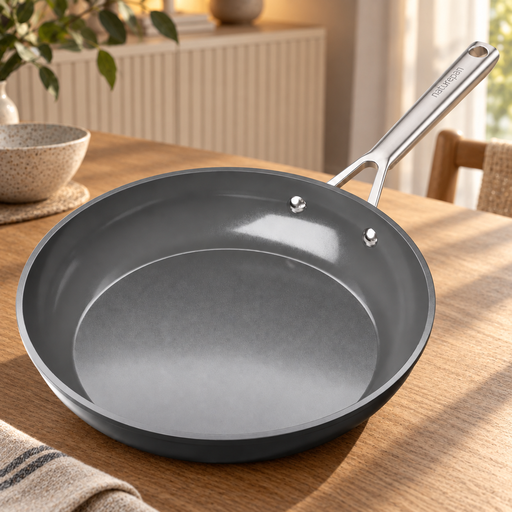
Why this product suits this profile: The ceramic-coated aluminium pan is designed for everyday frying with little oil and, according to the product specifications, is compatible with induction, gas, electric and ceramic hobs.
The specifications name specific hob types and recommend cleaning with mild detergent and a soft sponge.
28 cm diameter, ceramic coating, stainless steel handle and dishwasher suitability according to the product description.
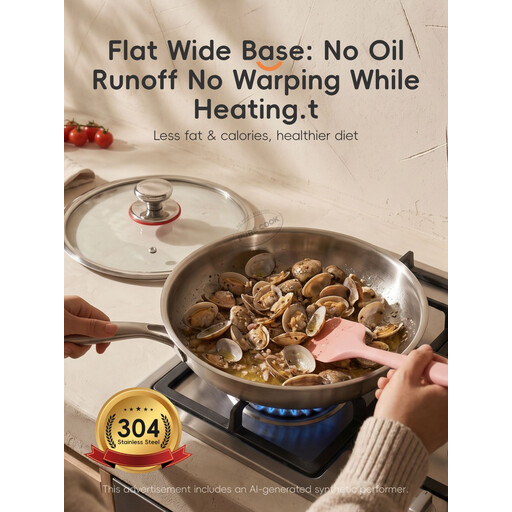
Why this product suits this profile: The multi-layer construction of stainless steel and aluminium, together with the supplied glass lid, suits households that want to cover food while frying and braising.
The product description points out that the stainless steel body is uncoated and explains the temperature and oil technique needed to prevent food from sticking.
Tri-ply construction, glass lid, suitability for several hob types and dishwasher suitability according to the supplier’s information.
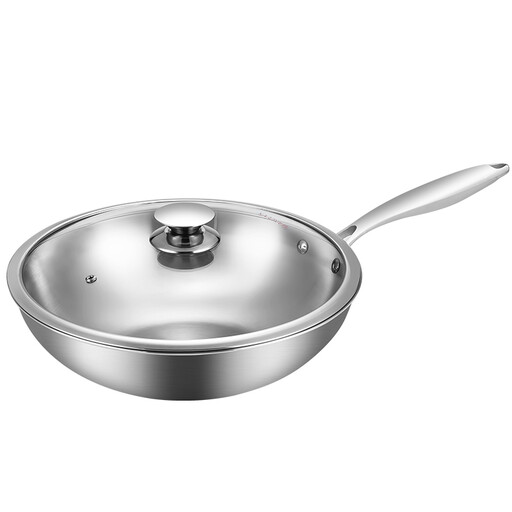
Why this product suits this profile: The wok shape is suitable for stir-frying and larger one-pan dishes. The lid extends its uses when braising and cooking with liquid.
The described composite base is designed for induction, gas, electric and ceramic hobs; the absence of a non-stick coating is clearly stated.
304 stainless steel, glass lid, single handle and compatibility with several hob types according to the product information.
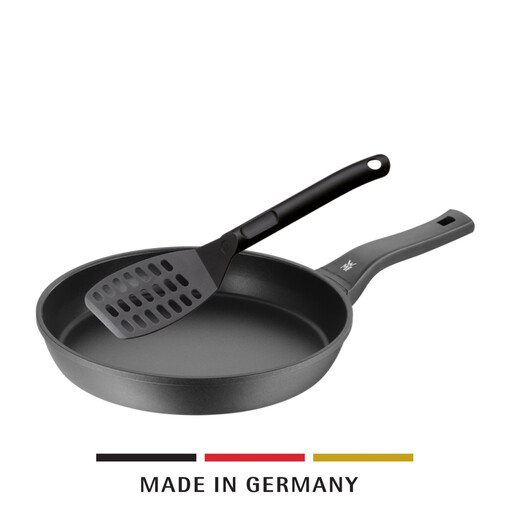
Why this product suits this profile: The coated cast aluminium pan is designed for gentle frying and comes with a turner.
The product specifications state specific oven and temperature limits, as well as recommending that you fry at medium heat after preheating.
PTFE coating, cast aluminium, all conventional hob types and a turner listed as included in the delivery.
We have put together a complete, regularly updated list of products that fully meet these strict selection criteria and the safety regulations applicable in the EU.
No. The base must be magnetic, flat and explicitly approved for induction use. For a pan suitable for all hob types, the product information should name the individual heat sources. A magnet test can provide an initial indication, but it does not replace the manufacturer’s information.
Its service life depends on the heat, utensils, cleaning method and frequency of use. A coating can be damaged by heating the pan empty, sharp metal objects or abrasive cleaning products. Stainless steel pans do not have a non-stick coating, but they require more practice when it comes to temperature and oil.
The label generally permits cleaning in the dishwasher. Nevertheless, hand washing is recommended for many coatings to help protect the surface, handle and appearance. The care instructions for the particular product are the key reference.