
Lieferung heute & morgen

Qualitätsgarantie

Willkommens-Angebote freischalten: KOSTENLOSE Lieferung | Bis zu 80 % RABATT | Kostenlose 30-Tage-JoyPlus-Testphase
App herunterladen
A 28 cm sauté pan can serve as a frying pan, a sauté pan and a small braising pot all in one. This size is ideal for several portions, while the high sides keep liquids, vegetables and meat safely inside the pan. However, models differ significantly when it comes to coating, base construction, lid and oven suitability.
The stated size usually refers to the top diameter. What really matters for cooking performance are the base diameter and the height of the pan body. A model with a 28 cm rim, for example, can have a noticeably smaller contact surface. For induction hobs, the pan base should match the cooking zone as closely as possible.
A coated sauté pan is generally straightforward to use on low to medium heat. However, prolonged heating when empty, metal utensils and abrasive cleaning products can damage the surface. Claims like “scratch-resistant” or “particularly durable” should therefore always be backed up by specific information about the type of coating and care required.
A pan for all hob types may work on gas, electric, ceramic and induction, without automatically being designed for high oven temperatures. So check these separately:
With a sauté pan that comes with a lid, the lid must be considered separately. Glass, plastic and Bakelite handles can have different temperature limits than the pan body.
A deep 28 cm pan is more practical for braised dishes, sauces, larger portions of vegetables and one-pot meals than a shallow frying pan. A rim height of around 7 to 8 cm offers more volume and reduces splashing. For omelettes or shallow frying, a lower rim can make handling easier.
Also pay attention to the weight. Cast aluminium distributes heat well, but can be significantly heavier with the lid on. This matters if you regularly move the pan from the hob to the table.
An aluminium sauté pan is comparatively light and conducts heat quickly. For induction, it needs a magnetic base plate or a suitable multi-layer base. Models with a fully encapsulated or multi-layer base can distribute heat more evenly across the contact surface.
With stainless steel or aluminium composite constructions, heat conduction depends on the build. The material name alone is therefore not enough as a quality criterion. Look for specific details on:
A non-stick pan is practical for delicate foods and reduces the need for oil. PTFE and ceramic coatings differ in their material base and care instructions. A ceramic pan is not necessarily made of solid ceramic material; it is often a ceramic coating on aluminium.
For a longer service life, a few basic rules apply regardless of the coating type:
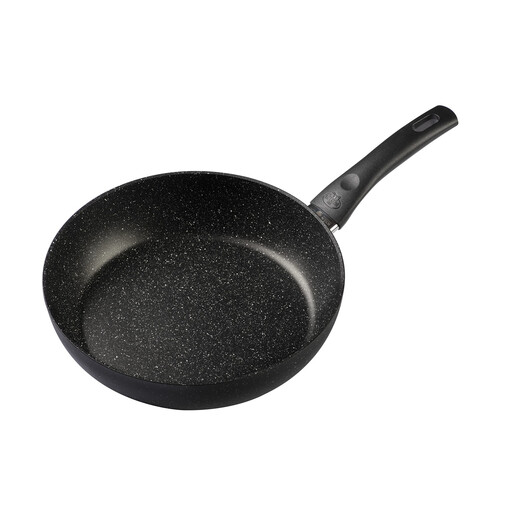
Why this product fits the profile: This aluminium sauté pan offers a 6-litre capacity, a four-layer Nerolite coating and suitability for gas, electric, ceramic and induction hobs. The temperature indicator in the handle helps guide you during preheating.
The product data specifies the coating type, hob compatibility and an oven limit of 160 °C. This makes it easier to put general advertising claims into perspective.
6-litre capacity; dishwasher-safe; temperature display in the handle.
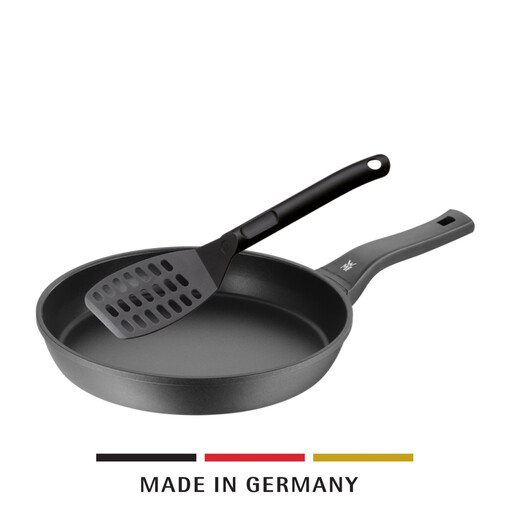
Why this product fits the profile: The pan is made of coated cast aluminium, is suitable for induction and other standard hobs, and has high sides. A spatula is included according to the product information.
The stated maximum oven temperature for the pan body is 70 °C. If you frequently use the oven, this makes it clear early on that this model is primarily intended for hob use.
Cast aluminium; high sides; 28 cm format with matching spatula.
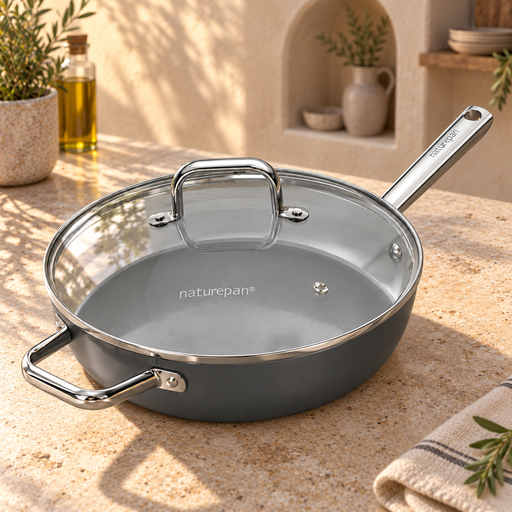
Why this product fits the profile: This deep ceramic pan has a stated body height of 7.5 cm, a glass lid and a diamond- and titanium-reinforced coating. It is designed for induction, gas, electric and ceramic hobs.
The description explicitly states that this is a ceramic-coated metal pan, not solid ceramic. In addition, 260 °C is specified for the pan body; the lid must be removed before oven use.
High sides; glass lid included; dishwasher-safe according to product information.
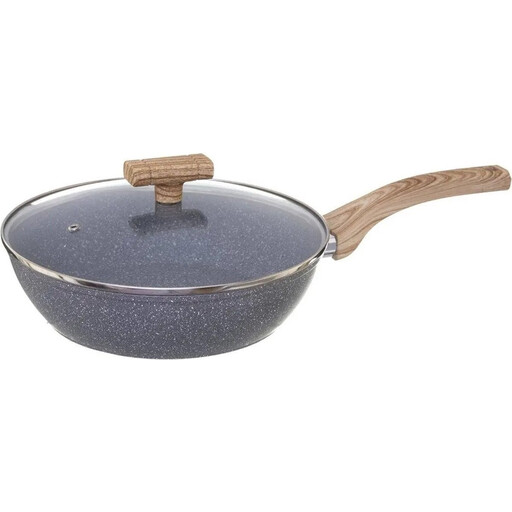
Why this product fits the profile: With a stated usable capacity of 7 litres, this pan is suitable for larger quantities. It comes with a glass lid and is designed for electric, ceramic, halogen, gas and induction hobs.
The product data lists the volume, dimensions, hob types and care instructions separately. The recommendation for hand washing makes it clear that dishwasher suitability and coating-friendly care are not the same thing.
7-litre usable capacity; glass lid; induction base and wide hob compatibility.
We have put together a complete, regularly updated list of products that fully meet these strict selection criteria and the safety regulations in force in the EU.
Even a solid 28 cm sauté pan will only remain functional if the care matches the coating. On induction hobs, use a suitable cooking zone and avoid unnecessarily high power levels. With coated models, medium heat is usually sufficient. Before cleaning, the pan should be allowed to cool down completely, as extreme temperature changes can stress the base and surface.
With a lid, also make sure steam can escape safely. Lift it away from your body and always use oven gloves or pot holders when carrying it. The specific temperature limits of the product in question take priority over general kitchen rules.
That depends on the dish and the capacity. For pan-fried dishes, vegetables, rice dishes or smaller braised meals, 28 cm is often enough. For large pieces of meat or very liquid foods, the rim height and volume are more important than the diameter alone. A model with 6 to 7 litres offers more leeway than a shallow pan of the same size.
Look for explicitly stated induction compatibility and a magnetic base. With aluminium alone, induction is not automatically possible. In addition, the base diameter should match the cooking zone. For other hob types, information on gas, electric, ceramic and, where applicable, halogen is helpful.
It is not possible to give a reliable general lifespan. It depends on the heat, utensils, cleaning and frequency of use. Low to medium temperatures, soft kitchen tools and gentle cleaning can protect the coating. As soon as the surface starts to peel, becomes heavily scratched or feels uneven, the pan should no longer be used.