
Lieferung heute & morgen

Qualitätsgarantie

Willkommens-Angebote freischalten: KOSTENLOSE Lieferung | Bis zu 80 % RABATT | Kostenlose 30-Tage-JoyPlus-Testphase
App herunterladen
A 28 cm stainless steel wok fits well in many British kitchens, offering plenty of space for vegetables, meat or noodles, and depending on the model it works on induction, gas, electric and ceramic hobs. Yet shiny surfaces, terms like "Tri-Ply" or an included glass lid don't automatically lead to the right purchase decision.
Three common pitfalls are particularly worth noting:
A 304 stainless steel wok is a commonly used austenitic grade for kitchen utensils. This material is often described as food-safe in the product range. However, what really counts are the specific manufacturer details and compliance with the applicable requirements for materials that come into contact with food.
A Tri-Ply wok typically consists of several metal layers. Depending on the construction, an aluminium core between stainless steel layers can help distribute heat. Other models only have a thick bonded base. So it's not just the word "Tri-Ply" that matters, but the actual construction stated.
An uncoated stainless steel wok has no classic non-stick coating. This can be appealing for households that prefer a robust interior surface and want to cook with stainless steel or silicone utensils. Sharp metal edges should still be avoided to prevent unnecessary damage to the surface.
A wok for induction needs a magnetic contact base that is large enough. For a gas hob, it's important that the wok sits stably on the grate and the handle isn't directly over the flame. A wok for a gas hob shouldn't only be labelled as suitable for induction.
For electric and ceramic hobs, a flat base is recommended. It improves contact with the heating surface and reduces the risk of the wok tipping when you stir. A 28 cm diameter usually refers to the top rim; the usable base area can be significantly smaller. If you often cook for several people, you should also pay attention to the base diameter and capacity.
A stainless steel wok with a glass lid is suitable for dishes that need a short braise or steam after searing. The lid should have a sturdy handle and a proper fit. For pure stir-frying, however, it's rarely needed.
When it comes to care, the manufacturer's instructions are key. A dishwasher-safe wok can generally be cleaned in the machine. However, for the most even surface possible, hand washing with a soft sponge is often recommended. Water spots, white deposits or rainbow-coloured discolouration can occur with stainless steel and can often be removed with a little vinegar or citric acid. Before first use, the wok should be thoroughly cleaned according to the instructions.
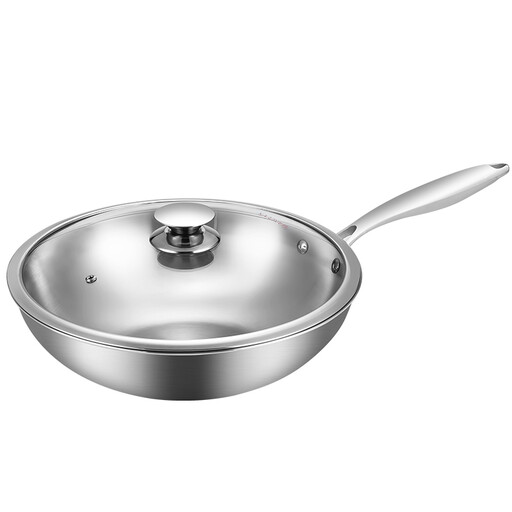
Why this product fits the profile: This wok combines a 28 cm diameter with a glass lid and stated compatibility for induction, gas, electric and ceramic hobs. That makes it suitable for households looking for a versatile model to get started with Asian cooking.
The product details mention 304 stainless steel, a thick bonded base and no non-stick coating. The stated multi-hob compatibility reduces the risk of an unsuitable base.
304 stainless steel according to the product details, glass lid, single handle and dishwasher safe according to the manufacturer.
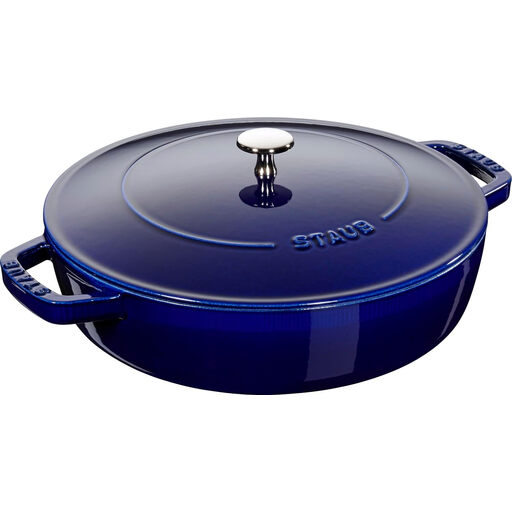
Why this product fits the profile: This 28 cm enamelled cast iron roaster is aimed at users who plan to braise and serve from the same dish as well as sear. It's an alternative to a stainless steel wok when heat retention and lid design matter more than low weight.
The product description states the material, the 28 cm size and its suitability for induction, gas and electric hobs. This makes it clear that it is not an uncoated stainless steel wok, but enamelled cast iron.
Cast iron with enamelled interior and exterior, Chistera lid and dishwasher safe according to the product details.
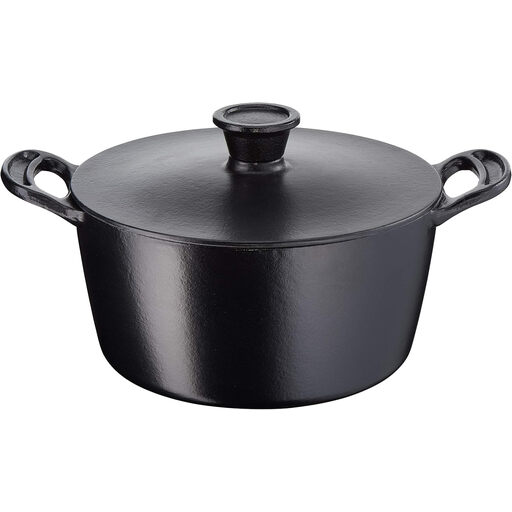
Why this product fits the profile: This more compact vessel is ideal for braised dishes, sauces and smaller portions. It's an option for heavy users who want a heavy pot with a lid to use alongside a stainless steel wok.
The details explicitly state its suitability for gas, electric, ceramic and induction hobs. At the same time, hand washing is recommended, so the care requirement is clear before purchase.
Enamelled cast iron, 24 cm format, lid and suitable for all common hob types according to the product description.
When using a wok pan for searing and frying, the order matters:
This method won't prevent all sticking. Stainless steel has no non-stick properties. Any seared-on residue can usually be loosened with warm water and a soft sponge after cooling. It's best to add salt only in liquid or at the end, as it can cause spots at high heat.
We've put together a full, regularly updated list of products that fully meet these strict selection criteria and the safety regulations in force in the EU.
Only if the base is explicitly approved for induction and is magnetic. A flat bonded base also helps with contact to the hob. The statement "suitable for all hob types" should be in the technical product data.
The wok and oil should be hot enough before you add the ingredients. Small portions, medium to medium-high heat and the right timing reduce sticking. You shouldn't expect non-stick performance like a coated pan from an uncoated wok.
The lifespan depends on the material thickness, base construction, handle attachment and care. Stainless steel is generally corrosion-resistant, but severe overheating, harsh cleaners or rough metal tools can damage the surface. If you dry the wok thoroughly after cleaning and follow the manufacturer's instructions, you'll create the right conditions for long-term use.