
Lieferung heute & morgen

Qualitätsgarantie

Willkommens-Angebote freischalten: KOSTENLOSE Lieferung | Bis zu 80 % RABATT | Kostenlose 30-Tage-JoyPlus-Testphase
App herunterladen
A high-quality table is often the centrepiece of the home—whether it's the dining table for shared meals or the desk for productive hours. But daily life poses risks: scratches from keys, stains from spilled drinks, or wear and tear from everyday use. A 2mm transparent table protector seems like the ideal solution to shield the surface without obscuring its appearance.
However, the selection is vast, and not every product lives up to its promises. As your Joybuy Product Recommendation Officer, I'll help you avoid common buying mistakes and find a protector that truly meets your needs.
Many buyers are swayed by advertising claims that disappoint in practice. Watch out for these three pitfalls to avoid a poor investment:
To make the right choice, you should focus on objective criteria. These three parameters are crucial for the durability and functionality of your table cover.
The material's thickness is a direct indicator of its protective qualities and durability. A 2mm thick table protector provides a robust barrier against most everyday stresses.
Not every protector is suitable for every table. Most PVC protectors are heat-resistant up to a certain temperature, typically around 80°C (176°F). This is sufficient for hot plates or mugs, but not for pots taken directly from the hob.
Pay special attention to compatibility with your table surface. A standard PVC protector is often unsuitable for high-gloss and glass tables, as it tends to cause the aforementioned air bubbles. Some manufacturers explicitly state this. For such surfaces, frosted protectors or special products with a lightly textured underside are the better choice.
A good protector for the table should fit perfectly. Many products are cut-to-size, allowing you to trim them precisely to your table's dimensions. Use a sharp utility knife and a straight edge for this. Note that PVC material can shrink slightly with temperature fluctuations. Reputable sellers often cut the protector with a small tolerance of a few millimetres to compensate for this.
Instead of making a one-size-fits-all recommendation, we have identified products tailored to specific use cases.

Why This Fits Their Persona: In a household with children, a table protector needs to be robust and easy to clean. This protector reliably guards against spilled juice, paint stains, or scratches from toys and can be cleaned effortlessly.
The 2mm thickness provides solid protection and prevents the slipping and curling common with thinner protectors. It lies flat and stays in place.
High durability and a completely waterproof surface. According to the manufacturer, the material is low-odour and designed for long-term use.
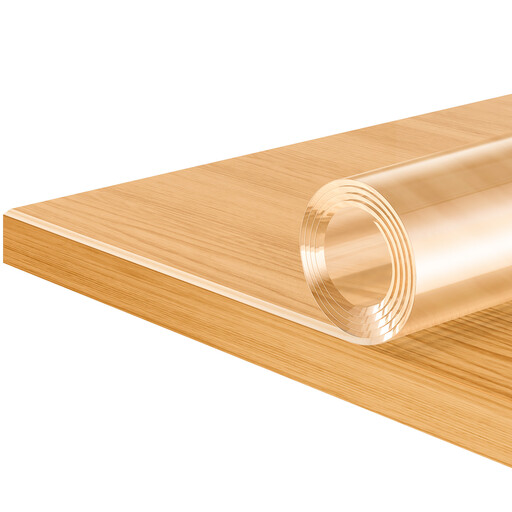
Why This Fits Their Persona: Anyone who owns a valuable solid wood table wants to preserve its grain and feel. This protector not only protects but also enhances the look with its special edge finishing, offering additional comfort.
The 45° bevelled edge is not just a visual detail; it prevents the sharp edges that can occur with simply cut protectors. The material is suitable for food contact.
Enhanced comfort and a premium feel thanks to the polished V-cut edge. The protector also dampens the noise of dishes and cutlery.
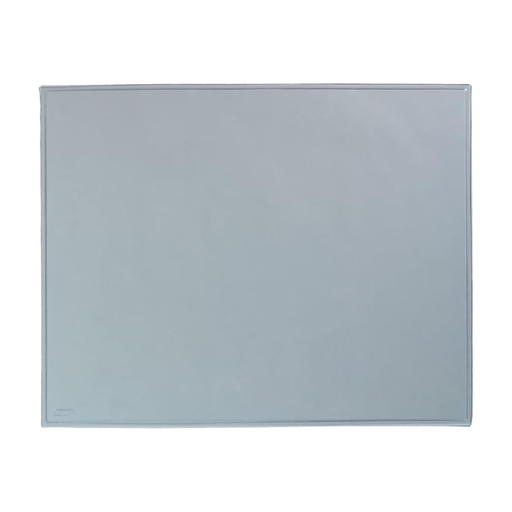
Why This Fits Their Persona: A desk requires a smooth yet firm surface that facilitates writing and doesn't hinder mouse movement. This mat protects the work surface from scuffs, pen marks, and coffee rings.
Unlike soft PVC protectors, this mat is made of rigid polypropylene. It is dimensionally stable, doesn't curl, and provides an ideal writing surface without being too soft.
Durable, non-slip, and long-lasting surface. Its transparency allows you to place notes or photos visibly underneath the mat.
We've compiled a complete, up-to-date list of products that fully meet these strict selection criteria and relevant safety regulations.
Since the protectors are rolled for transport, they need some time to flatten out completely. Unroll the protector and place it on the table with the curled-up side facing down. Weigh down the corners and the centre with heavy books for 24 to 48 hours. Alternatively, you can gently warm the protector with a hairdryer on a low setting to speed up the process.
This phenomenon occurs because air pockets get trapped between the perfectly smooth protector and the non-porous table surface. To avoid this, you can spray a fine mist of water onto the table surface before laying down the protector, then use a squeegee or a credit card to push the air bubbles out towards the edges. However, always check the manufacturer's instructions, as some products are explicitly not recommended for high-gloss surfaces.
Yes, but to a certain extent. Most PVC table protectors are heat-resistant up to about 80°C (176°F). This protects the table surface from hot plates, coffee mugs, or laptops. However, you should never place hot pots, pans, or casserole dishes directly from the hob or oven onto the protector, as this can cause permanent warping or damage. Always use a trivet in such cases.