
Lieferung heute & morgen

Qualitätsgarantie

Willkommens-Angebote freischalten: KOSTENLOSE Lieferung | Bis zu 80 % RABATT | Kostenlose 30-Tage-JoyPlus-Testphase
App herunterladen
A high-quality table is often the centrepiece of the home—whether it's the dining table for shared meals, the kitchen table for daily use, or the desk in your home office. Protecting it from scratches, stains, and everyday wear and tear is an understandable priority. A transparent table protector film seems like the ideal solution, but choosing one involves navigating several pitfalls that can lead to an unsatisfactory result.
As your Joybuy Product Recommendation Officer, I'll help you identify the essential features and avoid common problems, so you can make a well-informed decision.
Many protective films on the market overpromise and underdeliver. Pay attention to these three points to avoid a bad investment:
To avoid the problems mentioned above, you should check three core parameters. These determine the durability, functionality, and safety of your table protector film.
Thickness is a crucial factor for protective performance. A 2mm table protector film provides a robust barrier against most everyday hazards. It reliably shields the surface from scratches caused by dishes, keys, or laptops and dampens impacts from falling objects. At the same time, it's heavy enough to lie flat on the table without easily slipping. Thinner films may be cheaper, but they offer significantly less protection and have a shorter lifespan.
Most high-quality protector films are made of Polyvinyl Chloride (PVC). This material is ideal because it is inherently a waterproof table protector and oil-resistant. A good PVC protective film for the table can be easily cleaned with a damp cloth, making it a very low-maintenance transparent and washable tablecloth. Look for information regarding odour emission; high-quality PVC should become largely odour-neutral after a brief airing-out period.
A good fit is essential. Many suppliers deliver the film with a slight extra length to compensate for potential material shrinkage of a few millimetres. This allows for precise adjustment if you want to create a custom-cut table film.
Compatibility with your table surface is especially important. For a protective film for a wooden table with a matte or textured finish, a crystal-clear film is ideal. For high-gloss or glass tables, it is often recommended to use a matte film or place a thin cloth underneath to prevent the formation of air bubbles. Some models with a slightly textured underside can also mitigate this problem.
Here are some product recommendations tailored to different user profiles that meet the criteria mentioned above.
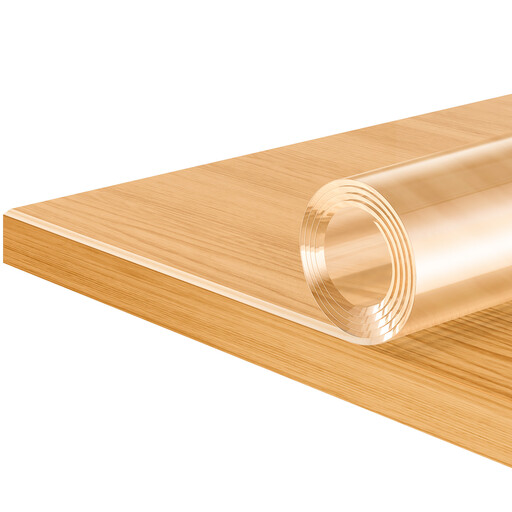
Why This Fits Their Persona: Ideal for the family dining table, where durability, safety, and easy cleaning are top priorities. The size fits many standard dining tables.
The 45° V-cut edge is bevelled, making it more comfortable and safer than sharp edges, which is particularly beneficial in households with children.
The 2 mm thick PVC structure offers reliable protection and dampens the noise of dishes. The surface is water- and grease-repellent and easy to wipe clean.
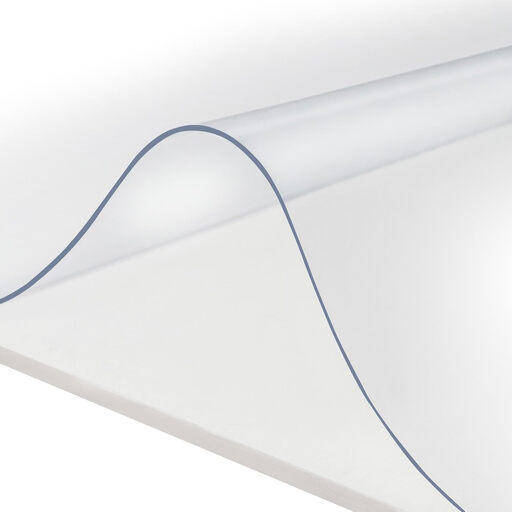
Why This Fits Their Persona: Anyone who wants to protect the grain and colour of their wooden table without hiding it needs a highly transparent film that preserves the look.
This model is designed for matte or textured surfaces like wood, thus avoiding the air bubble problem that occurs on high-gloss surfaces.
The high transparency leaves the table surface's appearance unaltered. According to the manufacturer, the material is also heat-resistant up to 80°C, protecting it from hot plates.

Why This Fits Their Persona: Perfect for the desk, protecting it from scratches from a keyboard, mouse, or coffee mugs. The size is suitable for many common desks.
The bevelled edge provides a comfortable surface for resting your arms while working at the computer, preventing uncomfortable pressure points or sharp edges.
The non-slip texture on the underside ensures a secure grip on the desk surface. The smooth top side allows for seamless mouse use.
We have compiled a complete, up-to-date list of products that fully meet these strict selection criteria and relevant safety standards.
Since the films are delivered rolled, they need some time to flatten out completely. Lay the film on the table and weigh down the corners and any waves with heavy books for 24 to 48 hours. Alternatively, you can gently warm the film with a hairdryer on a low setting to speed up the process.
Yes, most PVC films can be cut with a sharp utility knife or sturdy scissors. It's best to use a long ruler or a straight edge to ensure a clean cut. Keep in mind that the material can shrink by a few millimetres, so don't cut it too short right away.
For high-gloss lacquered or glass tables, crystal-clear films are often not ideal, as trapped air is almost unavoidable. Some manufacturers recommend placing a very thin, barely visible fabric tablecloth between the table and the film. Another option is to choose a protector film with a slightly matted or textured surface, which is specifically designed to prevent this problem.