
Lieferung heute & morgen

Qualitätsgarantie

Willkommens-Angebote freischalten: KOSTENLOSE Lieferung | Bis zu 80 % RABATT | Kostenlose 30-Tage-JoyPlus-Testphase
App herunterladen
A quality wooden dining table, a delicate coffee table or a well-used work surface can quickly show signs of wear from spills, grease, scratches and everyday use. A 2 mm transparent PVC table protector helps protect the surface without completely hiding its grain or colour. To make sure it works well in everyday use, check the material, size, edge shape and maximum temperature before you buy.
The term heat-resistant table protector is often used as a general description. On its own, however, it doesn’t tell you whether a product is suitable for a pan straight from the hob or a dish straight from the oven. The stated temperature limits for the protectors considered here vary by model, for example 60 °C or up to 80 °C.
This means warm plates or a cup of coffee may be fine, depending on the manufacturer’s instructions. However, don’t place items straight from the hob or oven on a PVC table cover. High temperatures can permanently deform the material.
An 80 x 140 cm table protector isn’t automatically a perfect fit for a tabletop of the same size. You may need to adjust the measurements to allow for rounded corners, slightly uneven edges or the amount of overhang you want. Rolled protectors may also be wavy when first unpacked, and storage or the properties of the material can cause slight changes.
A PVC table protector you can cut to size is therefore a practical choice. Use a sharp knife or sturdy scissors to trim it along a straight edge you’ve marked out. If your table has a high-quality finish, avoid cutting the protector directly on the furniture.
Air bubbles can form between the tabletop and the protector on glass or high-gloss surfaces. On some surfaces, a soft, thin layer of fabric can help as a spacer. Follow the manufacturer’s instructions for your particular product. A textured or non-slip underside can be useful on matt wood and plastic surfaces, but may not suit every type of tabletop equally well.
A 2 mm-thick PVC table protector is sturdier than very thin covers and will generally lie more firmly on the table. It can provide clear protection against everyday scratches, stains, water and grease. However, thickness alone doesn’t make it resistant to sharp objects. Don’t move knives, pointed ornaments or items with rough undersides directly across the protector.
Also look for clear product information covering:
A waterproof table protector, or a transparent PVC table cover, creates a sealed surface. Spilt drinks, sauces and grease can usually be wiped away with a damp cloth. For regular cleaning, mild soapy water and a soft cloth are all you need.
Avoid scouring pads, harsh bleach and concentrated cleaning products. They can make the clear surface look matt or cause fine scratches. A wipe-clean table protector is especially handy for families with children, kitchen worktops and craft areas, as spills and marks won’t soak into the tabletop.
Measure the tabletop in several places. For a rectangular table, length and width are what matter; for rounded corners, you should also take the radius into account. Popular sizes include:
A table protector with a bevelled edge can feel more comfortable under your arms than one with a straight-cut edge. A 45-degree edge also creates a shallower transition to the tabletop. This is a matter of comfort and appearance, but it doesn’t replace careful measuring.
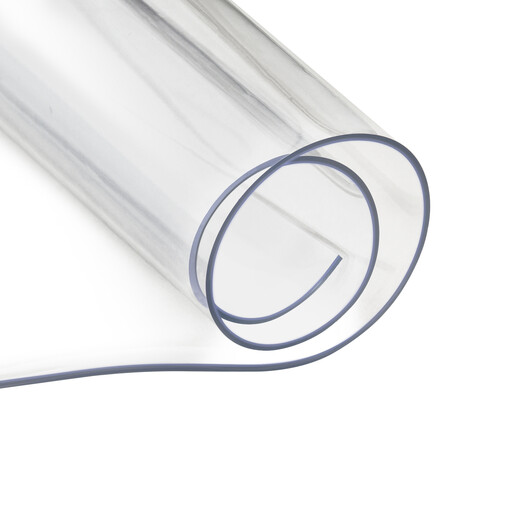
Why this product suits this need: Its compact size is ideal for smaller kitchen, dining or office tables. It’s listed as 2 mm thick, waterproof and heat-resistant up to 80 °C.
The product details give specific measurements and a temperature limit, rather than relying on a vague “heat-resistant” claim. Even so, hot items shouldn’t be placed directly on it.
2 mm PVC, non-slip design, waterproof surface and can be cut to size.
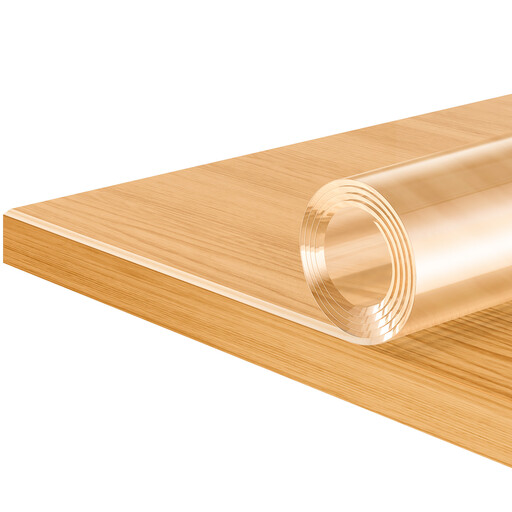
Why this product suits this need: The 80 x 140 cm size and bevelled 45-degree edge combine a neat, clear look with a lower profile that’s more comfortable for your arms.
The edge shape is clearly specified, so you won’t have to assume it has a straight-cut edge that could get in the way when sitting or working at the table every day.
Crystal-clear PVC, a water- and grease-resistant surface, a non-slip texture and a 45-degree edge.
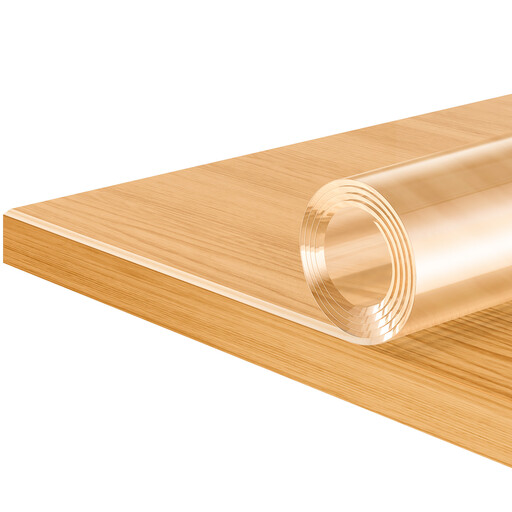
Why this product suits this need: This large PVC table cover is designed for bigger dining tables, office tables or buffet surfaces where you need a wide, continuous area of protection.
The exact 100 x 180 cm size and specified bevel help make it easier to choose for a large rectangular tabletop. Even so, measure your own table in several places before buying.
2 mm-thick clear PVC with a water- and grease-resistant surface and a bevelled edge.
We’ve put together a complete, regularly updated list of products that meet these strict selection criteria and fully comply with the safety regulations in force in the EU.
If the protector has been stored rolled up, it may have a slight plastic smell when unpacked. Air the room until the smell fades. Keep cutting tools and small packaging parts out of children’s reach. Keep the protector itself away from babies and children because of the risk of suffocation.
Generally, it can be used to protect wooden surfaces while keeping them visible. Make sure the tabletop is clean and dry. For varnished, oiled or delicate surfaces, check the manufacturer’s instructions and avoid allowing moisture to collect under the protector.
Mark the required measurements with a pencil or wipe-clean pen. Then cut along a straight edge using a sharp knife or sturdy scissors. If you’re buying a table protector with a bevelled edge, take the edge shape into account when choosing it. Cutting a 45-degree bevel afterwards can give an uneven result without the right tools.
Its lifespan depends on exposure to sunlight, temperature, cleaning, the tabletop surface and wear and tear. A 2 mm protector is designed for regular everyday use, but it won’t remain completely free of signs of wear. Sharp objects, abrasive cleaners and direct heat can damage the surface more quickly.