
Lieferung heute & morgen

Qualitätsgarantie

Willkommens-Angebote freischalten: KOSTENLOSE Lieferung | Bis zu 80 % RABATT | Kostenlose 30-Tage-JoyPlus-Testphase
App herunterladen
A 2 mm transparent PVC table protector helps protect your table from spills, stains, scratches and everyday wear without completely hiding the surface. For families, offices, kitchens, cafés, schools and nurseries, it can be a practical alternative to a traditional tablecloth. However, materials, sizes and finishes can vary considerably.
Very thin protectors are easy to roll out and inexpensive to ship, but they can shift or crease more easily on a dining table that gets frequent use. At 2 mm thick, a protector has more weight and tends to sit more securely on many rectangular tables. It still won’t replace a trivet for hot pots or pans.
The term ‘heat-resistant’ doesn’t automatically mean a protector is suitable for items straight from the hob or oven. Some products are described as heat-resistant up to 80 °C according to the product description. This does not apply to naked flames, heat sources or temperatures above the stated limit. Trivets are still a good idea for hot serving dishes.
A table protector needs to do more than cover the tabletop: it should also suit the way you use it. An overhang can get in the way at the table edges, while a protector that’s too small will offer less coverage. Certain PVC protectors can trap air bubbles or stick to glass and high-gloss surfaces. Before buying, check your table’s material and measurements, along with the care instructions.
PVC is waterproof and, if it has a smooth surface, can be cleaned with a damp cloth. A 2 mm thick PVC table protector is generally more substantial than very thin alternatives, making it a good choice for dining rooms, kitchens and desks. Terms such as ‘scratch-resistant’ or ‘wear-resistant’ describe product features; they are not a guarantee against all damage.
Clean a wipe-clean table protector with a soft cloth and mild detergent. Scouring products, sharp objects and concentrated bleach can scratch or cloud the transparent surface.
A waterproof table protector is particularly practical when drinks, sauces or craft materials end up on the table. A textured underside, or one described as non-slip, may help reduce movement. However, how securely it stays in place also depends on dust, moisture, the table material and the size of the protector. Make sure the tabletop is clean and dry before laying it down.
Common rectangular sizes include 70 x 120 cm, 80 x 140 cm, 90 x 160 cm and 100 x 180 cm. Before choosing a size, measure the length and width of the tabletop in several places. A cut-to-size table protector can be trimmed using a straight edge and a suitable sharp tool. Follow the manufacturer’s safety instructions.
A protector supplied rolled up may have ripples at first. Depending on the material, leaving it flat for 24 to 48 hours may help. Allow a little extra when trimming if the manufacturer mentions possible size tolerances or later shrinkage.
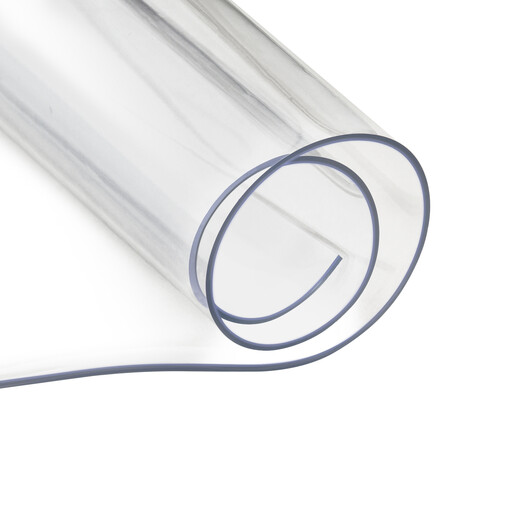
Why this product suits this profile: Its compact size is suitable for smaller dining tables, desks or kitchen areas. The transparent design keeps the table surface visible.
At 2 mm thick, with features described as water-repellent and resistant to scratches and wear, it offers more than a simple, thin cover sheet.
2 mm PVC, 70 x 120 cm, heat-resistant up to 80 °C according to the product description, waterproof and can be trimmed to size.
Why this product suits this profile: The larger rectangular size fits many standard dining tables and work surfaces. It combines a transparent look with a smooth, wipe-clean surface.
The precise measurements make it easier to plan. For everyday care, the product description recommends cleaning with a soft, damp cloth; harsh or abrasive products are not suitable.
2 mm thick, rectangular size of 90 x 160 cm, and described as waterproof and heat-resistant.
Why this product suits this profile: Its generous size makes it a good option for larger tables in dining rooms, offices, cafés or care settings. According to the description, the protector can be adapted to suit different shapes.
The V-shaped edge design can give you more room to move your arms when sitting at the table. For glass and high-gloss surfaces, an intermediate layer is recommended to prevent bubbles.
2 mm PVC, 100 x 180 cm, waterproof, wipe-clean and heat-resistant up to 80 °C according to the product description.
We’ve put together a complete, regularly updated list of products that meet these strict selection criteria and the safety regulations in force in the EU.
Avoid direct contact with naked flames, radiators and prolonged exposure to sunlight. Keep small offcuts out of the reach of children and pets. In most cases, water and a mild detergent are all you need for cleaning.
It depends on the specific manufacturer’s guidance. The WOLTU models mentioned are described as heat-resistant up to 80 °C according to the product description. Even so, hot pots and pans, or items straight from the oven, should be placed on a suitable trivet.
There’s no set lifespan that applies to every protector. It depends on how heavily it’s used, how it’s cleaned, exposure to sunlight, the table surface and contact with sharp or hot objects. Wiping it regularly with a soft cloth and avoiding scouring products can help extend its useful life.
Many 2 mm protectors are described as suitable for trimming. Before cutting, check the shape you need, allow for any size tolerance and read the safety instructions. For rounded corners or cut-outs, a template can help you achieve an even finish.