
Lieferung heute & morgen

Qualitätsgarantie

Willkommens-Angebote freischalten: KOSTENLOSE Lieferung | Bis zu 80 % RABATT | Kostenlose 30-Tage-JoyPlus-Testphase
App herunterladen
A high-quality table is often the centerpiece of the home—whether it's the dining table for family meals, the solid wood table in the living room, or the desk in your home office. Protecting it from scratches, stains, and everyday wear and tear is a smart move. A 2mm transparent table protector seems like the ideal solution, preserving the furniture's appearance while providing a durable protective layer.
However, the market is saturated, and not every product delivers on its promise. Before you make a decision, it's crucial to understand the common pitfalls that can lead to an unsatisfactory result.
This guide will help you navigate these issues and make an informed choice.
To find the right protective film for your table, a few technical specifications are key. These determine not only its durability but also its aesthetics and functionality in daily use.
The thickness of the film is the most important criterion for its protective performance. While thinner films (<1.5 mm) may function as a light, washable transparent tablecloth, a PVC table pad with a 2 mm thickness offers significantly better protection.
One of the most common problems is the formation of air bubbles between the film and the tabletop. This phenomenon occurs almost exclusively on very smooth, non-porous surfaces like glass, high-gloss lacquer, or polished marble. Due to adhesive forces, the film sticks unevenly and traps air.
Being a good waterproof table protector is a basic requirement. However, you should also pay close attention to the specifications for heat resistance.
Based on the criteria mentioned, we have identified some products that are well-suited for specific user profiles.
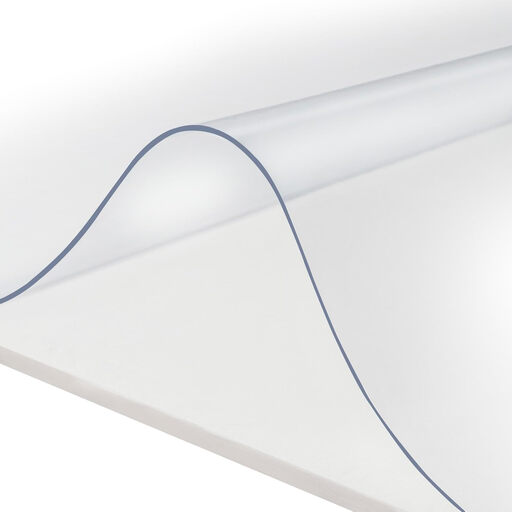
Why This Fits Their Persona: Ideal for family dining tables. The robust film reliably protects against spilled drinks, paint, or scratches from toys and is clean again in no time after every meal or craft session.
The 2 mm material thickness avoids the pitfall of films that are too thin, offering real, resilient protection that stands up to family life.
High durability and complete water resistance for straightforward use and cleaning.

Why This Fits Their Persona: For owners of solid wood tables whose natural beauty should not be concealed. The high transparency allows the wood grain to be fully appreciated while the surface is protected.
The product description explicitly states that the film is not suitable for high-gloss surfaces. This transparency helps to avoid the "air bubble trap" from the outset.
High clarity to preserve the table's appearance and heat resistance up to 80°C according to the manufacturer.
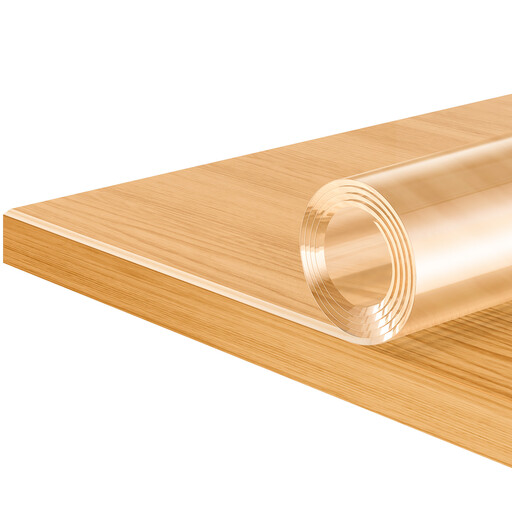
Why This Fits Their Persona: Perfect as a dining table protector or for a home office desk. The beveled edges (V-cut) provide a comfortable finish, so your forearms don't rub against a hard edge during long hours at the computer.
This product goes beyond mere protection and addresses user comfort—an aspect often overlooked during selection that marks the difference between a good and an impractical solution.
Increased working comfort thanks to the 45° V-cut edges and a non-slip texture for a stable grip.
We have compiled a complete, up-to-date list of products that fully meet these strict selection criteria and safety regulations.
Table protectors are shipped rolled for transport. After unpacking, it may take some time for it to lie completely flat. To speed up the process, you can spread the film out on the table and weigh down the corners and edges with heavy books for 24-48 hours. Alternatively, gently heating it with a hairdryer (on a low setting and from a distance) can help the material relax.
Yes, creating a custom-sized table protector is easy. Use a sharp utility knife or box cutter and a long steel ruler to ensure a straight cut. It is advisable to initially cut the film with a slight overlap of about 0.5-1 cm per side, as PVC material can shrink or expand slightly over time depending on the room temperature.
Air bubbles are caused by adhesion on extremely smooth, sealed surfaces like glass or high-gloss lacquer. The film suctions itself down in spots, trapping air in the process. To prevent this, you should choose a film with a slightly textured or matte surface for such tables. Another option is to place a very thin, barely visible fabric tablecloth between the table and the film to break the direct adhesion.