
Lieferung heute & morgen

Qualitätsgarantie

Willkommens-Angebote freischalten: KOSTENLOSE Lieferung | Bis zu 80 % RABATT | Kostenlose 30-Tage-JoyPlus-Testphase
App herunterladen
A 3- to 5-tier shelving unit can hold books, shoes, plants or household items without taking up much room. But in homes, rental properties, student flats and home offices across the UK, the number of shelves is only part of the picture. Size, load capacity, stability and where you plan to put it all matter.
Many disappointing purchases come down to three common pitfalls:
That’s why it’s worth checking the technical details before you buy, rather than focusing only on colour and design.
For a space-saving shelving unit in a hallway or bedroom, width and depth are particularly important. A slim design can keep walkways clear, while a corner unit makes use of awkward corners. Measure more than just the space where it will stand. Remember to check:
A wall shelf also needs a suitable wall surface and the right fixings. A freestanding bookcase should be as stable as possible on a level floor. In a hallway, a shallow shoe rack may be a better choice than a deep storage unit.
Look for the wording ‘maximum static load per shelf’. This usually refers to a load distributed evenly across a stationary shelving unit. Concentrated loads, frequent moving or heavy lever arch files can put more strain on the structure.
A metal shelving unit isn’t automatically suitable for every use. The key factors are the thickness of the tubes, the connectors, the shelf material and the stated total load. If you’re choosing a plant stand, remember to account for water, decorative pots and possible damp. Wood-based materials such as MDF should not be left wet for long periods.
A stackable shelving unit or a model with adjustable shelves can adapt to changing needs. However, check that the connections are specifically designed for stacking. A shelving unit on castors, or a mobile shelving unit, offers flexibility, but may be harder to move on carpet. Lockable castors are more practical than free-moving ones in many settings.
Assembly time and the tools required should also factor into your decision. Tool-free assembly is appealing for renters and students, while a taller shelving unit may benefit from an additional wall fixing. Before assembling it, check that all the connectors, shelves and feet are included.
The models below cater for a range of requirements, from a corner unit for small rooms to a slim shoe rack and a mobile shelving unit for flexible storage.
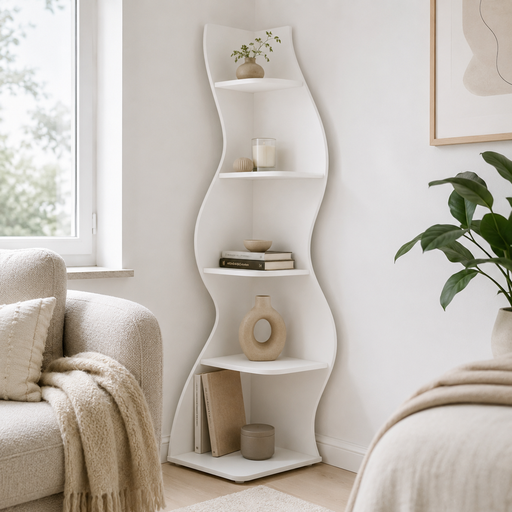
Why this product suits this profile: This white corner shelving unit makes use of an unused corner and offers five tiers for smaller items, books or plants. Its neutral design works well in a living room, home office or bedroom.
The product description highlights its compact corner dimensions and adjustable shelves. Before buying, check the exact measurements and permitted load per shelf on the product page.
Five shelves, white-coated board material and a design made for corners.
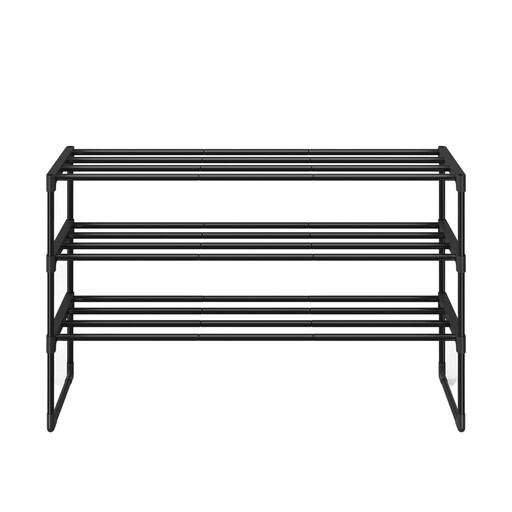
Why this product suits this profile: This metal shoe rack measures 30 × 92 × 55 cm and is designed for hallways, wardrobes or living rooms. According to the product description, it can be used upright, upside down or stacked.
The stated static load is 10 kg per shelf and 30 kg in total. This makes it easier to plan how you’ll use it than a vague claim such as ‘sturdy’.
Metal tubes, plastic connectors, tool-free assembly and a slim width of 92 cm.
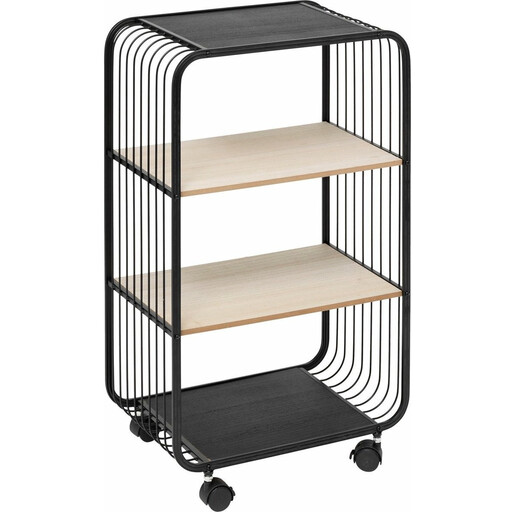
Why this product suits this profile: This mobile shelving unit measures 43 × 28 × 74 cm and provides flexible storage in the kitchen, bathroom, home office or living room. Four swivel castors make it easy to move around.
The product details state a maximum total load of 25 kg. The product title refers to three tiers, but the detailed information lists four shelves, so check this point directly before ordering.
Steel frame, MDF shelves, four castors, stated total load of 25 kg and FSC information in the product details.
We’ve put together a complete, regularly updated list of products that meet these strict selection criteria and fully comply with the safety regulations in force in the EU.
Place the shelving unit on a level surface and tighten all the connectors as instructed. For tall, narrow or heavily loaded models, an additional anti-tip fixing may be a good idea. A wall shelf must be fixed using wall plugs and screws that are suitable for the type of wall and the intended load.
Its lifespan depends on the material, assembly, moisture, load and how often it is moved. Don’t exceed the stated load, and distribute heavy items as evenly as possible. Check castors, plastic connectors and MDF shelves regularly for looseness, cracks or warping.
Normal use doesn’t incur any ongoing energy costs. Possible follow-up costs could include replacement castors, additional fixings or damaged shelves. Before you buy, consider the type of castors, the floor surface and whether suitable replacement parts are available.