
Lieferung heute & morgen

Qualitätsgarantie

Willkommens-Angebote freischalten: KOSTENLOSE Lieferung | Bis zu 80 % RABATT | Kostenlose 30-Tage-JoyPlus-Testphase
App herunterladen
A 3-compartment lunchbox is designed to keep your main course, sides and snacks separate. In practice, though, problems often arise: sauces leak out, the lid stops closing properly after a short time, or the stated capacity simply isn't enough for daily use. That's why it's worth taking a close look at the closure, internal layout and care instructions – whether you're a professional, a student, a pupil or part of a family.
A leak-proof lunchbox needs more than just a tight-fitting lid. What really counts is a continuous seal and a closure system that presses the lid evenly. Multiple side clips are practical here. They can help when transporting yoghurt, dressing or other liquid foods.
Even so, the box shouldn't be left loose in a bag. Seals must be clean, undamaged and correctly fitted. An overfilled container can also compromise the seal.
On some models, the compartments are fixed. This limits your choice of foods and makes cleaning more difficult. Removable inserts offer greater flexibility: you can clean them individually or leave them out when needed.
A 3-in-1 lunchbox with three removable compartments is therefore ideal for different meals. For example, you can transport rice, vegetables and fruit separately, or use one large compartment for a sandwich.
"Microwave-safe" doesn't automatically mean you can heat the whole box with the lid on. With plastic containers, the lid usually needs to be removed. You also need to pay attention to temperature limits and any restrictions for foods that are particularly high in fat, oil, sugar or tomato.
Before buying, check the manufacturer's instructions for the microwave, freezer and dishwasher. A dishwasher-safe lunchbox is only truly hassle-free if the seal, inserts and cutlery can also be washed that way.
A 1-litre lunchbox offers enough room for a compact meal with a side and a snack. It's suitable for most school bags, rucksacks and work bags, provided you're not transporting an especially large portion.
A 1.2-litre lunchbox provides more volume for larger meals. The extra capacity can be useful for professionals, long school days or anyone who likes several sides. Still, the external dimensions and weight should fit your bag.
Important: the stated total volume doesn't always describe the usable amount per compartment. With three chambers, the space is divided across several areas. So check whether the layout matches your usual portion sizes.
According to the product details, the models featured here are made from polypropylene (PP); the seal is silicone. The products are also described as a BPA-free lunchbox. BPA stands for bisphenol A, a substance whose use in food-contact materials is subject to specific regulations in the European Union. Such labelling should be clear from the product description or manufacturer documentation.
Also relevant are:
A lunchbox with cutlery reduces the need to carry a separate knife, fork and spoon. A separate lunchbox sauce container is useful if you want to add dressing or dip just before eating.
For work and school, a design that's easy to take apart is also recommended. Removable compartments can be cleaned more thoroughly, while a four-sided closure can secure the lid evenly. That said, an airtight lunchbox isn't maintenance-free in daily use: after every use, all components should be cleaned and dried completely.
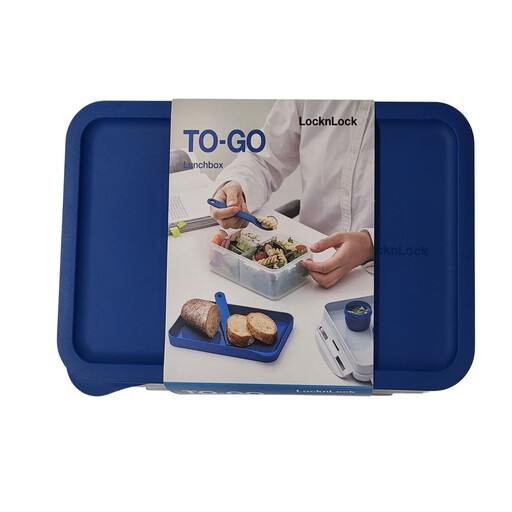
Why this product fits the profile: The 1,000 ml capacity is suitable for compact meals, and the three removable compartments allow you to store your main course, side and snack separately.
According to the product details, the box has three removable inserts, a four-sided closure and is described as leak-proof and airtight. This keeps the layout flexible.
1.0 litre capacity, cutlery set and sauce container; according to the product details, suitable for the freezer, dishwasher and microwave without the lid.
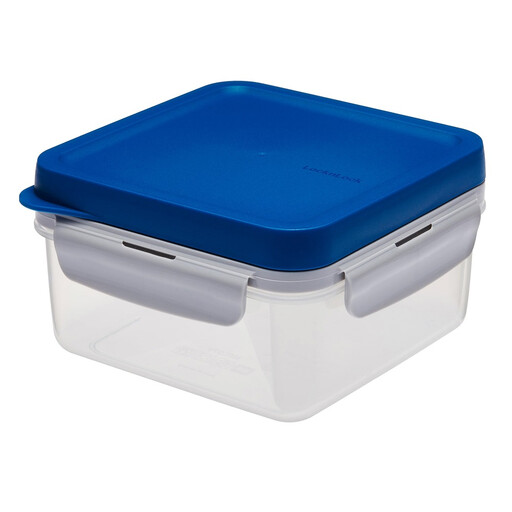
Why this product fits the profile: The 1.2-litre capacity offers more room for a larger meal, without sacrificing separate compartments or the included cutlery.
According to the product details, the three compartments are removable. The temperature range of -20 °C to 120 °C makes the intended usage limits clear.
1,200 ml total volume, PP construction, silicone seal, four-sided closure system, plus cutlery and sauce container as per the product description.

Why this product fits the profile: For regular use in the office, at school or on trips, the larger variant offers a consistent system for your meal, sides and sauce.
The removable compartments make cleaning easier, according to the product details. The box can go in the top rack of the dishwasher; for heating, the lid is removed completely.
1.2 litre volume, three removable compartments, cutlery set and sauce pot; the yellow colour variant makes it easier to tell apart in a family or office setting.
We've put together a full, regularly updated list of products that fully meet these strict selection criteria and the safety regulations in force in the EU.
To keep a 3-compartment lunchbox working well for as long as possible, a few simple routines help:
The lifespan depends mainly on how often you use it, the cleaning temperature, mechanical stress and the condition of the silicone seal. It's therefore not possible to give a reliable fixed time frame.
That depends on the design and the manufacturer's specifications. For the LocknLock models mentioned, the product description states they are air- and watertight with a four-sided closure. Even so, liquid foods should be transported upright, and the seal should be checked regularly.
For the models mentioned, the product details say: yes, but without the lid and within the stated temperature range of up to 120 °C. The instructions for the specific product are what matter. The oven, hob and direct heat are not intended.
A 1-litre lunchbox is suitable for smaller to medium-sized meals. A 1.2-litre lunchbox offers more room for larger portions or extra sides. As well as volume, the bag size, weight and the actual dimensions of the three compartments are also important.