
Lieferung heute & morgen

Qualitätsgarantie

Willkommens-Angebote freischalten: KOSTENLOSE Lieferung | Bis zu 80 % RABATT | Kostenlose 30-Tage-JoyPlus-Testphase
App herunterladen
A multifunctional reversible ratchet promises to combine three tools in one, saving space and money. However, the market is flooded with models whose versatility quickly reaches its limits in practice. Many DIY enthusiasts and auto mechanics invest in a supposed all-in-one tool, only to find that it fails under load, is useless in tight spaces, or shows wear after a short time.
Before you make a purchasing decision, it's important to know the common pitfalls that can render an initially promising tool useless:
To make an informed decision, you should check three core technical specifications. These determine the durability, efficiency, and usability of your tool.
A 3-in-1 reversible ratchet combines the most common drive sizes: 1/4-inch, 3/8-inch, and 1/2-inch. However, what's crucial is not just compatibility, but whether the design can withstand the typical torque for each size.
Check the manufacturer's specified maximum torque values for each drive. A solid tool should withstand significantly higher values for the 1/2-inch drive than for the 1/4-inch drive.
The number of teeth in the ratchet head is a direct measure of its practicality in tight spaces. A mechanism with 72 teeth or more is considered the modern standard.
A reversible ratchet handle with fine gearing saves time and prevents frustration when working space is limited.
The longevity of a ratchet wrench depends directly on the materials used. Look for the following features:
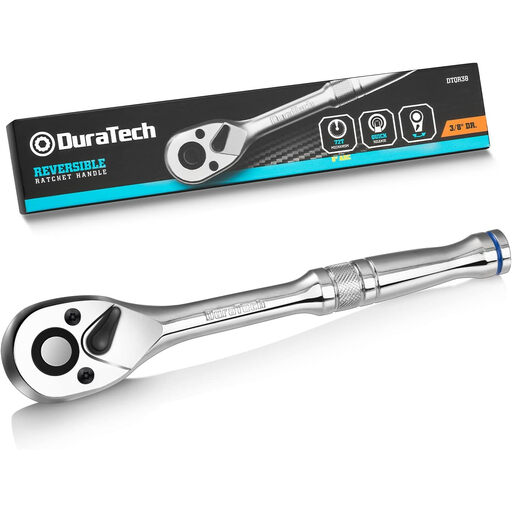
Why This Fits Their Persona: Ideal for DIY enthusiasts and hobby mechanics who want a single, reliable tool for repairs on cars, motorcycles, and around the house. It reduces the need for multiple individual ratchets and keeps the toolbox tidy.
The design combines 1/4", 3/8", and 1/2" drives in a robust body without compromising on stability. The CR-MO steel head is designed for real-world torque and prevents failure under load.
The 72-tooth mechanism with a 5-degree swing arc enables efficient work in hard-to-reach places. The knurled handle provides a secure grip.
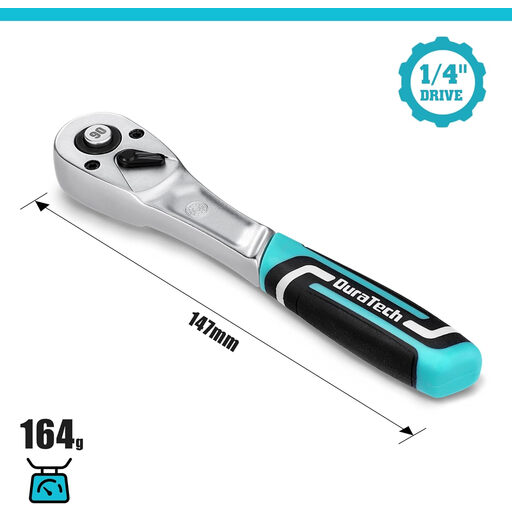
Why This Fits Their Persona: Perfect for users who primarily work on small fasteners, such as on bicycles, electronics, or in model making. Here, maximum precision and a minimal swing arc are more important than the versatility of a 3-in-1 tool.
This tool bypasses the pitfall of coarse gearing. With 90 teeth, it offers an extremely small 4-degree working angle, preventing the frustration that occurs when a standard ratchet can't engage in tight areas.
The high-precision 90-tooth mechanism allows for excellent control with minimal effort. The ergonomic handle reduces fatigue during extended use.
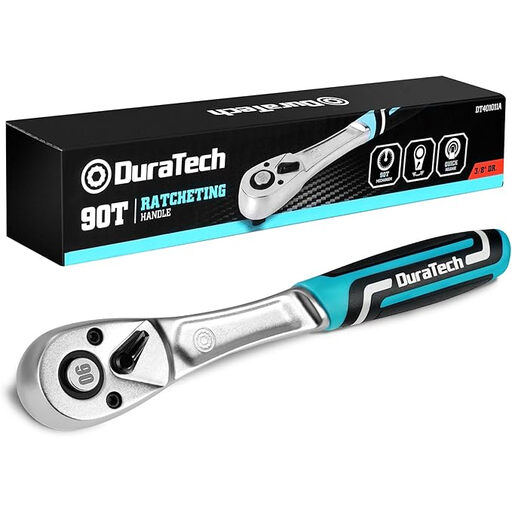
Why This Fits Their Persona: For the ambitious hobbyist or professional who needs a dedicated, heavy-duty tool for the commonly used 3/8-inch size. It's a reliable workhorse for daily workshop use.
As a dedicated 3/8-inch ratchet, this model avoids any potential weaknesses of a multi-drive head. The chrome vanadium steel construction is designed for maximum stability and durability.
The combination of a 90-tooth mechanism (4-degree arc) and high torque strength makes it a powerful yet precise tool for common automotive jobs.
We've compiled a complete, up-to-date list of products that meet these strict selection criteria. Find the right tool for your needs.
The tooth count in the ratchet head determines how finely the tool operates. A higher number of teeth results in a smaller swing arc—the minimum angle the handle must be moved for the mechanism to engage the next tooth. A socket ratchet with 72 teeth requires a 5-degree swing, while a 90-tooth model needs only 4 degrees. The smaller the angle, the easier it is to work in spaces with very little room to move.
For most DIYers and hobby mechanics, a high-quality 3-in-1 reversible ratchet is an excellent, space-saving solution that covers the majority of common tasks. Professional mechanics who work under extreme conditions daily often prefer specialized, single-size ratchets for maximum torque transfer or specific applications. Nevertheless, a good 3-in-1 model is a very capable and versatile core component for any tool collection.
Proper maintenance is straightforward and ensures longevity. Keep the tool clean and wipe it down after use to protect it from moisture and rust. Avoid using the ratchet as a hammer or exceeding its intended torque limit with an extension pipe (a.k.a. a "cheater bar"). An occasional drop of light machine oil into the mechanism can keep it operating smoothly.