
Lieferung heute & morgen

Qualitätsgarantie

Willkommens-Angebote freischalten: KOSTENLOSE Lieferung | Bis zu 80 % RABATT | Kostenlose 30-Tage-JoyPlus-Testphase
App herunterladen
A 3-piece wire brush set can cover tools, metal surfaces, barbecue grills and hard-to-reach areas. However, sets of this kind can differ considerably in terms of bristle material, head shape and handle design. If you focus only on the colour, low price or vague claims such as “extra strong”, you may end up buying a brush that is unsuitable for the intended surface or loses its cleaning performance after a short time.
Steel bristles remove stubborn rust and hard residues, but they can scratch more delicate surfaces. For painted surfaces, soft metals or workpieces with a visible finish, a hard wire brush with stiff bristles is therefore not automatically suitable. The crucial question is whether the surface can withstand aggressive treatment.
Descriptions such as stainless steel wire brush, copper-plated wire brush or brass-plated wire brush do not mean the same thing. A coating can affect the properties of the bristles, but it does not replace a clear specification of the actual wire material. For a product with copper-plated stainless steel wire, you should check whether the description matches the intended use. A “brass coating” must not simply be assumed if it is not expressly stated in the product data.
A set with several brushes is only practical if the heads or bristles are genuinely suitable for different tasks. A double-headed brush, for example, can cover narrow gaps and larger surfaces. However, if details such as brush width, bristle thickness or handle dimensions are missing, it becomes difficult to assess its actual suitability.
When choosing a cleaning brush for metal, the surface is the first consideration:
A brush should first be tested in an inconspicuous area. Stiff wire bristles pose a higher risk of scratching, particularly on coated, polished or painted surfaces.
A straight brush is suitable for longer, open surfaces. A double-headed brush with differently arranged bristles can offer advantages when cleaning tool edges, threads, joints and narrow areas. For workshop use, a sufficiently long handle with a low-slip design is also important, as pressure is transferred when removing rust and dirt.
Pay attention to:
A rust removal brush should be cleared of metal filings and residues after use and stored in a dry place. If the bristles are damaged or badly bent, replacing the brush is advisable. Individual wires may come loose during use. Protective goggles, suitable work gloves and close-fitting workwear should therefore form part of your basic equipment.
Extra care is required when cleaning barbecue grills: after brushing, the surface should be checked and any loose bristles removed. A barbecue brush should not be mixed up with a workshop brush. For contact with food, the relevant manufacturer’s instructions are decisive.
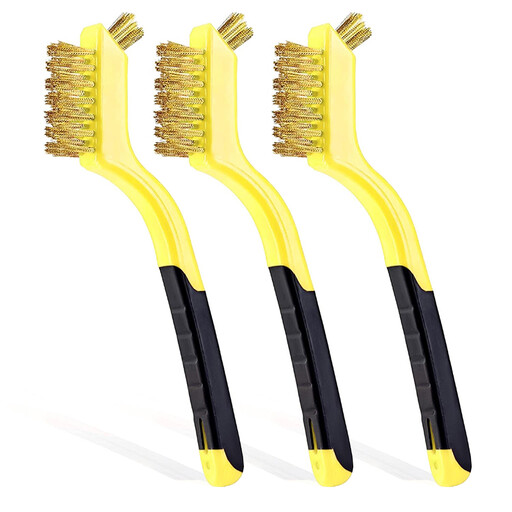
Why this product suits this profile: This set combines three double-headed brushes with stiff bristles. It gives DIY users a compact selection for tools, metal parts and hard-to-reach areas.
The product data specifies a 3-piece set, a double-headed design and copper-plated stainless steel wire. Buyers can compare these details with their intended surface before ordering.
Three brushes, a double-headed design and a yellow finish for quick identification in your tool collection.
Why this product suits this profile: For users who carefully compare materials before buying, the expressly stated copper-plated stainless steel wire is an important selection criterion.
The material specification is more precise than a simple claim such as “extra robust”. However, an exact wire thickness is not stated and should be checked separately for specialist applications.
Stainless steel wire according to the product description, plus three brushes for different manual cleaning tasks.
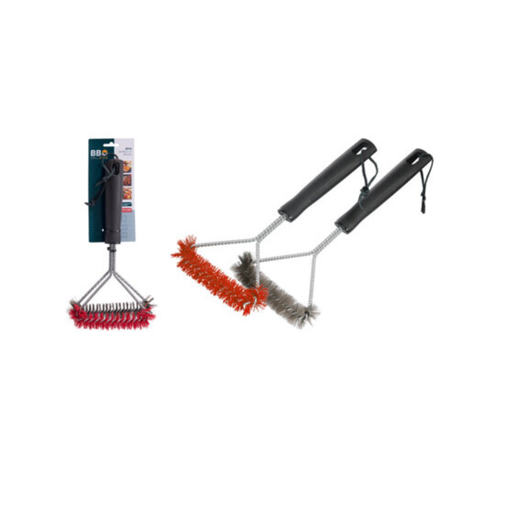
Why this product suits this profile: This set is designed for barbecue grills and is suitable for households or catering environments where a dedicated grill brush is required.
The product data specifies galvanised wire, a PP handle and 201 stainless steel bristles. This makes it easier to identify the product as intended for barbecue use than a general workshop set.
Two brushes, a triangular shape and stated dimensions of approximately 30.5 × 16 × 3 cm.
We have put together a complete, regularly updated list of products that fully meet these strict selection criteria and the safety regulations applicable in the EU.
For uncoated, hard-wearing metal surfaces, a wire brush with stiff bristles may be suitable. Loose paint residue should be removed first, and the surface should be tested in a small area. Softer bristles or a different cleaning method are more suitable for delicate coatings.
Its lifespan depends on the pressure applied, frequency of use, degree of rust and storage conditions. Visibly bent, thinned or loose bristles are signs of wear. After cleaning, the brushes should be stored dry and separately from damp materials.
A hand brush for workshop use should not automatically be used on a barbecue. A dedicated grill brush with suitable material specifications is the sensible choice for barbecue grills. After every use, check whether any bristles or pieces of wire have been left on the grill.