
Lieferung heute & morgen

Qualitätsgarantie

Willkommens-Angebote freischalten: KOSTENLOSE Lieferung | Bis zu 80 % RABATT | Kostenlose 30-Tage-JoyPlus-Testphase
App herunterladen
A 3-wheel kids' scooter is often the first big adventure on wheels for little ones. It promises freedom, develops motor skills, and brings a sparkle to their eyes. However, the vast selection of models can quickly become overwhelming, leading to decisions you'll later regret. As your Joybuy Product Recommendation Officer, I'm here to help you navigate the common pitfalls and make a choice that is both safe and durable.
Many parents invest in a model that becomes too small after a few months, has frustrating steering, or whose wheels give out on the first uneven cobblestone. So, before you choose a gift for kids, let's look at the three most common sources of error:
toddler scooter wins with function, not flashy effects.To avoid a bad purchase, you should focus your attention on three core aspects. These determine whether a scooter will bring joy and remain a faithful companion for years to come.
For children, especially between the ages of 3 and 5, stability is paramount. A 3-wheel kids' scooter naturally has an advantage here over two-wheeled models. However, pay attention to further details:
A height-adjustable scooter is not an option, but a necessity for long-term use. A child grows quickly, and the handlebar height must adapt to ensure an ergonomic and safe posture. A good scooter for kids ages 3 and up should offer at least three, ideally four or more, adjustment levels. This allows the scooter to accompany the child for several years, making it a sound economic investment.
The wheels are the direct contact with the ground and are crucial for safety and ride comfort. A scooter with light-up wheels can be a great extra, but the fundamental quality is more important.
Based on the criteria above, we have selected a few models from our range for different user profiles.
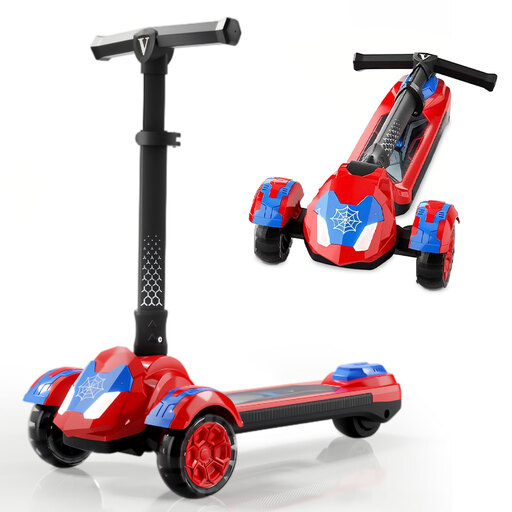
Why This Fits Their Persona: Ideal for toddlers getting their first experience on a scooter. The intuitive lean-to-steer mechanism and the wide, stable deck provide immediate confidence and make it easy to learn balance.
This model is specifically designed for the motor skills of beginners, avoiding the frustration of overly complex steering.
Stable anti-slip deck for a secure footing; smooth lean-to-steer system promotes coordination.

Why This Fits Their Persona: Perfect for parents looking for a long-term investment. Thanks to its multi-level adjustable handlebar and robust construction, this scooter grows with the child, covering the age range from 3 to 10 years.
This model escapes the "one-size-fits-all" trap through its high degree of adjustability. You won't need to buy a new scooter after two years.
Multi-level height-adjustable handlebar; foldable for easy transport and storage; dynamic LED light-up wheels.
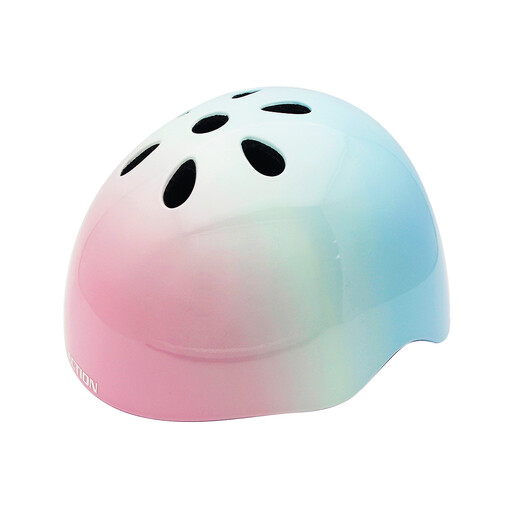
Why This Fits Their Persona: For safety-conscious parents and grandparents who want to gift a complete `outdoor toy` experience. The combination of a sturdy scooter and a certified helmet ensures that fun doesn't come at the expense of safety.
This recommendation prioritizes certified safety over pure aesthetics. The helmet meets the EN1078 standard, a key benchmark for bicycle and skate helmets.
In-mould construction for high stability at a low weight; 7 ventilation openings for comfort; can be paired with a sturdy scooter for a safe complete package.
We've compiled a complete, up-to-date list of products that fully meet these strict selection criteria and safety regulations.
1. From what age is a 3-wheel kids' scooter suitable? A three-wheeled scooter is generally ideal from around the age of 3. The three wheels provide the necessary stability for children who are still developing their sense of balance. Models with lean-to-steer are particularly good for getting started.
2. How do I set the handlebar height correctly? The optimal handlebar height is reached when the child is standing on the scooter and can comfortably grip the handles at or slightly above navel height. Their arms should be slightly bent. An adjustment that is too high or too low can impair control and safety.
3. Does my child need a helmet for a 3-wheel scooter? Yes, absolutely. Even though 3-wheel scooters are more stable, falls can never be completely ruled out. A well-fitting, certified helmet is an indispensable form of head protection and should be part of the routine from the very beginning. Safety should always come first.