
Lieferung heute & morgen

Qualitätsgarantie

Willkommens-Angebote freischalten: KOSTENLOSE Lieferung | Bis zu 80 % RABATT | Kostenlose 30-Tage-JoyPlus-Testphase
App herunterladen
A new scooter can bring a lot of joy. However, that excitement can quickly fade if the chosen model turns out to be a poor purchase. Many parents experience frustration with scooters that are unsafe, are outgrown too quickly, or simply aren't durable enough. Two common pitfalls can prove particularly costly: models with a fixed, non-adjustable handlebar height that become useless after a growth spurt, and those made from low-quality materials that crack or break under normal use.
This guide serves as a roadmap to help you avoid such disappointments and select a model that combines safety, durability, and riding enjoyment.
Instead of focusing solely on colour or design, objective technical features should be at the forefront of your purchasing decision. These parameters determine whether a kick scooter for kids is a safe and long-term investment.
Many modern scooters for toddlers use a lean-to-steer mechanism. Instead of actively turning the handlebars, the child steers by shifting their body weight. This method intuitively promotes the development of balance and coordination. It also prevents abrupt, sharp turns, which increases stability and reduces the risk of falling, especially for children from 3 years old. A well-designed kids' scooter should have a responsive yet controlled steering system.
The durability of a kids' scooter depends heavily on the materials used and the quality of its construction. Pay special attention to these two components:
Children grow quickly. A height-adjustable kids' scooter is a more sustainable investment because it grows with your child. Models with multiple handlebar adjustment levels can be used for several years. A correct handlebar height, positioned at around the child's belly button, allows for an ergonomic and safe posture while riding. This is a critical feature for models designed for a wide age range, such as from 3 to 10 years.
Instead of making a one-size-fits-all recommendation, we have matched models based on specific use cases.

Why it's a good fit: Ideal for beginners who need safety and stability. The wide, non-slip deck and intuitive lean-to-steer system help build confidence and train balance quickly.
The four-level height adjustment on the handlebar prevents the scooter from being outgrown too quickly. Its robust construction is designed to withstand the rigours of beginner use.
Features 4 height settings and battery-free LED wheels that enhance visibility.
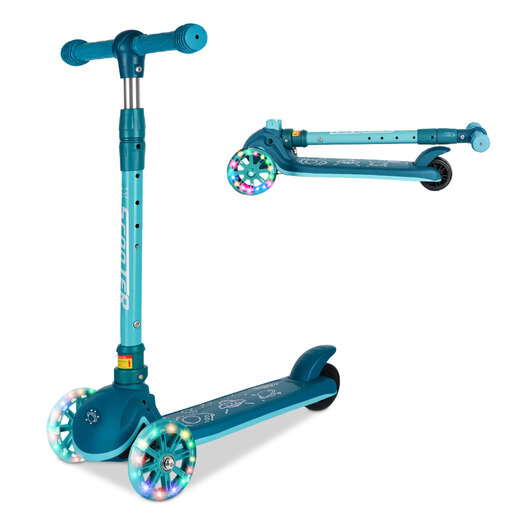
Why it's a good fit: The foldable design makes this scooter especially practical for families who need to transport it in a car or store it compactly at home.
Despite its folding mechanism, the scooter offers a sturdy frame and a height-adjustable handlebar, addressing concerns about durability and longevity.
The easy-to-use folding mechanism allows for hassle-free transport and space-saving storage.
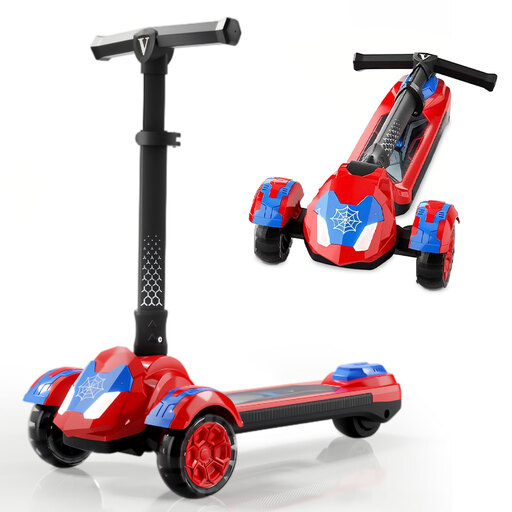
Why it's a good fit: Designed for a wide age group, this scooter is a long-term investment. Its robust construction and multi-level height adjustment will accompany a child for many years.
This model directly counters the problem of being outgrown too quickly by accommodating children from ages 3 to 10. The sturdy deck ensures material integrity.
The wide age range (3-10 years) and robust construction make it a durable companion for both boys and girls.
We've compiled a complete, up-to-date list of products that meet these strict selection criteria and current safety standards.
At what age is a 3-wheel kids' scooter suitable? Generally, 3-wheel scooters are suitable from around 2.5 to 3 years of age, once a child can walk confidently. The three wheels provide the necessary stability for this age group. However, it is crucial to always check the manufacturer's specific age and weight recommendations.
How does the lean-to-steer mechanism work on a kids' scooter? With lean-to-steer, the child controls the scooter by shifting their body weight to the left or right, rather than turning the handlebars. This intuitive mechanism supports the development of balance and coordination. It also prevents abrupt steering movements, making the ride safer.
Do the light-up wheels need batteries? Usually not. Most kids' scooters with light-up wheels use a dynamo mechanism. The light-emitting diodes (LEDs) are powered by the energy generated as the wheels rotate. This means no battery changes are required.