
Lieferung heute & morgen

Qualitätsgarantie

Willkommens-Angebote freischalten: KOSTENLOSE Lieferung | Bis zu 80 % RABATT | Kostenlose 30-Tage-JoyPlus-Testphase
App herunterladen
A 3-wheel kids’ scooter can make it easier for children from around three years old to learn to ride. Two front wheels provide a wide base, while many models use a lean-to-steer system: instead of turning the handlebars sharply, your child gently shifts their body weight to the left or right.
When buying, however, it is not just illuminated wheels or an eye-catching colour that matter. Unclear age recommendations, non-adjustable handlebars or a deck that is too narrow can quickly make a children’s scooter uncomfortable or impractical. The following criteria will help you distinguish marketing claims from product features that genuinely matter.
An LED kids’ scooter is easy to see at dusk or on the pavement and is appealing to many children. However, lighting does not replace a helmet or adult supervision, and it is not permission to use the scooter on public roads. Also check whether the wheels light up through movement or require batteries.
According to the product description, the wheels on the Beleev V2-Pure PurpleScooter light up while riding without batteries. The LED lighting in the deck, however, requires two AA batteries, which are not included. For other models with dynamic LED modes, buyers should check the power supply details directly on the product page.
A height-adjustable scooter is only a sensible long-term choice if the actual handlebar heights are provided. A general age recommendation is not enough, as children of the same age can vary considerably in height. The key factors are the suitable body height, maximum load and number of adjustment positions.
The Beleev model has three handlebar heights between 24.0 and 32.1 inches. The product description states that it is suitable for children aged 3 to 12 who are under 62 inches tall, with a maximum load of 110 pounds. These figures should always be checked against your child’s height and weight.
A foldable kids’ scooter saves space in the hallway or boot. Before buying, you should still check whether the folding mechanism is suitable for everyday use, how heavy the scooter is and whether it locks securely once folded. A product may be foldable but still be impractical because of its weight or bulky dimensions.
A 3-wheel kids’ scooter should have a wide platform positioned as close to the ground as possible. A broad deck makes it easier to place both feet on the scooter. The lean-to-steer principle supports controlled weight shifting and is often easier for younger children than handlebars that turn directly.
Look for:
The design does not automatically make a scooter suitable for every child. Some children initially need time to coordinate balance, pushing off and cornering.
A rear foot brake allows your child to slow down by pressing on the rear mudguard. On a kids’ scooter with a brake, the brake should be easy to reach and should not have any sharp edges sticking out. Your child should first practise braking on a flat, clear surface.
Light-up wheels can be activated by movement. Wheel size, material specifications and how the wheels are attached are also important when choosing a scooter. Regardless of the model, regularly check the scooter for loose screws, damaged wheels and play in the handlebars.
The term “kids’ scooter from age 3” is a guide, not individual approval for use. The manufacturer’s information on age, height and weight is what matters. Safety instructions must be followed where there are small parts, battery compartments or removable components. Children below the stated minimum age should not use the scooter.
A scooter is intended for pavements, private paths or suitable recreational areas. The product warning for the Beleev V2-Pure states explicitly that it must not be used in traffic and that protective equipment should be worn.
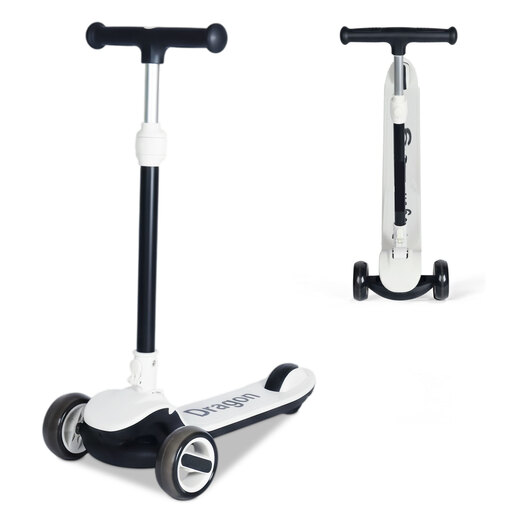
Why this product suits the profile: The specifications mention a wide platform, a foot brake, light-up wheels and a maximum load of 30 kg for children aged 3 and over.
The maximum load and foot brake are clearly stated rather than relying solely on a general age recommendation.
Wide deck, light-up wheels, 3-wheel platform and an activated foot brake according to the product specifications.

Why this product suits the profile: This model combines adjustable handlebar heights, a foldable design, a low anti-slip deck and a rear foot brake.
The product description provides specific handlebar measurements, a weight of 6.1 pounds and information about batteries and the minimum age.
Three handlebar heights, folding function, 8 LED modes in the deck and a stainless-steel component on the rear brake according to the supplier’s information.
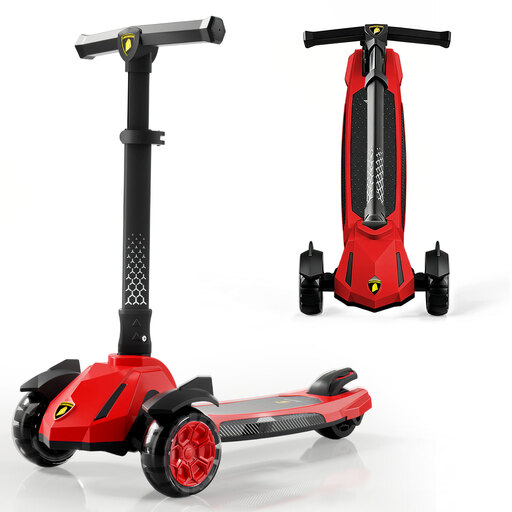
Why this product suits the profile: The product name lists adjustable and foldable handlebars, three light-up wheels, a wide deck and a brake.
The brake is explicitly stated, while the adjustable and foldable components are also clearly identified.
Wide deck, foldable handlebars, height-adjustable construction and brake according to the product specifications.
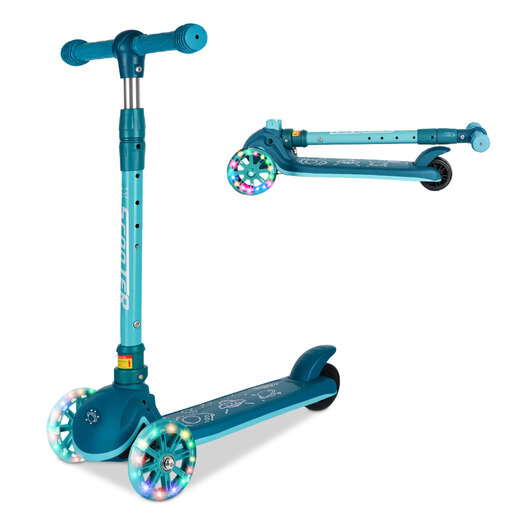
Why this product suits the profile: This foldable model is an appealing option for families who want to store the scooter regularly in the car, cellar or when heading out on trips.
The folding function and height-adjustable handlebars address the common combination of limited storage space and a short period of use.
Light-up wheels, adjustable handlebars, lean-to-steer system and anti-slip deck according to the product name.
We have put together a complete, regularly updated list of products that fully meet these strict selection criteria and the safety regulations applicable in the EU.
Before the first ride, check all screw connections, the folding mechanism and the handlebar lock. To begin with, children should use the scooter on flat, dry surfaces away from traffic. A helmet and suitable protective clothing can reduce the risk of injury in the event of a fall. Adult supervision remains essential, particularly for younger children.
The scooter should be stored in a dry place after use. Dirt on the wheels and brake can affect performance. For deck LEDs, insert the batteries according to the manufacturer’s instructions and remove them if necessary before storing the scooter for a longer period.
Many models are designed for children from age 3 according to the product information. Height, weight, motor skills and the ability to follow instructions are also important. The manufacturer’s minimum age recommendation should not be ignored.
This depends on the handlebar adjustment, weight limit, child’s height and build quality. A height-adjustable scooter may remain suitable for longer than a model with a fixed handlebar height. Regularly checking the wheels, brake, deck and screws helps you identify wear at an early stage.
Not always. On some models, the wheels are activated by movement and do not require batteries. Illuminated decks or specific LED modes, on the other hand, may need batteries. The product description should therefore be checked for separate information about the wheels and deck.