
Lieferung heute & morgen

Qualitätsgarantie

Willkommens-Angebote freischalten: KOSTENLOSE Lieferung | Bis zu 80 % RABATT | Kostenlose 30-Tage-JoyPlus-Testphase
App herunterladen
The search for the right first 3-wheel kids' scooter can quickly become overwhelming. While many models look similar at first glance, the differences in quality and durability are significant. The wrong purchase not only leads to disappointment but can also be a safety hazard. This guide will help you identify the crucial features and avoid common purchasing traps.
Two frequent problems lead to unnecessary expenses:
To find a scooter for toddlers that is safe and will provide years of enjoyment, you should focus on three core aspects. These objective criteria are more important than flashy designs or marketing promises.
A height-adjustable kids' scooter is a fundamental requirement for long-term use. Look for models that offer multiple adjustment levels to precisely fit the handlebar to your child's height. This not only ensures an ergonomic and comfortable posture but also safe control over the scooter. A scooter for ages 3 and up should ideally be usable until the age of 8-10, which is only possible with sufficient handlebar adjustability and an appropriate maximum weight capacity.
The deck is the platform that supports the child's entire weight. Its construction is critical for safety.
The quality of the wheels and the steering mechanism largely determines the riding experience.
Based on the objective criteria mentioned above, we have identified a few models that are well-suited for different user profiles.

Why It's a Match: Ideal for toddlers getting their first experience on a scooter. The focus is on maximum stability and easy handling to build confidence.
The extra-wide, non-slip deck provides a secure platform and prevents the risk of cracking that can occur with cheap hard plastic.
The intuitive lean-to-steer mechanism and stable three-wheel design specifically support the development of balance in beginner riders.
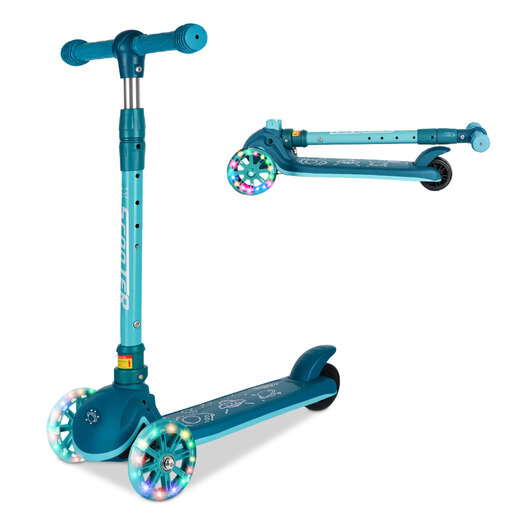
Why It's a Match: For families who value durability and practicality. This scooter grows with the child and is easy to transport or store.
Thanks to the multi-level adjustable handlebar, it avoids the "one-season scooter" trap. It adapts to the child's growth over several years.
The foldable kids' scooter can be collapsed with a single motion. This is especially practical for taking it in the car or for space-saving storage in the basement.

Why It's a Match: For kids who want a flashy and entertaining riding experience. This model combines functional safety with a high fun factor and is a popular gift for boys and girls.
Despite the focus on light effects, there's no compromise on material quality. The PU wheels are durable and ensure the dynamo-powered lights function reliably.
The dynamic LED modes in the wheels and deck offer a unique look while also increasing the child's visibility in low-light conditions.
We've compiled a complete, up-to-date list of products that meet these strict selection criteria and safety requirements.
A scooter for ages 3 and up with three wheels is generally a great choice. The two front wheels provide high stability, allowing even younger children to quickly develop a secure feel for riding and practice their balance without being overwhelmed from the start.
With lean-to-steer, the handlebar is not rigidly connected to the wheels. Instead, the child leans the handlebar to the left or right, which causes the entire deck to tilt slightly and steer the wheels in the desired direction. This intuitive method of control promotes coordination and a sense of balance.
No, in most cases, kids' scooters with light-up wheels do not require batteries. The LEDs are powered by a small dynamo integrated into the wheel hub. As soon as the wheels spin, energy is generated, and the lights turn on. This is maintenance-free and works as long as the scooter is in motion.