
Lieferung heute & morgen

Qualitätsgarantie

Willkommens-Angebote freischalten: KOSTENLOSE Lieferung | Bis zu 80 % RABATT | Kostenlose 30-Tage-JoyPlus-Testphase
App herunterladen
A 3-wheel scooter for children can make it easier for younger riders to get started. But product photos featuring glowing wheels, broad age ranges and supposedly versatile features tell you little about whether a model suits your child, their height and how they plan to use it. Before buying, it’s worth checking a few technical details.
A label such as “for children aged 3 to 10” is only a rough guide. What matters is the handlebar height, your child’s height and the maximum load capacity. A scooter may be advertised for a particular age group but still be too tall or too low for your child.
If you’re choosing an adjustable-height scooter for children, the handlebar should offer several height settings. It should also lock securely into place and stay firm while your child is riding.
LED scooters for children are popular. On many models, the wheels light up as they turn, so no batteries are needed. However, LED lights are no substitute for being clearly visible in traffic, wearing protective equipment or having a working brake.
If the scooter has battery-powered lights, for example on the deck, check whether batteries are included and how the battery compartment is secured. Small parts and batteries should be kept out of reach of young children.
A folding scooter for children is easier to store and transport, but it has extra joints or locking mechanisms. Check that these are secure before every ride. A folding feature also doesn’t mean the scooter is equally suitable for the boot of a car, the school run or longer journeys.
Don’t judge the maximum load capacity by your child’s current weight alone. Clothes, a rucksack and the extra force of getting on the scooter all put additional strain on the deck, wheels and handlebars.
A 3-wheel scooter for children usually has two front wheels and one rear wheel. Many models use lean-to-steer steering, where your child steers by shifting their weight. Younger children may find this design easier to understand than a traditional scooter with a handlebar that turns.
Two-wheel models are often more manoeuvrable and tend to suit older children, teenagers or experienced riders better. So, choose a two-wheel scooter for children only once your child can balance confidently and brake deliberately.
A wide, anti-slip deck gives your child more room to stand. Look for:
A wide deck can help your child stay in control, but it doesn’t automatically make the scooter suitable for every surface. Many scooters for children are designed for smooth, dry ground. Gravel, wet surfaces, stairs and steep slopes increase the risk of falls.
Leisure scooters often combine plastic, aluminium or steel components. Stunt scooters commonly use aluminium alloys and sturdier construction. However, the material alone doesn’t tell you how long a scooter will last.
Before buying, compare the maximum load capacity, the scooter’s own weight and the manufacturer’s guidance. For a stunt scooter for children, a fixed handlebar, rigid construction, sturdy clamps and a rear brake are also important. These models aren’t automatically suitable for children aged 3 and over.
Check the wheels, axles, screws, handlebar clamp and brake regularly. A damp cloth is usually a better choice for cleaning than a pressure washer, which can damage bearings and moving parts.
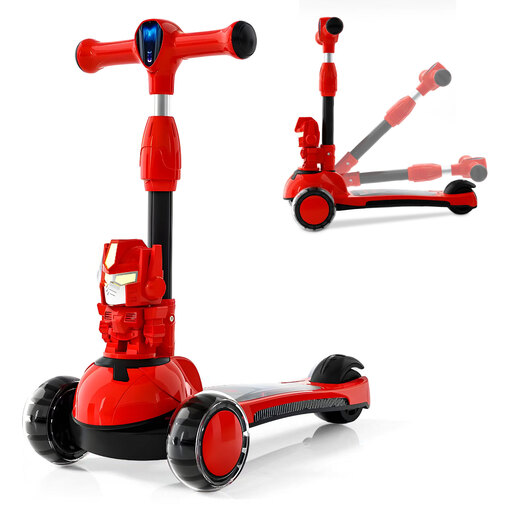
Why it suits this type of rider: This model is designed for children aged 3 to 10 and combines three wheels with adjustable handlebars and lean-to-steer steering.
The product details list a wide, anti-slip footboard and adjustable handlebars. Parents should still check the exact dimensions and load limit before buying.
Three-wheel design, height-adjustable handlebars and illuminated wheels, according to the product description.

Why it suits this type of rider: This model combines three wheels with a folding design and several handlebar height settings. According to the product details, it’s suitable for children aged 3 and over, up to 62 inches tall.
The product details list three handlebar height settings, a rear brake and a maximum load of 110 pounds. The deck lights need two AA batteries.
Folding design, lean-to-steer steering, LED wheels that don’t need batteries according to the description, and adjustable handlebar height.
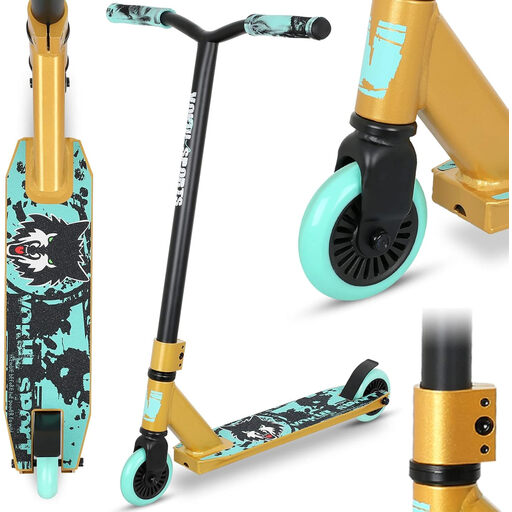
Why it suits this type of rider: According to the product details, this two-wheel stunt scooter is designed for children aged 6 and over. It’s intended for leisure rides and first tricks on suitable surfaces.
The minimum age of 6 is clearly stated. For tricks, a helmet, knee and elbow pads, and a check of all screws before use are recommended.
6061 aluminium, 100-millimetre polyurethane wheels, ABEC-9 bearings and an HIC compression system, according to the product description.
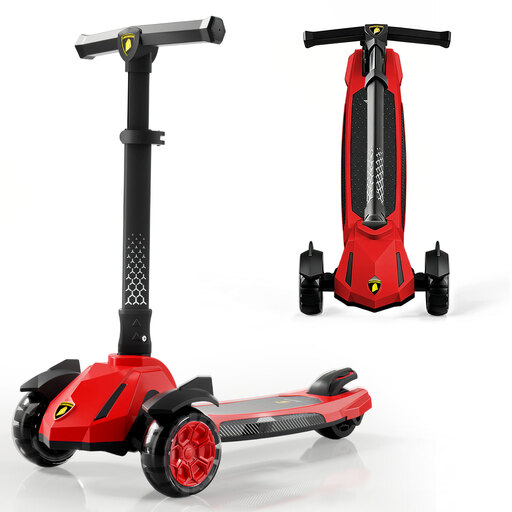
Why it suits this type of rider: The scooter is described as suitable for children aged 3 to 10 and combines three flashing wheels with adjustable, folding handlebars.
The folding feature is clearly listed as a product feature. Check the lock before folding or unfolding the scooter.
Folding handlebars, adjustable height, a wide deck and a rear brake, according to the product details.
We’ve put together a complete, regularly updated list of products that meet these strict selection criteria and fully comply with the safety regulations applicable in the EU.
Many models are listed as suitable from around 3 years old. Your child’s height, handlebar height, the load limit and their ability to stand and brake safely are also important. Use the scooter on suitable, dry surfaces and supervise your child.
Its lifespan depends on the materials, how often it’s used, the surface it’s ridden on, the load it carries and how well it’s maintained. If you have a 3-wheel scooter for children, check the wheels, axles, handlebars, screws and brake regularly. Repair or replace any damaged or loose parts before using the scooter again.
Many LED wheels light up as they turn and don’t need batteries. Additional LED lights on the deck or handlebars may be battery-powered. Check the product description and battery compartment for details.