
Lieferung heute & morgen

Qualitätsgarantie

Willkommens-Angebote freischalten: KOSTENLOSE Lieferung | Bis zu 80 % RABATT | Kostenlose 30-Tage-JoyPlus-Testphase
App herunterladen
A 3 x 3 m folding gazebo is a practical choice for many gardens, patios, parties and festivals. Its nine-square-metre footprint gives you room for a table, several chairs or a small buffet area. However, terms such as “weather-resistant”, “sturdy” and “quick to set up” aren’t always used consistently in product descriptions. That’s why it’s important to check the specific details about materials, dimensions, anchoring and what’s included.
A coated polyester or PE roof can repel rain. That doesn’t automatically mean the seams, zips or joins in the side panels will provide lasting protection in heavy rain. So, check:
A waterproof gazebo isn’t necessarily suitable for strong winds, either. That depends on its construction, how it’s anchored and the conditions at the site.
A quick-to-set-up gazebo saves time when the frame and roof are designed to work together. But on soft grass, you’ll still need tent pegs or suitable ground anchors. Weights are useful on patios and paved surfaces. Without adequate anchoring, even a heavier garden gazebo can shift in the wind.
The dimensions of a 3 x 3 m folding gazebo usually refer to its outer edges. The frame, roof overhang and side panels reduce the usable space inside. Also check the entrance height and the maximum height when fully assembled.
For occasional use, a polyester fabric with a clearly stated weight per square metre gives you a useful basis for comparison. The reference model, measuring 300 x 300 x 245 cm, uses 140 g/m² polyester fabric and comes with two side panels. According to the product details, it weighs 10.8 kg in total.
When looking at the frame, consider:
A higher weight may indicate that more material has been used, but it doesn’t on its own prove that a gazebo is more wind-resistant.
A gazebo with side panels offers some protection from the sun, passers-by and light weather. However, a fully enclosed gazebo can trap heat. If you’ll be spending longer periods inside, check how it can be opened up and how the side panels can be arranged.
For sun protection, the specific rating matters. According to the product description, the 3 x 3 m model mentioned above has UV resistance with UPF50+. This rating applies to the material or stated level of protection; it shouldn’t be taken to mean complete protection from UV rays on every side.
According to the product details, the model is listed as conforming to EN 13561, the standard for the safety of external solar protection products. This kind of certification should be clearly documented in the product description. It doesn’t replace correct assembly and anchoring, or taking the weather conditions into account.
As a rule, take down a folding gazebo or secure it particularly well if strong gusts or thunderstorms are forecast, or if you’ll be away for a long time. A weather-resistant gazebo isn’t necessarily a shelter designed to stay up permanently.
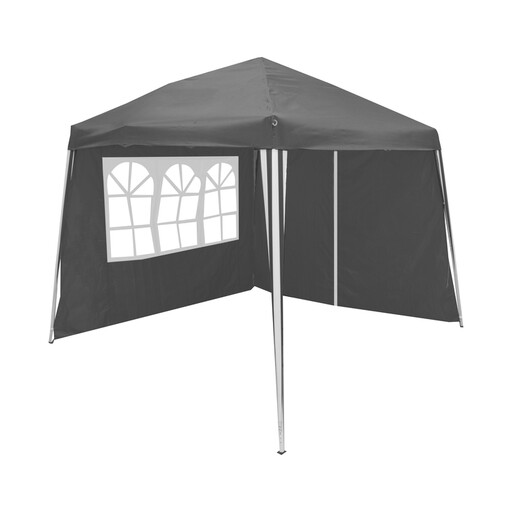
Why this product suits this profile: The 3 x 3 m size is a practical choice for private gardens, patios and occasional get-togethers. Two side panels are included, so there’s no need to buy them separately.
The product details clearly state its dimensions, weight, materials and included side panels. This makes it easier to compare what’s included with products that don’t come with side panels.
300 x 300 x 245 cm, 140 g/m² polyester, two side panels, a total weight of 10.8 kg and a stated UPF50+ rating.
Why this product suits this profile: If you prefer technical details to marketing claims, this model gives you specific information about its fabric, dimensions, weight and UV rating.
The product description gives a specific fabric weight and a stated UPF50+ rating, rather than making a general claim about “sun protection”.
A folding frame for easy set-up and pack-down, two side panels, a weight of 10.8 kg, and documented details about the materials and dimensions.
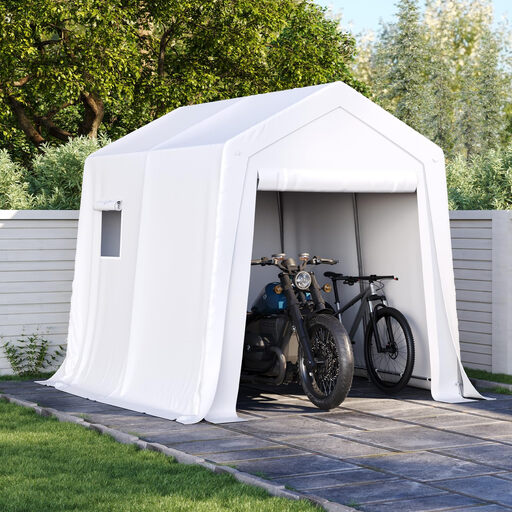
Why this product suits this profile: This larger option is designed for more permanent storage and shelter, rather than for use as a portable, traditional pop-up gazebo.
Its different design is made clear: this model isn’t a 3 x 3 m folding gazebo, so it isn’t suited to spontaneous parties or festivals.
Galvanised steel frame, 200 g/m² PE cover, roller door, ventilation windows and elastic fastening straps for more permanent use.
We’ve put together a complete, regularly updated list of products that meet these strict selection criteria and fully comply with the safety regulations in force in the EU.
For a secure set-up, follow these steps:
Store polyester and PE fabrics when they’re dry. Damp covers can develop unpleasant odours and suffer material damage. Water and a soft cloth are usually all you need for cleaning. Harsh cleaning products can damage the coatings.
It depends on the frame design, your experience and the surface. A pop-up gazebo with a pre-assembled folding frame is generally quicker to put up than one with lots of separate poles. Even so, allow enough time to fit the roof and side panels and secure the gazebo.
Its lifespan depends on how often you use it, how much sun it gets, how it’s stored and cared for, and how much wind it’s exposed to. Drying it regularly, storing it somewhere sheltered and taking it down in poor weather can reduce wear and tear. You can’t estimate its overall lifespan from its size alone.
As well as the purchase price, you may need to pay for ground anchors, weights, spare parts or additional side panels. If you’ll be using the gazebo frequently, check whether replacement roofs and side panels are available. This will help you get a better idea of the long-term costs of a gazebo for your garden or patio.