
Lieferung heute & morgen

Qualitätsgarantie

Willkommens-Angebote freischalten: KOSTENLOSE Lieferung | Bis zu 80 % RABATT | Kostenlose 30-Tage-JoyPlus-Testphase
App herunterladen
A 30 cm frying pan gives you plenty of room for larger portions, vegetable stir-fries, meat, fish or a family breakfast. However, it won’t necessarily fit every hob, and its size can make it heavier and less easy to handle than a smaller model. If you focus only on colour, coating or a low price, you could miss some important details.
The stated size usually refers to the top rim. The actual base of the pan may be much smaller. This matters with induction hobs, where the hob’s magnetic area should match the pan base as closely as possible. Before buying, it’s worth checking:
A deep frying pan can hold more liquid and ingredients than a shallow model with the same rim diameter. Interior depth is therefore a useful point of comparison for sauces, casseroles and larger portions of vegetables.
A frying pan for all hob types may be suitable for gas, electric, ceramic and induction hobs. But that doesn’t tell you whether it can be used in the oven. Plastic or Bakelite handles often limit the maximum temperature or rule out oven use altogether.
If you’re looking for an oven-safe frying pan, check the stated maximum temperature and the construction of the entire pan. Removable handles often come with their own restrictions. Lids, seals and fittings must also be approved for the temperature you plan to use.
A coated frying pan makes it easier to release delicate foods and can reduce the effort involved in cleaning. However, a coating isn’t a licence to use high heat when the pan is empty, metal utensils or harsh cleaning products. Depending on the material, wooden, plastic or silicone utensils may be the safer choice.
With a dishwasher-safe pan, it’s also worth distinguishing between being technically suitable for the dishwasher and being best cared for that way. Several product descriptions recommend hand-washing despite dishwasher compatibility, as mild washing-up liquid and a soft sponge are gentler on the surface.
An aluminium frying pan is often relatively lightweight and heats up quickly. For induction, aluminium usually needs a magnetic stainless steel base or a suitable induction plate. So when choosing a pan, don’t just look for ‘aluminium’ in the description: make sure it specifically says that it’s suitable for induction.
A 30 cm stainless steel pan is generally robust and suitable for high temperatures. However, without a coating, it needs the right preheating and oiling technique to help stop food from sticking. Multi-layer construction with an aluminium core can improve heat distribution.
Enamelled cast iron retains heat for longer. This can be useful for searing and braising, but it also makes the pan heavier. If you’ll be lifting and tossing it frequently, a lightweight aluminium model may be more practical.
A 30 cm ceramic pan usually has a ceramic non-stick coating on a metal body. Care instructions vary by manufacturer. Avoid high heat when the pan is empty, sharp objects and metal scouring pads unless the product instructions say otherwise.
Before buying, check:
When you see claims about coatings, look for precise information about the materials. For example, the KT Hybrid Stainless Steel Deep Frying Pan 30cm is described as having a natural ceramic coating without PFAS, PTFE or PFOA. These details relate to the product specification and are not health or therapeutic claims.
A capacity of around three to five litres is useful for family meals, particularly with a deep-sided pan. Weight is still important, though: a large pan can quickly become heavy when full. A sturdy, ergonomic handle and a secure helper handle make it easier to move.
Also check the space available in your cupboard and the length of the handle. A pan with a 30 cm rim diameter can be well over 45 cm long once you include the handle.
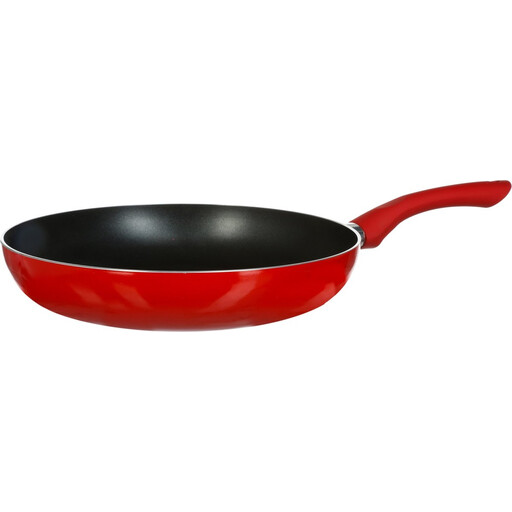
Why this product suits this profile: An aluminium body, stainless steel induction plate and stated depth of 9.5 cm combine with a low weight of 940 g to make this a versatile choice for everyday use.
The description explicitly states that it’s suitable for gas, electric, ceramic and induction hobs, and has two non-stick layers. It’s listed as dishwasher-safe, although hand-washing is still recommended.
30 cm diameter, 2.8 l capacity and stated suitability for all common hob types.
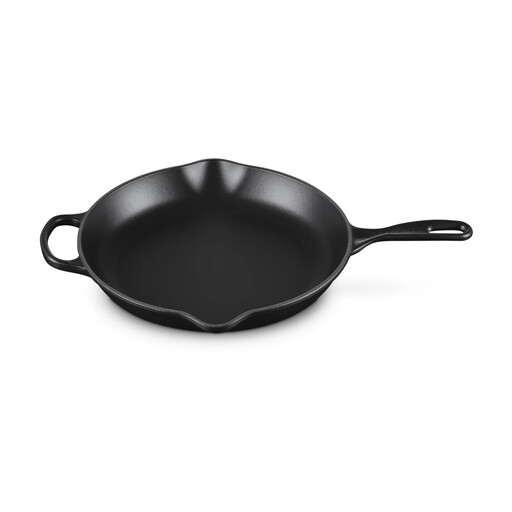
Why this product suits this profile: Enamelled cast iron is designed to retain heat and, according to the product details, is suitable for use on the hob, in the oven and for serving straight to the table.
Oven suitability and compatibility with induction, gas, electric and ceramic hobs are clearly stated. The material is specified, but bear in mind the pan’s heavier weight before buying.
Enamelled cast iron, a 30 cm diameter and suitability for all the stated hob types, including oven use.
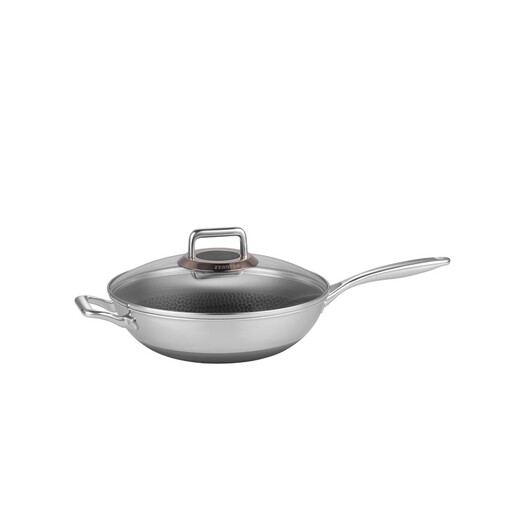
Why this product suits this profile: Its deep design and lid make it suitable for larger portions and casseroles, as well as moving from the hob to the oven.
The product description explicitly lists compatibility with all common hob types, oven use up to 260 °C and dishwasher suitability. Check the instructions again to confirm the exact temperature limit before use.
Three-layer construction with an aluminium core, deep design, lid and stated suitability for the hob, oven and dishwasher.
We’ve put together a complete, regularly updated list of products that meet these strict selection criteria and fully comply with the safety regulations in force across the EU.
Whatever the material, a few simple habits can help:
A 30 cm ceramic pan or PTFE-coated aluminium frying pan can remain in good working order for a long time with careful use. However, visible flaking, warping or a badly damaged base are all reasons to stop using the pan.
Not necessarily. The key factors are the pan’s magnetic base and its size. A 30 cm pan may work on a smaller induction zone, but it might not heat evenly across its whole surface. Compare the guidance from the hob and pan manufacturers.
It depends on the depth and usable capacity. Shallow models are often suitable for frying several portions. A deep frying pan with a capacity of around three to five litres also has room for sauces, rice dishes and casseroles. For very large quantities, it may still be better to cook in two batches.
Being dishwasher-safe makes cleaning easier, but it won’t automatically extend the pan’s lifespan. Coated models often benefit from hand-washing, low to medium heat and non-abrasive utensils. Stainless steel and cast iron each have their own care requirements.