
Lieferung heute & morgen

Qualitätsgarantie

Willkommens-Angebote freischalten: KOSTENLOSE Lieferung | Bis zu 80 % RABATT | Kostenlose 30-Tage-JoyPlus-Testphase
App herunterladen
A 32 cm frying pan offers plenty of room for family-sized portions, several pieces of meat or a vegetable stir-fry. It’s also considerably larger and heavier than a standard frying pan. Before you buy, it’s worth checking the dimensions, hob compatibility and care instructions carefully. The key considerations go beyond the diameter: the usable cooking surface, the pan base and the temperature limits all matter too.
The 32 cm measurement usually refers to the top rim. The actual cooking surface at the base can be considerably smaller. For example, the BALLARINI Vipiteno has a base diameter of 23.9 cm. This affects how many ingredients can sit directly on the hot surface, and whether the pan sits evenly on a smaller hob zone.
The height of the sides also matters for family meals. Higher sides make it easier to braise and turn larger quantities, while a shallower shape may be better for pancakes or quick searing.
A large non-stick frying pan can make cleaning easier, but it still needs to be treated properly. Metal utensils, sharp objects and abrasive cleaners can damage the surface. Heating the pan while empty for prolonged periods can also put unnecessary strain on the coating.
If you’re choosing a 32 cm non-stick frying pan, check the details of the coating, suitable kitchen utensils and cleaning instructions. A dishwasher-safe pan can go in the dishwasher, but hand-washing it with a soft sponge may help protect the surface.
Not every aluminium frying pan will work on an induction hob. It needs a suitable magnetic base. If you’re looking for a 32 cm pan for induction, the product description should explicitly state that it’s compatible with induction hobs.
The size of the heated zone matters too. On a small induction zone, the outer edges of a large pan may take longer to heat up. A suitable base that distributes heat evenly can reduce this difference, but it can’t compensate for a hob zone that’s the wrong size.
Aluminium heats up relatively quickly and is often used for coated pans. Depending on how they’re made, cast or forged aluminium pans can be sturdier than very thin-walled models. With stainless steel pans, the multi-layer base is particularly important.
A 32 cm stainless steel wok with a three-ply construction may be suitable for stir-fries, braising and wok cooking. Its shape differs from that of a traditional frying pan, though: a wok often has higher sides and a more curved interior.
For coated models, check the manufacturer’s information about the coating and maximum oven temperature. An oven-safe frying pan isn’t necessarily suitable for every temperature. According to the product details, the Ballarini models featured here can be used in the oven up to 160 °C.
A pan with a temperature indicator can help you judge when it’s heating up. However, it’s no substitute for a thermometer and won’t necessarily show the temperature across the entire cooking surface. Treat the indicator as a guide.
A 32 cm frying pan can become heavy when it’s full. An ergonomic handle and a secure connection to the pan are therefore practical features to look for. Before buying, also check that the overall length will fit in your kitchen cupboard and dishwasher.
A glass lid is useful if you often braise or steam food. It lets you keep an eye on what’s cooking without lifting the lid. Check whether the lid is included or needs to be bought separately.
The models below cater to a range of needs. The information is based on the respective product descriptions and technical specifications.
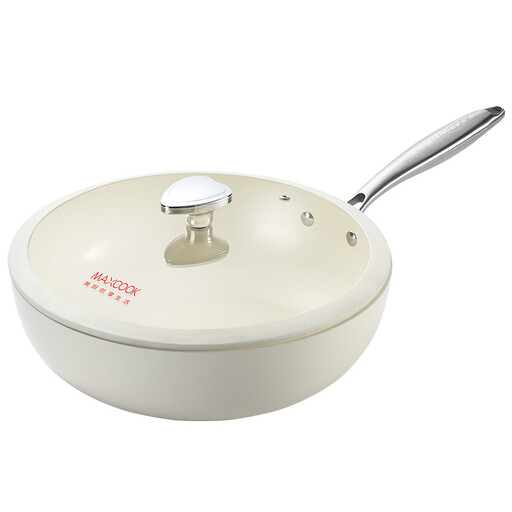
Why this product suits this profile: Its aluminium construction and ceramic non-stick coating make it a good choice for shoppers looking for a large pan with straightforward features.
The product name specifies a ceramic non-stick coating and cast aluminium construction. Before buying, shoppers should also check the listing details for hob compatibility and care instructions.
32 cm diameter; aluminium body with a ceramic non-stick coating, according to the product name.
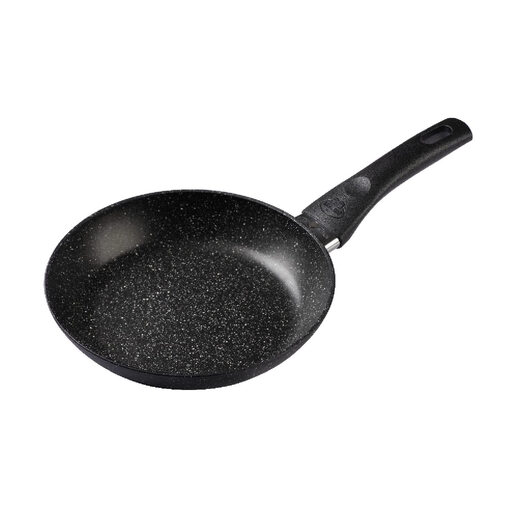
Why this product suits this profile: A good fit for households that use different types of hob and value a temperature indicator, easy cleaning and a coated aluminium construction.
The product details explicitly state that it’s suitable for induction, gas, electric and ceramic hobs, and give a maximum oven temperature of 160 °C. The care instructions advise against using metal utensils and abrasive cleaners.
Four-layer Nerolite coating; THERMOTION indicator; dishwasher-safe and oven-safe up to 160 °C, according to the product details.
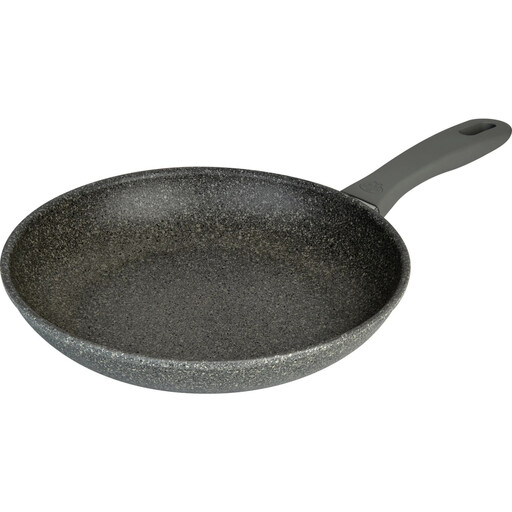
Why this product suits this profile: This large aluminium pan is designed for households that regularly cook meat, vegetables or braised dishes in larger portions.
The product details give specific information about the weight, base, coating, compatible hob types and oven use. This makes it easier to assess storage needs and cleaning requirements before buying.
5-layer GRANITIUM Extreme coating, according to the product details; Thermopoint indicator; suitable for induction and oven-safe up to 160 °C.
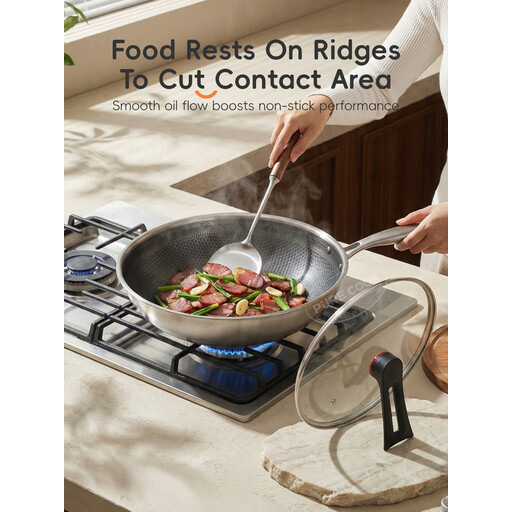
Why this product suits this profile: This wok is a good choice for shoppers who prefer high sides, a glass lid and 304 stainless steel construction for wok cooking, braising and steaming.
The product description lists gas, induction and ceramic hobs as suitable, and includes the glass lid in the package. Avoid exposing the wok to sudden temperature changes when cleaning it.
Three-ply 304 stainless steel construction; glass lid included; dishwasher-safe on a gentle cycle, according to the product description.
We’ve put together a comprehensive, regularly updated list of products that meet these strict selection criteria and the safety regulations in force in the EU.
Not necessarily. The pan base and the size of the heated zone are what matter. For induction, the pan must be explicitly labelled as suitable for induction hobs. On a small hob zone, a large pan may take longer to heat around the edges.
There’s no single answer, as it depends on heat, utensils, cleaning and storage. Using wooden or silicone utensils, keeping the temperature moderate and avoiding abrasive cleaners can help protect the coating. If the coating is visibly flaking or has deep scratches, stop using the pan.
The label means that, according to the product details, the pan can be cleaned in a dishwasher. However, frequent dishwasher use can put more strain on materials and coatings than gentle hand-washing. Always follow the manufacturer’s care instructions for the specific pan.