
Lieferung heute & morgen

Qualitätsgarantie

Willkommens-Angebote freischalten: KOSTENLOSE Lieferung | Bis zu 80 % RABATT | Kostenlose 30-Tage-JoyPlus-Testphase
App herunterladen
A 32 cm wok pan provides ample space for family-sized portions, vegetable stir-fries, noodles, meat and braised dishes. At the same time, this size remains practical for many German kitchens. Before buying, however, it is worth taking a close look at the material, base shape and care requirements. Product descriptions such as “non-stick,” “lightweight” or “suitable for all hob types” do not always describe the features that matter most in everyday use.
A non-stick wok pan is usually easy to clean and requires very little oil. However, the coating must be treated with care. Metal utensils, abrasive cleaners and severe overheating can damage the surface. Anyone who specifically wants to cook without Teflon or a conventional non-stick coating should look for an uncoated wok pan, a carbon-steel wok or stainless steel.
With an uncoated model, a naturally slippery surface does not develop automatically. A carbon-steel or iron wok generally needs to be seasoned and oiled regularly. This is not a drawback, but rather a different approach to care and maintenance.
A wok pan for induction requires a flat, magnetic base. A round wok shape without a suitable contact surface is often unstable on a flat hob. A more pronounced curve can be advantageous on gas, while induction, electric and ceramic hobs require a sufficiently large contact area.
For this reason, pay attention to the specific wording wok for all hob types and check whether gas, induction, electric and ceramic hobs are explicitly listed. The diameter of the heated base is also relevant: 32 cm at the rim does not automatically mean a 32 cm direct heat zone.
A wok with a glass lid can also be used for braising, steaming and keeping food warm. The lid makes it easier to monitor the cooking process without letting steam and heat escape immediately. For very hot stir-frying, however, it is generally used only after the ingredients have been seared.
Check whether the lid is included, whether it has a steam vent and whether the handle is heat-resistant. If the handle is removable and made of wood, you should also clarify whether the pan is suitable for use in the oven or dishwasher.
A stainless-steel wok is durable, heat-resistant and does not rely on a delicate non-stick coating. However, food can stick more readily when searing if the pan has not been preheated properly or enough oil has not been used. Multi-layer constructions with an aluminium core can distribute heat more evenly.
A carbon-steel wok responds relatively quickly to temperature changes and is well suited to stir-frying. Its surface becomes increasingly smooth and naturally non-stick through seasoning and regular care. Nevertheless, protection against rust is only ensured through thorough drying and a thin layer of oil.
Coated aluminium or iron pans are often easier to handle. The maximum temperature, suitability for metal utensils and cleaning requirements should be checked against the relevant manufacturer’s specifications.
A lightweight wok pan can be more comfortable when tossing ingredients or pouring out food. At 32 cm, however, the weight should still be appropriate for your own strength and the intended capacity. An additional helper handle is useful for heavier family-sized portions. A long handle, on the other hand, requires more storage space.
As a practical reference, the product specifications for the models presented here list weights of 1.1 kg, 1.17 kg, 1.51 kg and 1.66 kg, for example. Actual handling also depends on the handle position, lid and contents.
An uncoated wok pan should be seasoned before first use. After cooking, it is usually cleaned by hand, dried thoroughly and lightly oiled. Dish soap, residual moisture and prolonged storage in damp conditions can compromise rust protection.
For coated models, soft sponges and suitable kitchen utensils are recommended. Even if the manufacturer states that a product is dishwasher-safe, hand-washing can help protect the surface and handles. The care instructions provided by the respective manufacturer are binding.
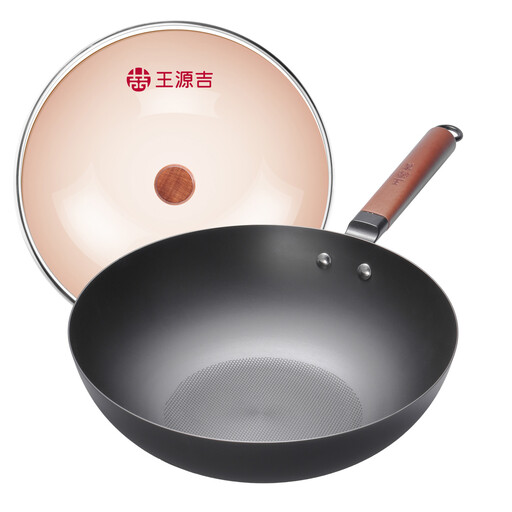
Why it is suitable: According to the product specifications, the wok body weighs 1.1 kg and has a flat base for induction, gas, electric and ceramic hobs. This may appeal to smaller kitchens and anyone who frequently tosses food one-handed.
The product description states that it has no coating. This eliminates concerns about damaging a non-stick surface; seasoning and oiling are still required, however.
1.1 kg body weight, flat base, glass lid and nitrided surface according to the product specifications.

Why it is suitable: According to the product specifications, the three-layer construction consists of Cromargan stainless steel, an aluminium core and a stainless-steel outer layer. It is designed for gas, induction, electric and ceramic hobs.
The specifications clearly state the material construction, hob compatibility and a lid with an adjustable steam vent, rather than making only a vague promise of “versatility”.
Uncoated stainless steel, aluminium core, metal lid with steam valve and dishwasher suitability according to the product specifications.
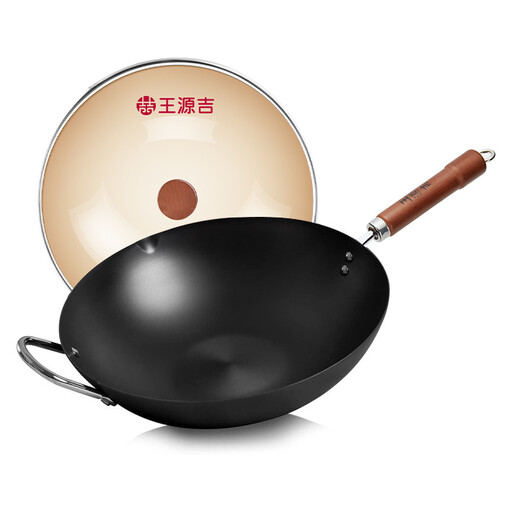
Why it is suitable: According to the product specifications, this model weighs 1.51 kg, has a main handle and helper handle, and is designed for two to four portions. This makes it a good fit for family meals and frequent stir-frying.
The helper handle makes it easier to manage larger quantities. At the same time, the care requirements of the uncoated surface are explicitly highlighted.
1.51 kg weight, two handles, glass lid, flat base and suitability for gas, induction, electric and ceramic hobs according to the supplier’s specifications.
For a large pan for stir-frying, a flat induction base, rapid heat transfer and sufficient side height are important. Anyone who wants to sear vegetables quickly over high heat should avoid overfilling the pan. Otherwise, the temperature drops and the ingredients are more likely to steam than sear.
A lightweight wok pan is practical if you frequently toss ingredients or serve directly at the table. For braised dishes and large quantities of meat, a heavier model may retain heat for longer. A glass lid makes the wok pan more versatile, but it does not automatically shorten heating or cooling times.
Anyone looking for a wok pan for induction should also compare the base diameter with the size of the cooking zone before buying. On smaller induction zones, a large outer area may not heat evenly.
Our current selection includes products with different materials, coatings, lids and hob compatibilities for households in Germany.
That depends on the base. For induction, the pan needs a magnetic, flat contact surface. According to the product specifications, many flat-base models are also suitable for gas, electric and ceramic hobs. The specific manufacturer’s description should be checked before buying.
Carbon steel and stainless steel can provide many years of service when properly cared for. With carbon steel, seasoning, drying and oiling are essential. Rust, warping or a damaged handle cannot be ruled out simply by looking at the stated material.
The costs depend primarily on heating time, the power of the hob and frequency of use. Rapid preheating can shorten cooking time, but it does not replace appropriate temperature control. On induction, the heated base should match the cooking zone as closely as possible to ensure efficient heat transfer.