
Lieferung heute & morgen

Qualitätsgarantie

Willkommens-Angebote freischalten: KOSTENLOSE Lieferung | Bis zu 80 % RABATT | Kostenlose 30-Tage-JoyPlus-Testphase
App herunterladen
Choosing a child car seat is one of the most important decisions parents make for their child's safety. With a vast array of models, standards, and features, the search can quickly become overwhelming. A 360° car seat promises significant everyday convenience, but what other criteria are crucial?
As your Joybuy Product Recommendation Officer, I have compiled the essential information for you. This article serves as an objective guide to help you make an informed decision based on facts and practical benefits—without the marketing hype.
Before making a decision, it's helpful to understand the fundamental features and standards that define the safety and functionality of a modern child car seat.
The latest and most stringent European approval standard for child car seats is ECE R129, better known as i-Size. Unlike the older ECE R44/04 standard, i-Size sets higher safety requirements:
An i-Size car seat is therefore a future-proof choice that complies with the latest safety standards.
A car seat with ISOFIX uses a standardised attachment system found in most newer vehicles. The seat connects directly to the car's chassis, offering several benefits:
Many 360-degree models combine ISOFIX with a support leg, which further enhances stability and minimises rotational forces in an accident.
An all-in-one car seat is an economical and practical solution. These models cover multiple age and weight groups, often from birth until the car seat requirement ends at age 12 (corresponding to Car Seat Group 0/1/2/3). Such a car seat suitable from birth adapts to your child's growth with adjustable headrests, removable newborn inserts, and adaptable harness systems.
Based on the criteria mentioned, we have curated a selection of products that stand out for their functionality and compliance with current standards.
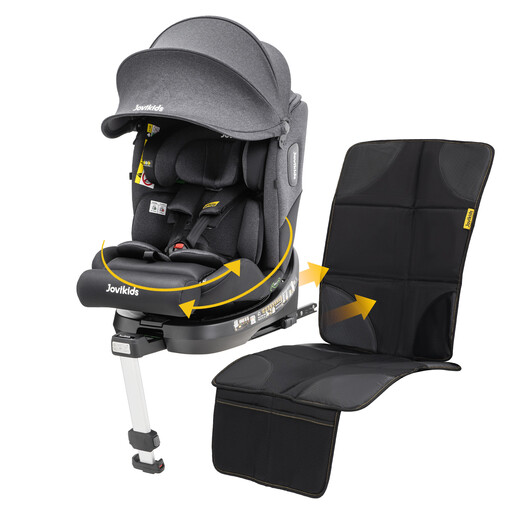
Why It Stands Out: The Jovikids RANGER 2 is designed as an all-in-one car seat that accompanies children from birth (40 cm) to 12 years of age (150 cm). It meets the strict i-Size ECE R129 standard and combines the 360-degree rotation feature with a secure ISOFIX installation and a support leg.
Benefits at a Glance:
Who It's For: For parents looking for a single, long-term, and safe solution that grows with their child from birth to the end of the car seat requirement, while offering maximum comfort and ease of use.
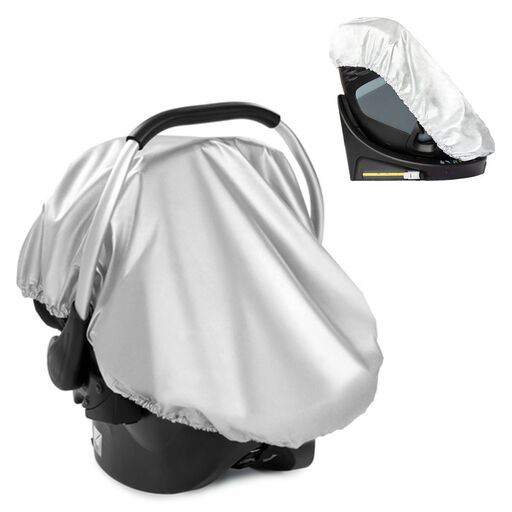
Why It Stands Out: This accessory solves a common summer problem. The car seat heat shield from Zamboo prevents the seat surface and buckle from getting too hot in direct sunlight.
Benefits at a Glance:
Who It's For: For all car seat owners who want to increase their child's comfort and safety on warm days.
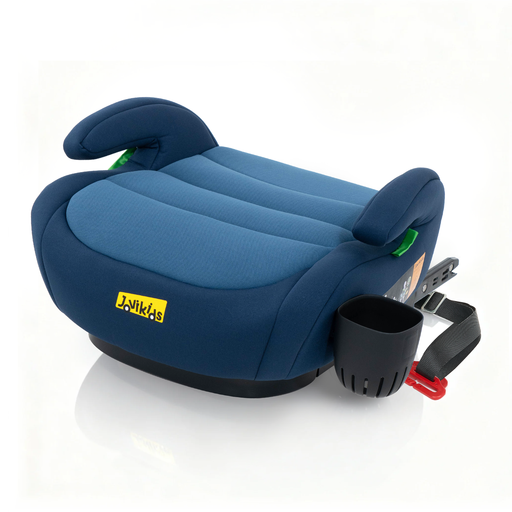
Why It Stands Out: For older children who have outgrown their combination seat, a safe booster seat is required. The OHHO+ model from Jovikids also meets the modern ECE R129 standard and can be secured with ISOFIX for added stability.
Benefits at a Glance:
Who It's For: For families with older children who need a safe, comfortable, and easy-to-handle booster seat for the final stage of the car seat requirement.
For families who are not only focused on in-car safety but also on driving fun for their little ones, our selection of electric ride-on cars might be of interest. Discover various models and accessories to bring a sparkle to your child's eyes, even outside the vehicle.
1. How long must a child travel in a rear-facing position? According to the i-Size standard (ECE R129), rear-facing travel is mandatory until at least 15 months of age. However, safety experts recommend keeping children in an extended rear-facing car seat for as long as possible, as this provides the best possible protection for the head and neck in a frontal collision. Many all-in-one seats allow for this up to a height of 105 cm (approx. 4 years).
2. What does i-Size mean for car seats?i-Size is the common name for the UN Regulation ECE R129. It is the current safety standard for child car seats in Europe. It mandates improved side-impact tests, a longer requirement for rear-facing travel, and classification by height instead of weight.
3. Can a 360-degree car seat be used in any car? Most 360-degree car seats require an ISOFIX anchorage system. Before purchasing, check if your vehicle is equipped with ISOFIX connectors. These are usually located between the backrest and the seat cushion of the rear bench. Additionally, models with a support leg require a stable vehicle floor. Installation may be restricted in cars with underfloor storage compartments.