
Lieferung heute & morgen

Qualitätsgarantie

Willkommens-Angebote freischalten: KOSTENLOSE Lieferung | Bis zu 80 % RABATT | Kostenlose 30-Tage-JoyPlus-Testphase
App herunterladen
Choosing a car seat is one of the most important decisions for expectant and new parents. A 360° rotating i-Size car seat, in particular, promises maximum safety and convenience. However, the market is flooded with models whose marketing claims don't always hold up in practice. This guide will help you identify the crucial features and avoid common pitfalls.
Before we dive into the key parameters, let's highlight three common issues that often only become apparent after the purchase, leading to dissatisfaction.
To make an informed decision, focus on the following three objective criteria. These define the real-world safety and usability of a car seat.
The ECE R129 car seat designation, often known as i-Size, is more than just a sticker. It is the current European safety standard and introduces critical improvements over the older ECE R44 regulation:
Ensure the seat is approved according to the latest version of the standard (e.g., UN R129/03 or /04).
A car seat with ISOFIX is standard today. The seat's metal connectors lock directly into the vehicle's chassis anchor points, creating a firm and stable connection. To prevent rotation during an impact, there are two systems:
Before purchasing, check the seat manufacturer's vehicle compatibility list to confirm that your car model is approved for the respective installation method.
The choice between a seat for a specific age group (e.g., a car seat from birth to approx. 4 years) and an all-in-one model (up to 12 years) is fundamental.
Here are some models tailored to the different needs and priorities of parents.

Why it's a great fit: Ideal for parents who refuse to compromise on safety and comfort for the first four years. The focus is on providing optimal support for newborns and toddlers.
This seat avoids the compromise of a 12-year seat. It is specifically designed for the 0-4 year age group (40-105 cm), offering optimised ergonomics and safety for the most vulnerable stage.
Integrated Linear Side-impact Protection (L.S.P.) system and up to six times more breathability thanks to mesh inserts in the Plus version.
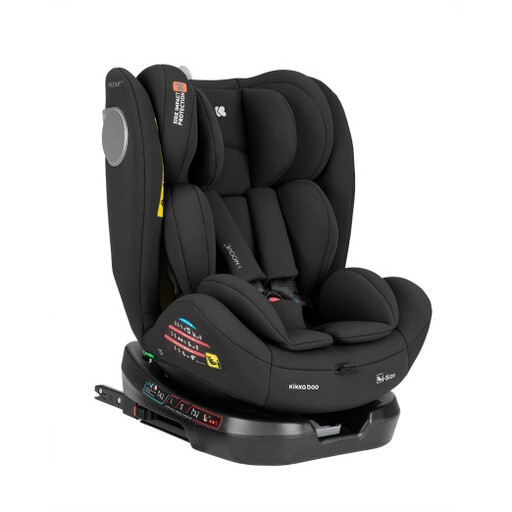
Why it's a great fit: For families seeking a single, cost-effective solution that accompanies the child from birth until they no longer need a car seat, without compromising on fundamental safety standards.
Although it's an all-in-one seat, it meets the strict i-Size standard (UN R129/04). The 24-position adjustable headrest ensures a precise fit throughout its entire lifespan, thus preventing a poor fit.
Extremely long usability range from 40 cm to 150 cm (approx. 12 years). Installation uses ISOFIX and Top Tether, allowing for flexible and secure attachment in i-Size compatible vehicles.
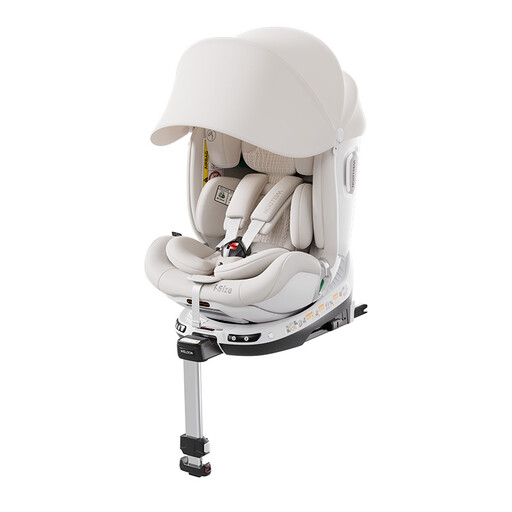
Why it's a great fit: For parents who appreciate technological assistance to ensure an extra layer of safety. The seat combines a long usability range (0-7 years) with active monitoring.
The smart features here are not a gimmick but a well-designed system that monitors correct installation (ISOFIX, support leg). The foundation remains a solid mechanical construction with a steel frame and EPP foam.
Hawk-Eye safety monitoring system with 8 sensors, providing audible and visual warnings, as well as app notifications, for incorrect installation.
We have compiled a complete, up-to-date list of products that fully meet these strict selection criteria and UK/EU safety regulations.
Yes, that is generally the case. The rotation mechanism is part of an integrated base station that must be firmly connected to the vehicle. The ISOFIX system provides the necessary stable and secure anchoring for this. Installation using only the vehicle's seat belt is not intended for these models due to their design.
The i-Size standard (ECE R129) mandates that children must be transported rear-facing until they are at least 15 months old and 76 cm tall. However, safety experts recommend keeping them in this position for as long as possible, ideally until the age of four or until the seat's height or weight limit for the rear-facing position is reached.
Yes, this is possible, provided the seat is explicitly approved for it and includes a high-quality newborn insert. This insert usually consists of several parts and supports the baby's head, back, and pelvis to ensure the flattest and most ergonomic lying position possible. Check if the seat offers a good recline function in the rear-facing position to protect the newborn's spine.