
Lieferung heute & morgen

Qualitätsgarantie

Willkommens-Angebote freischalten: KOSTENLOSE Lieferung | Bis zu 80 % RABATT | Kostenlose 30-Tage-JoyPlus-Testphase
App herunterladen
Choosing a car seat is one of the most critical decisions for your child's safety in the car. A car seat with 360-degree rotation promises maximum everyday convenience, making it significantly easier to get your child in and out. However, the market is flooded with models offering a wide range of features and promises. As your Joybuy Product Recommendation Officer, I'll help you identify the crucial features and avoid common purchasing pitfalls.
Many parents invest in an expensive seat only to find it doesn't meet their expectations after a short time. Pay attention to these three points to make an informed decision:
To find a suitable and safe car seat for your baby and child, you should focus on objective criteria. These three parameters are fundamental to your decision.
The most current and stringent European safety standard for child car seats is ECE R129, also known as i-Size. Unlike the older ECE R44/04 standard, which is based on the child's weight, i-Size classifies seats by height. This makes selection easier and more precise.
Key advantages of an i-Size car seat:
A rear-facing car seat with ISOFIX provides a rigid connection between the car seat and the vehicle's chassis, ensuring maximum stability. For 360-degree seats, this stability is usually supplemented by one of two methods:
For a rotating car seat, a combination of ISOFIX and a support leg is often the more practical solution.
A good multi-stage car seat adapts not only in size but also in comfort. Look for the following features:
Here are some models tailored to the different needs of families, all of which meet the key parameters mentioned above.

Why it's a great fit: Ideal for parents seeking the highest safety and comfort standards from birth. The seat specialises in the critical 0 to approx. 4-year age group and offers a well-designed, all-in-one package with its i-Size compliance, integrated side-impact protection, and newborn insert.
This seat avoids the compromise of a 0-12 year model by focusing on the optimal fit and ergonomics for babies and toddlers.
360° rotation mechanism combined with the UN R129/03 (i-Size) standard and Linear Side-impact Protection (L.S.P. System).
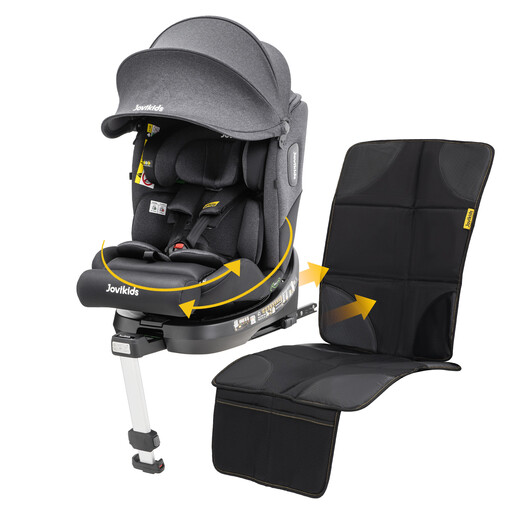
Why it's a great fit: For families looking for a single, long-term investment. This seat covers the entire period of use, from birth (40 cm) until a car seat is no longer required (150 cm), combining this longevity with modern safety and comfort features.
Despite its long lifespan, the seat meets the strict i-Size ECE R129 standard. With a 12-position adjustable headrest and removable inserts, it adapts to growth stages rather than being a poor compromise.
Extremely long usability (0-12 years) combined with a 360° rotation function and installation via ISOFIX with a support leg for easy handling.
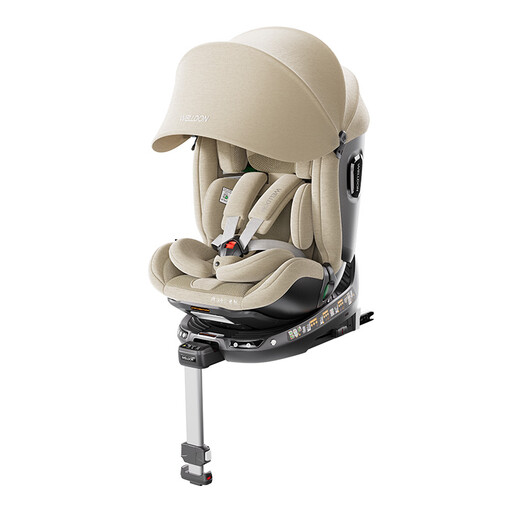
Why it's a great fit: For parents who value innovative technology and maximum comfort. In addition to i-Size safety standards, this seat offers smart additional features that further simplify daily life and ensure an optimal climate inside the seat.
The "Hawk-Eye" intelligent monitoring system actively addresses the risk of incorrect use. It provides audible and visual warnings for incorrect installation of the ISOFIX, support leg, or harness buckle.
Intelligent monitoring system and an age-based ventilation system for enhanced comfort on long journeys.
We've compiled a full, up-to-date list of products that fully meet these strict selection criteria and UK/EU safety regulations.
According to the i-Size (ECE R129) standard, rear-facing travel is legally required until at least 15 months of age and a height of 76 cm. However, safety experts recommend keeping children rear-facing for as long as possible, ideally up to the age of four. This position offers the best protection for the delicate cervical spine in a frontal collision.
Not necessarily. Although i-Size is designed to improve compatibility, there are differences between vehicle models (e.g., the angle of the back seat, the position of the ISOFIX anchors, the presence of underfloor storage compartments that can obstruct a support leg). Always check the car seat manufacturer's vehicle compatibility list before purchasing. This can usually be found on the brand's website.
Such a seat can be a practical and economical solution if it is well-designed. Ensure that the model meets the current i-Size standard and has high-quality, multi-stage inserts and a widely adjustable headrest. For newborns, the flattest possible recline position is crucial. A high-quality multi-stage seat is a good all-rounder, while specialised seats for specific age groups (e.g., 0-4 years) often offer an even more precise fit.