
Lieferung heute & morgen

Qualitätsgarantie

Willkommens-Angebote freischalten: KOSTENLOSE Lieferung | Bis zu 80 % RABATT | Kostenlose 30-Tage-JoyPlus-Testphase
App herunterladen
Purchasing a car seat is one of the most important decisions for new and expecting parents. A 360-degree rotating car seat promises maximum everyday convenience: simply turn the child towards the door, buckle them in, and rotate them back into a safe travel position. However, the market is flooded with models whose marketing promises often create more confusion than clarity. Before you make a decision you might later regret, it's crucial to know the most common pitfalls and understand which features truly matter.
As your Joybuy Product Recommendation Officer, I'll help you define objective criteria for your selection and steer clear of common marketing traps.
The convenience of a swivel function is undeniable, but it shouldn't be the sole deciding factor. Many buyers focus too heavily on this single feature, overlooking critical weaknesses.
To avoid a poor purchase, you should focus your attention on three objective, technical features that define a seat's safety and longevity.
A modern car seat should comply with the current European safety standard, i-Size (ECE R129). Unlike the older ECE R44 standard, i-Size offers clear advantages:
The safest installation is one that minimises errors. A car seat with ISOFIX and a load leg offers the most robust solution.
A car seat suitable from birth must offer more than just an age range on the packaging. Look for the following features:
Instead of making a one-size-fits-all recommendation, we present models tailored to the specific needs of parents.
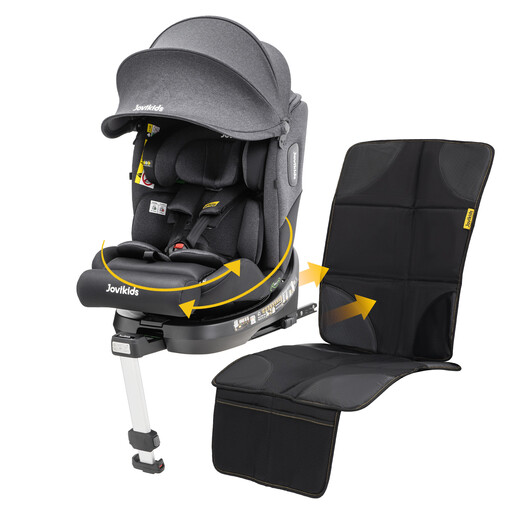
Why this model is a great fit: For parents looking for a single purchase to last the entire period a car seat is required. This seat covers the range from birth to 12 years, making further purchases unnecessary.
It counters the "grows-with-your-child" trap with specific features: the headrest is adjustable in 12 stages, and the newborn inserts are modular and removable to create genuine space for growing children.
The extremely long service life from 40 cm to 150 cm (birth to approx. 12 years) offers high cost-effectiveness. It meets the i-Size (ECE R129) standard.
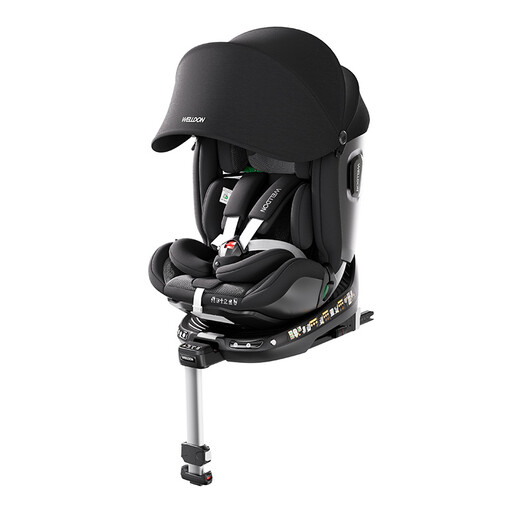
Why this model is a great fit: For parents who prioritise active safety features and correct installation. The seat provides technological support for the 0-7 age group.
It directly addresses the pitfall of an insecure base: according to the manufacturer, 8 sensors monitor the installation status in real-time and provide audible and visual warnings in case of errors. This minimises the risk of incorrect installation.
The "Hawk-eye Intelligent Safety Monitoring System" offers active installation feedback. The stable base is ensured by an integrated steel frame and the ISOFIX installation with a load leg.
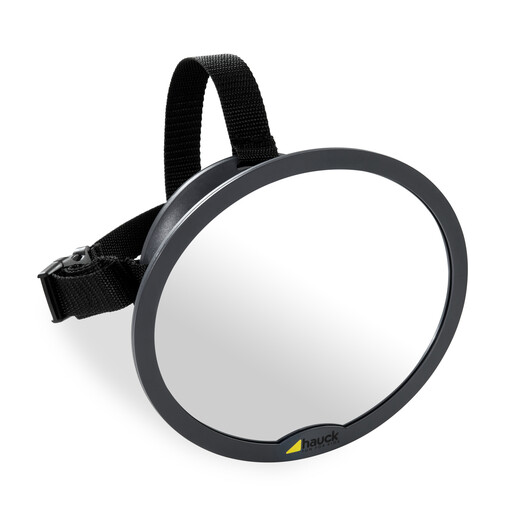
Why this accessory is a great fit: For anyone who uses a rear-facing car seat and doesn't want to miss out on reassuring eye contact with their child, without having to turn around while driving.
This accessory solves the visibility problem of rear-facing seats without compromising safety. Instead of switching to forward-facing too early for convenience, it enables safer, extended use of the rear-facing position.
Allows the driver to keep an eye on the child via the rearview mirror. The shatterproof material and secure attachment to the headrest are designed for safety within the vehicle's interior.
We have compiled a complete, up-to-date list of products that fully meet these strict selection criteria and German safety regulations.
1. How long should a child travel rear-facing? According to the i-Size (ECE R129) standard, rear-facing transport is legally required until 15 months of age and a height of 76 cm. However, safety organisations recommend keeping children rear-facing for as long as possible, ideally up to the age of 4. This position offers significantly greater protection for the head, neck, and spine in a frontal collision.
2. Will every i-Size car seat with ISOFIX fit in my car? Not necessarily. Although ISOFIX is a standardised system, the geometry of the vehicle's interior (e.g., the slope of the back seat, the position of the anchor points) can vary. Before purchasing, always check the car seat manufacturer's vehicle compatibility list. You can usually find this on the brand's website. Also, ensure your vehicle is equipped with ISOFIX anchors, which is standard in most models manufactured since 2013.
3. Is a car seat with a load leg or a top tether safer? Both systems are designed to minimise the rotational movement of the seat in an impact and are considered equally safe when installed correctly. A load leg braces against the vehicle floor, while a top tether is a strap that connects the top of the seat to an anchor point in the boot or on the back of the rear seatback. The choice depends on the seat model and the vehicle. A 360-degree rotating car seat almost exclusively uses a load leg, as a top tether would obstruct the rotation.