
Lieferung heute & morgen

Qualitätsgarantie

Willkommens-Angebote freischalten: KOSTENLOSE Lieferung | Bis zu 80 % RABATT | Kostenlose 30-Tage-JoyPlus-Testphase
App herunterladen
Choosing the right material is a critical step for the success of any 3D printing project. With the wide variety of available filament types like PLA, PETG, and ABS, deciding which 3D printer filament is right for your needs can be daunting. This guide aims to provide clarity by explaining the properties of the most common materials and presenting a selection of filaments for various applications.
As your Joybuy Product Recommendation Officer, my mission is to provide you with objective and practical information so you can make an informed decision for your next project.
To find the right filament, it's helpful to understand a few basic technical parameters. These criteria determine the printability, the properties of the finished object, and compatibility with your printer.
The choice of material directly depends on the requirements of your printed object.
The most common filament diameter for most desktop 3D printers is 1.75 mm. Crucial for consistent print quality is the diameter tolerance. A low tolerance, for example, ±0.02 mm, ensures a steady material feed, minimises the risk of nozzle clogs, and enables prints with high precision and clean surfaces. Pay attention to this specification from the manufacturer to avoid print failures.
The standard size for filament rolls is the 1 kg spool. This offers great value for money for most hobbyists and professional users. Equally important is the packaging: vacuum-sealed packaging with a desiccant packet protects the filament from moisture, which can significantly degrade print quality.
Here is a curated selection of filaments suitable for different projects and experience levels.

What Makes It Stand Out This PLA filament from ANYCUBIC is engineered for reliability and consistent results. With a precise diameter tolerance of ±0.02 mm, it ensures a smooth material flow and minimises printing issues. The bronze metallic look gives models and prototypes a premium finish.
Advantages
Who Is It For? Ideal for beginners and makers who want to create decorative objects, figures, or prototypes with an appealing look and without complex print settings.

What Makes It Stand Out CaiLab's PETG filament positions itself as a versatile 3D printing material that blends the toughness of ABS with the ease of processing of PLA. It produces glossy surfaces and offers good resistance to oils and common cleaning agents, qualifying it for everyday use.
Advantages
Who Is It For? For advanced users and hobbyists who need to print durable, long-lasting, and functional components that can withstand more stress than standard PLA.
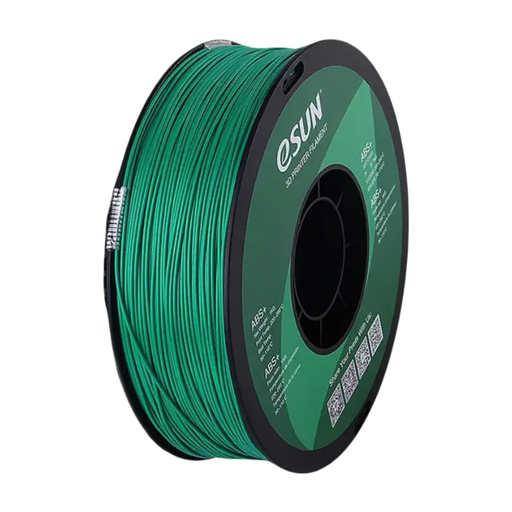
What Makes It Stand Out eSUN ABS+ is an enhanced version of standard ABS, designed to reduce common issues like cracking and warping on large objects. It offers the mechanical advantages of ABS—high strength, toughness, and heat resistance—while providing improved printing stability.
Advantages
Who Is It For? For professional users, engineers, and experienced makers who need high-stress, functional parts for mechanical engineering, the automotive industry, or outdoor applications. Important: Printing should be done in a well-ventilated area.
Haven't found the right material for your project yet? Discover a wider variety of colours and material types in our comprehensive category.
1. What is the difference between PLA and PETG filament? The main difference lies in their mechanical and thermal properties. PLA filament is stiffer and more brittle but very easy to print. It is well-suited for visual models. PETG filament is more flexible, impact-resistant, and temperature-tolerant. It is the better choice for functional parts that need to withstand a certain amount of stress.
2. Which filament is suitable for beginners? PLA filament is generally recommended for beginners. It is forgiving of minor printing errors, has a low tendency to warp, and adheres well to most print bed surfaces, often without heating. This leads to a higher success rate and less frustration during initial printing attempts.