
Lieferung heute & morgen

Qualitätsgarantie

Willkommens-Angebote freischalten: KOSTENLOSE Lieferung | Bis zu 80 % RABATT | Kostenlose 30-Tage-JoyPlus-Testphase
App herunterladen
For professionals in product design, dental technology, or small-batch manufacturing, choosing the right 3D printer is a critical investment. However, the market is saturated with marketing promises that often obscure more than they clarify. Many users invest in a device only to find it fails to meet the demands of precision, speed, and reliability in their day-to-day workflow. This guide will help you understand the key parameters and avoid common purchasing pitfalls, ensuring your next acquisition actually boosts your productivity.
Before being swayed by high resolution figures and speed claims, it's crucial to understand the pitfalls that often lead to disappointment and hidden costs.
To make an informed decision, you should focus on objective, verifiable technical specifications that directly impact your work output.
The "14K" specification refers to the number of pixels on the LCD screen. More important, however, is the XY resolution, which indicates the size of the smallest printable dot. For applications like a 3D printer for a dental lab or in jewellery making, an XY resolution in the range of 16–25 ?m is required to ensure the finest details and smooth surfaces. The Anycubic Photon Mono M7 Pro 14K Resin 3D Printer, for example, offers a resolution of 16.8 × 24.8 ?m on a generous 10.1-inch display. This allows for the creation of high-precision models without compromising on build volume.
A fast resin 3D printer is distinguished not only by a high maximum print speed but also by a seamless workflow. Look for the following features:
For manufacturing large prototypes or the parallel production of multiple smaller parts, a sufficient build volume is crucial. A volume of around 6.5 litres (e.g., 223 × 126 × 230 mm) is a good benchmark for professional desktop applications. At least as important is the mechanical stability of the Z-axis. Dual linear rails with a precision of 10 ?m minimise vibrations and so-called "Z-wobble," leading to more uniform layers and more dimensionally accurate prints for tall objects.
Based on the criteria above, we have compiled a selection of printers suitable for specific requirement profiles.
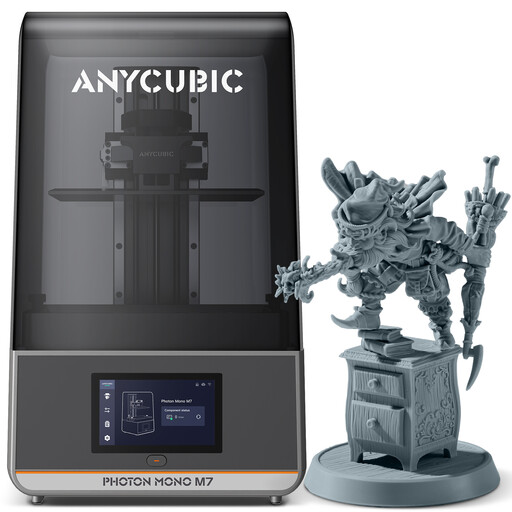
Why It's a Match: Ideal for users who need professional 14K resolution and high speed but can forgo fully automatic convenience features like a heater and resin auto-fill to save on costs. Perfect for prototyping and small-batch production where the printing process can be monitored.
Delivers true 14K resolution on a practical build volume, thus avoiding the pitfall of high resolution on a tiny area. The high speed is achievable but requires the deliberate use of high-speed resin.
A balanced ratio of professional resolution (16.8 × 24.8 ?m) and high print speed (up to 150 mm/h according to the manufacturer) at a more accessible price point.
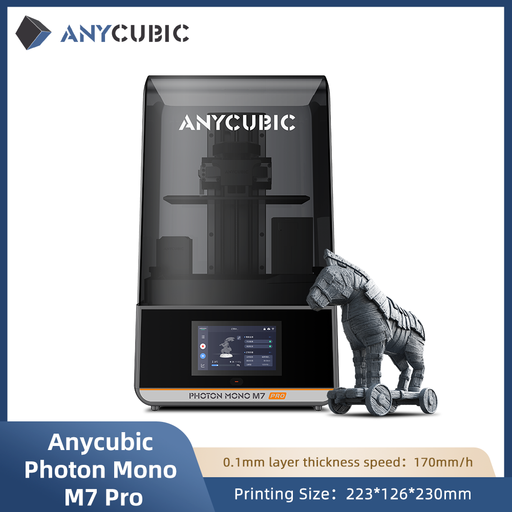
Why It's a Match: This model is engineered for maximum productivity and reliability. The combination of 14K resolution, high speed, and crucial automation features like a heater and automatic resin feeding is ideal for commercial environments where time and consistent quality are critical.
Directly solves the pitfall of workflow inefficiency with its intelligent assistance systems. Temperature control and automatic resin management enable largely unattended and reliable operation.
Maximised productivity through automation and consistently high print quality thanks to dynamic temperature control. When you buy the Anycubic M7 Pro, you invest in a streamlined manufacturing process.
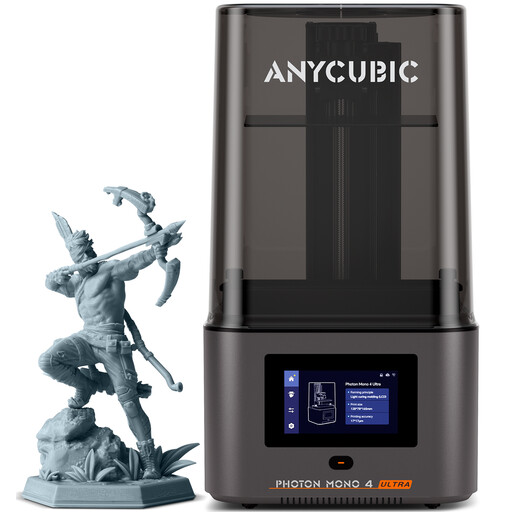
Why It's a Match: Offers a cost-effective entry point into high-resolution 3D printing. With 10K resolution and an extremely fine XY accuracy of 17x17 ?m, it's ideal for users printing smaller, detailed objects like miniatures or jewellery prototypes who don't require a large build volume.
Sets realistic expectations for build volume and speed but delivers outstanding detail accuracy for its price class. It avoids the disappointment often caused by budget printers with low resolution.
Outstanding resolution (17x17 ?m pixel size) in a compact and affordable package, enabling entry into professional-level detail printing.
We've compiled a complete, up-to-date list of products that fully meet these strict selection criteria and safety regulations.
Is a resin printer with a heater really necessary? For professional and repeatable results, a heater is highly recommended. The viscosity of resin is highly temperature-dependent. An integrated heater, like the one in the Photon Mono M7 Pro, keeps the resin at a constant temperature (e.g., 20–40°C). This ensures consistent resin flow and reliable curing, which significantly reduces the rate of print failures, especially in cooler work environments or when using high-viscosity specialty resins.
What does "levelling-free" mean for a resin printer? "Levelling-free" means the print platform is precision-calibrated at the factory and does not need to be manually adjusted by the user before printing. This saves significant time with every setup and eliminates one of the most common causes of print failures: poor first-layer adhesion due to an uneven platform.
What are the running costs for a 14K resin printer? The running costs are mainly composed of three consumables: