
Lieferung heute & morgen

Qualitätsgarantie

Willkommens-Angebote freischalten: KOSTENLOSE Lieferung | Bis zu 80 % RABATT | Kostenlose 30-Tage-JoyPlus-Testphase
App herunterladen
Choosing the right material is critical to the success of any 3D printing project. An unsuitable or low-quality 3D printer filament can lead to failed prints, clogged nozzles, and poor surface finishes. The goal of this article is to provide clear, practical guidance to help you find the right 3D printing material for your needs. We will introduce various filament types and useful accessories to improve the quality and reliability of your prints.
The market offers a vast selection. To make an informed decision, you should consider a few fundamental criteria.
For many users, especially in the hobbyist space, PLA filament is the go-to choice. Polylactic Acid (PLA) is made from renewable resources like corn starch and is biodegradable. It is known for its ease of use, as it prints at relatively low temperatures and experiences minimal warping as it cools, which simplifies bed adhesion.
PLA+ is an enhanced version of PLA, developed to overcome some of the drawbacks of the standard material. It typically offers greater toughness and impact resistance. This makes PLA+ a great option for functional parts that need to withstand some mechanical stress.
The most common standard for desktop 3D printers is a filament diameter of 1.75mm filament. Crucial for a smooth printing process is dimensional accuracy—the consistency of this diameter along the entire length of the spool. Significant deviations can lead to uneven extrusion and, in the worst case, nozzle clogs. Pay attention to the manufacturer's specifications for diameter tolerances; low values (e.g., ±0.02 mm) are an indicator of high manufacturing quality.
Many filaments, particularly PLA, PETG, and Nylon, are hygroscopic. This means they absorb moisture from the ambient air. Damp filament leads to a range of printing problems, including bubbling, stringing, oozing, brittle prints, and a rough surface finish. Proper storage in airtight containers with desiccant is therefore essential. For optimal results, especially with demanding materials, using a dedicated filament dryer is recommended. Such a filament dry box heats the material in a controlled manner to remove stored moisture and keep print quality consistently high.
Here is a selection of products that can be considered for various projects due to their specific properties and applications.
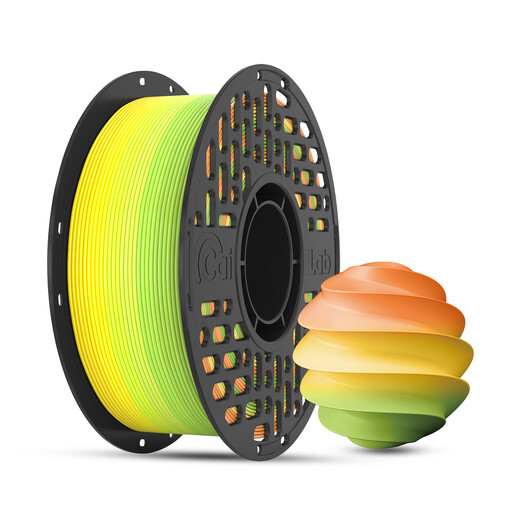
Why It Stands Out: This filament offers a smooth colour gradient, allowing you to print objects with a unique visual effect without having to change materials.
Pros:
Who It's For: Creative users, artists, and hobbyists who want to produce decorative objects, toys, or models with a special visual flair.
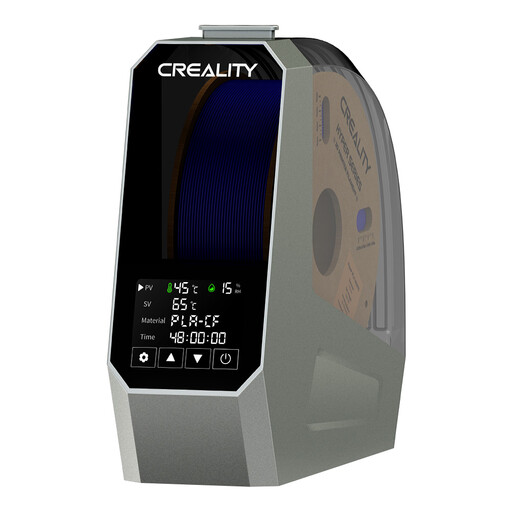
Why It Stands Out: This filament dryer is an advanced solution for conditioning 3D printing materials. It uses 360° hot-air heating and allows you to set the temperature and time for various filament types.
Pros:
Who It's For: Users who regularly work with moisture-sensitive materials like Nylon, PETG, or ABS, as well as quality-conscious PLA users aiming for maximum print reliability.
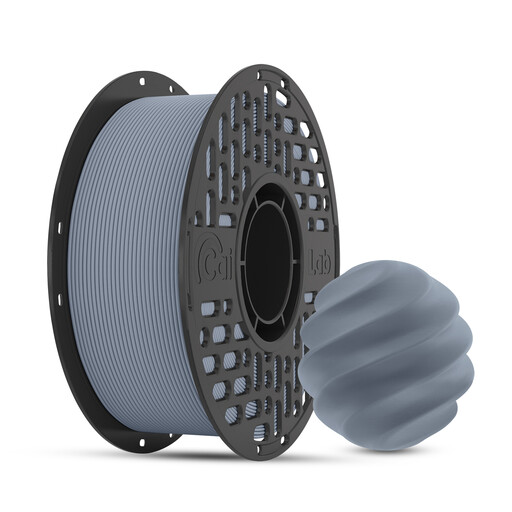
Why It Stands Out: The matte surface finish of this PLA filament reduces reflections and can help minimize the visibility of layer lines. The result is prints with a professional, high-end look.
Pros:
Who It's For: Designers, architects, and makers who want to create prototypes, models, or art objects with an elegant, non-plastic aesthetic.
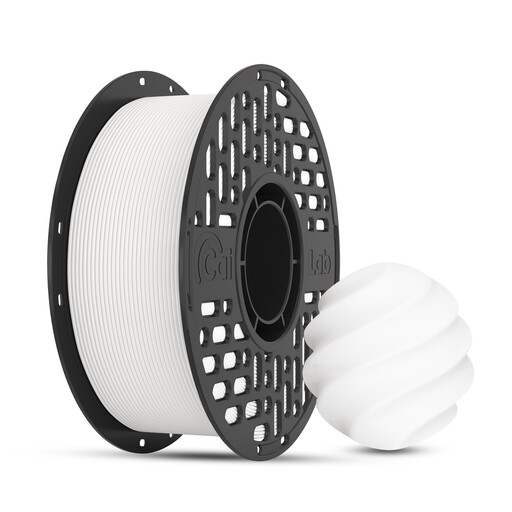
Why It Stands Out: This PLA+ filament combines the easy printability of PLA with improved mechanical strength. It's a great choice for parts that need to withstand more stress than purely decorative objects.
Pros:
Who It's For: Users printing functional prototypes, enclosures, brackets, or other mechanical parts that require greater strength.
The selection presented here covers common use cases. However, if you are looking for other materials, colours, or specific accessories, you can find additional options in our broader product category.
? Discover more products in the Computers and Printers category
1. How should you store 3D printer filament correctly? Filament should always be stored in a cool, dry place away from direct sunlight. The best options are resealable bags or airtight plastic containers along with silica gel packets to absorb moisture. For optimal results, especially with hygroscopic materials, a filament dry box is recommended.
2. What is the difference between PLA and PLA+ filament? Both materials are easy to print. The main difference lies in their mechanical properties. PLA+ is a modified version that typically has higher impact resistance and strength than standard PLA. It is less brittle, making it better suited for functional parts, while standard PLA is ideal for decorative objects and prototypes without mechanical stress.
3. Can any 1.75mm filament be used with any printer? Most desktop FDM 3D printers are designed to use 1.75mm filament. As long as the printer supports this diameter, the filament is generally compatible. However, it is important to follow the printing settings recommended by the filament manufacturer (such as nozzle and bed temperature) and adjust them accordingly in your slicer software to achieve optimal results.