
Lieferung heute & morgen

Qualitätsgarantie

Willkommens-Angebote freischalten: KOSTENLOSE Lieferung | Bis zu 80 % RABATT | Kostenlose 30-Tage-JoyPlus-Testphase
App herunterladen
Choosing the right 3D printer filament can be a challenge given the vast array of materials, brands, and specifications. Whether you want to create detailed prototypes, functional components, or simple hobby projects, the right material is critical for printing success. Beginners often face the question of whether to start with user-friendly PLA filament or venture directly into a technical filament like ABS.
As your Joybuy Product Recommendation Officer, my job is to offer you clear and objective guidance. This guide will help you understand the properties of different filaments and make an informed decision the next time you buy filament.
To find the right material for your project, there are a few basic criteria to consider. These will help you narrow down your options and avoid print failures.
The two most common materials for FDM 3D printing are PLA and ABS. Their properties largely determine the application of the printed object.
Most common 3D printers use 1.75mm filament. However, the key to consistent and trouble-free extrusion is the diameter tolerance. A tight tolerance, such as ±0.02 mm, ensures that the filament is fed smoothly through the extruder. This reduces the risk of clogging and results in more uniform layer deposition, leading to higher print quality.
The standard size for filament spools is the 1kg 3D filament roll. This quantity offers good value for money for most projects. Be sure to store your filament correctly. Many plastics, especially PLA, are hygroscopic, meaning they absorb moisture from the air. Dry and cool storage, ideally in a resealable bag with a desiccant, preserves material quality and prevents brittle filament that can lead to print failures.
Based on material properties, applications, and user feedback, we have compiled a selection of filaments that cover a range of needs.
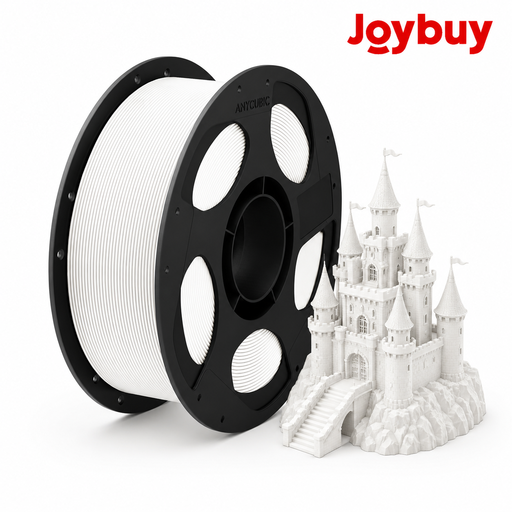
Why It Stands Out The ANYCUBIC PLA Filament is designed for reliability and ease of use. With a very tight diameter tolerance of just ±0.02 mm, it ensures a smooth and consistent material flow, which significantly reduces the risk of print failures.
Pros
Who Is It For? This filament is an excellent choice for beginners and hobbyists. It's perfect for creating detailed models, figures, and prototypes where high visual quality is a priority.
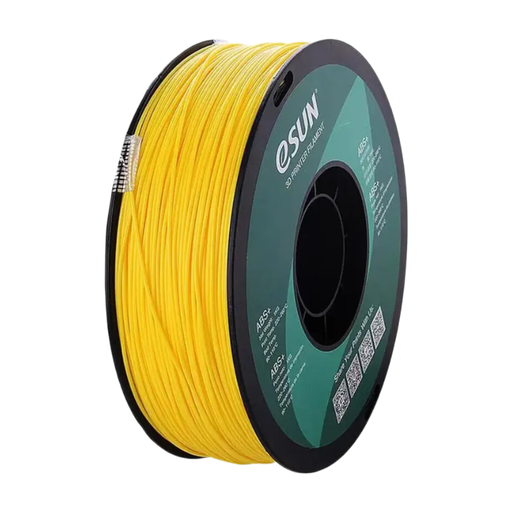
Why It Stands Out The eSUN ABS+ Filament is an enhancement of standard ABS. According to the manufacturer, the formula has been optimised to reduce the warping typical of ABS and improve print bed adhesion. This makes the printing process more accessible without sacrificing the mechanical advantages of ABS.
Pros
Who Is It For? This filament is aimed at advanced users who need functional and robust components. It is ideal for users looking to upgrade from PLA to a more resilient material but are hesitant about the challenges of conventional ABS.
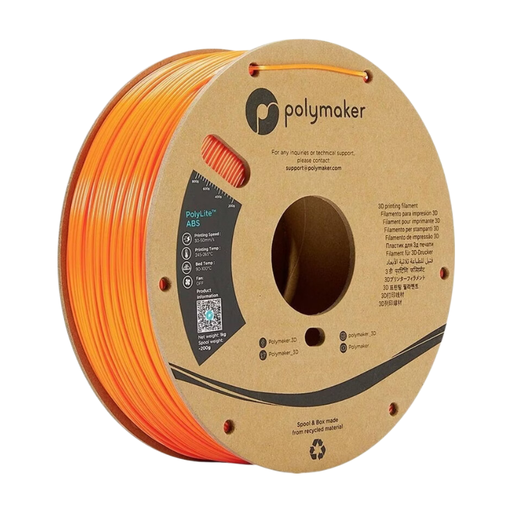
Why It Stands Out The Polymaker PolyLite ABS was specifically engineered to significantly reduce odour during printing. According to Polymaker, it uses a specially polymerised ABS resin that releases significantly fewer volatile compounds. This, combined with high impact and temperature resistance, makes it a practical solution for demanding applications.
Pros
Who Is It For? This filament is ideal for professional users and ambitious makers printing in environments like offices or smaller workshops where strong odours are undesirable. It is excellently suited for producing durable and heat-resistant functional parts.
The world of filaments is diverse, offering much more than just PLA and ABS. For projects requiring extreme strength or special visual properties, specialty materials are available. For instance, if you're looking for high-strength composite materials, a carbon fibre-reinforced material could be the right choice.
Explore more options like our black carbon fibre filament and find the perfect material for your next challenging project.
1. Which filament is suitable for beginners?PLA filament is generally recommended for beginners. It is easy to print, as it doesn't require high temperatures or a heated print bed and has a low tendency to warp. It's a very forgiving material and delivers good results quickly, making it ideal for taking your first steps in 3D printing.
2. How do I store 3D printer filament correctly? Filament should always be stored in a cool, dry place, protected from UV light. Many materials, especially PLA and PETG, absorb moisture from the air, which makes them brittle and degrades print quality. Storing it in an airtight container or bag along with a desiccant (silica gel) is an effective method to preserve the material's properties.
3. Can I use any 1.75mm filament for my printer? Most desktop FDM 3D printers are designed for 1.75mm filament. However, it's always wise to check your printer's specifications, as some models use other diameters (e.g., 2.85 mm). Also, consider the filament manufacturer's temperature recommendations for the nozzle and print bed to ensure compatibility with your machine.