Lieferung heute & morgen

Qualitätsgarantie

Willkommens-Angebote freischalten: KOSTENLOSE Lieferung | Bis zu 80 % RABATT | Kostenlose 30-Tage-JoyPlus-Testphase
App herunterladen
There is a quiet satisfaction that comes from repairing a cherished object. The handle of a favourite mug gives way after years of use. Instead of discarding the piece, the impulse is to create a solution—one that fits precisely and restores function. This process, transforming a digital idea into a tangible, useful object, is the heart of domestic additive manufacturing. It is a deliberate departure from throwaway culture and a turn towards thoughtful problem-solving. The tool for this transformation is not just the printer itself, but just as fundamentally, the material from which new forms emerge: 3D printer filament.
The choice of filament is a decision that goes far beyond mere colour. It determines the physical properties, the feel, and the longevity of the printed object. Two of the most fundamental materials for Fused Deposition Modeling (FDM) printing are PLA and PETG. They form the basis for a wide spectrum of applications, from decorative designs to functional prototypes.
PLA (Polylactic Acid) is often the starting point for many users. It is derived from renewable resources like corn starch and is known for its ease of use. It is less prone to warping during printing and, in many cases, does not require a heated print bed. These characteristics make it an ideal filament for beginners. Objects made from PLA exhibit high surface hardness and detail fidelity, making them perfect for visual models, figures, and prototypes where aesthetic quality is paramount. The standard diameter of 1.75mm PLA filament ensures broad compatibility with most common printer models.
In contrast, PETG filament (Polyethylene Terephthalate Glycol) is a material known for its robustness and flexibility. It combines higher impact resistance with better heat and chemical resistance compared to standard PLA. These properties make PETG ideal for producing mechanical parts, protective casings, or objects subjected to repeated stress. The printing process requires a bit more attention to settings, but the result is functional parts with remarkable durability.
Regardless of the chosen polymer, the consistency of the material is crucial for a smooth creative process. A precision-manufactured 1kg spool of filament with tight diameter tolerances prevents nozzle clogs and ensures uniform extrusion. This is not just a technical specification but the foundation for a calm and predictable workflow that minimises frustration and keeps the focus on design.
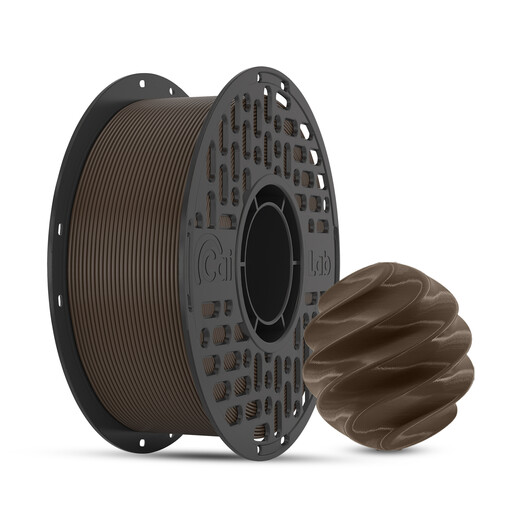
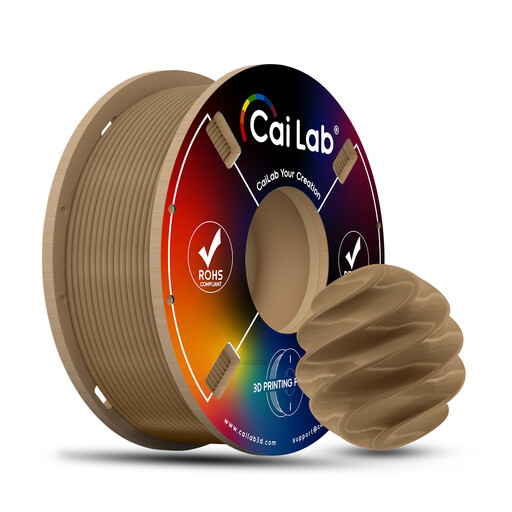
Material selection is an integral part of the design process. For objects whose purpose is primarily aesthetic, special filaments offer expanded design possibilities. A Silk PLA, for example, gives surfaces a subtle, light-reflecting sheen that accentuates an object's form. A simple vase or a geometric sculpture gains an almost metallic quality from a material like the CAILAB PLA Silk 3D Printer Filament in Brown Copper, without sacrificing the ease of printing associated with PLA. Likewise, coloured filament allows for the direct implementation of colour concepts without subsequent painting. A bold tone, like that found in the JOYBUY x ANYCUBIC PLA Basic Printing Filament in Red, can lend a deliberate accent to a functional object.
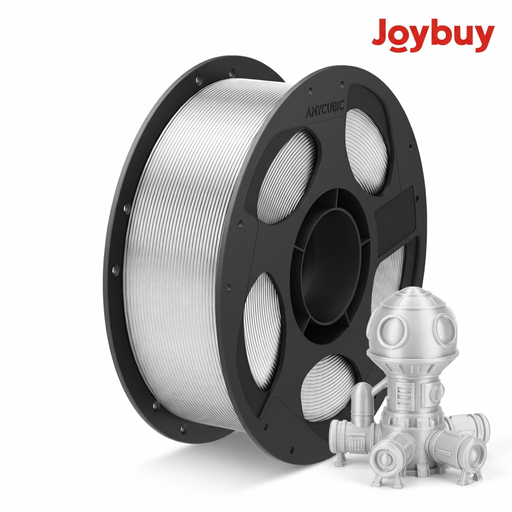
For projects where reliability and repeatability are paramount, choosing an established material is advantageous. Brands like Anycubic or Creality have specialised in producing filaments known for their consistent quality. A material like the JOYBUY x ANYCUBIC PLA Basic Printing Filament in Bronze not only offers an appealing look but also a low diameter tolerance of ±0.02 mm, which contributes to a stable printing process. The same applies to the Creality Hyper PLA Brown Filament, which is optimised for a wide range of printing speeds, thus offering flexibility for various projects.
When function extends beyond pure form, material choice becomes even more specific. For a replacement part used outdoors, or for an organiser that sees daily use, the resilience of PETG is a considered choice. The CAILAB 3D Printer Filament PETG in Orange not only delivers the necessary toughness and temperature resistance but also sends a clear visual signal with its colour. The decision for such a material is a conscious balance between the object's requirements and the material's properties—a dialogue between idea and matter.
For those looking to explore an expanded selection of materials with thoughtful properties, the directory for Brown PLA offers further inspiration.