
Lieferung heute & morgen

Qualitätsgarantie

Willkommens-Angebote freischalten: KOSTENLOSE Lieferung | Bis zu 80 % RABATT | Kostenlose 30-Tage-JoyPlus-Testphase
App herunterladen
The world of 3D puzzles is more fascinating and diverse than ever. From detailed replicas of famous buildings to intricate mechanical puzzles, the selection can be overwhelming. However, not every model that looks impressive on the box lives up to its promise in practice. Many buyers are left frustrated by unstable constructions, misleading difficulty levels, or poorly fitting pieces.
As your Joybuy Product Recommendation Officer, I'm here to help you identify the common pitfalls. This guide will show you which objective criteria to focus on to find a 3D puzzle that truly meets your expectations—whether as a challenging hobby for adults, a decorative object, or an educational toy for developing a child's motor skills.
Before we dive into the selection criteria, let's look at three common problems that can lead to disappointment:
To avoid buyer's remorse, you should focus on a few fundamental technical parameters. These provide a more reliable indication of quality than marketing promises alone.
The material is crucial for the tactile feel, stability, and longevity of the finished model. The most common materials are:
Not every 3D puzzle is a classic interlocking puzzle. The product type largely determines its primary purpose:
The manufacturer's age recommendation is a starting point. However, for a realistic assessment, you should consider other factors: the total number of pieces, the complexity of the instructions (numbered parts vs. purely visual guides), and the required fine motor skills. A 100-piece puzzle might be simple for an adult but a significant challenge for a child.
To make your decision easier, we have matched some products from our range to different user profiles.

Why This Fits Their Persona: Ideal for children aged 3 and up to be playfully introduced to geometric shapes and three-dimensional construction. The open-ended play concept fosters creativity without the frustration of rigid instructions.
This set bypasses the "limited functionality" pitfall. As a construction toy, it offers unlimited replay value and doesn't become uninteresting after a single build.
Promotes STEM skills like spatial reasoning and fine motor control. The magnets are securely welded inside the ABS plastic, and the pieces are compatible with other 5.5 cm magnetic systems.
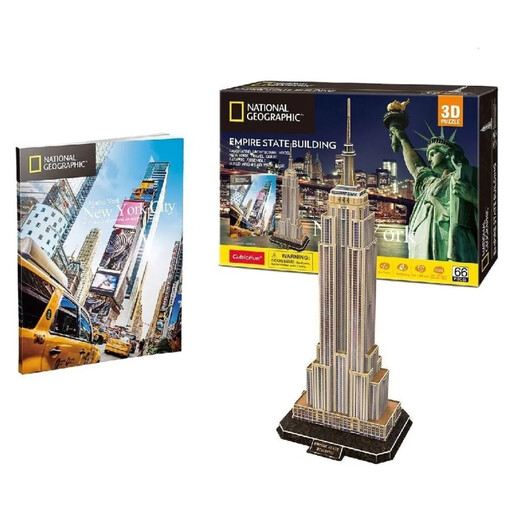
Why This Fits Their Persona: Perfect for hobbyists and adults who want to create an impressive, 66 cm tall model of an iconic landmark to display as a decorative piece in their living room or office.
This model avoids the "poor material stability" trap. The combination of die-cut cardboard and wooden elements ensures a robust and stable final construction.
The 66 numbered individual pieces allow for straightforward assembly without tools or glue. The finished model is a detailed and eye-catching showpiece.
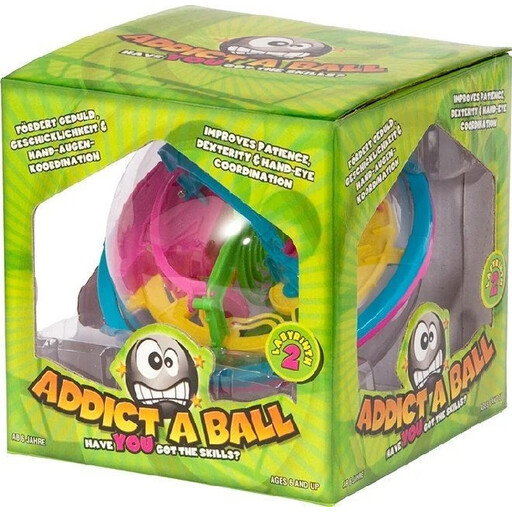
Why This Fits Their Persona: For anyone seeking a repeatable challenge that trains dexterity, concentration, and patience. It's a captivating game for short breaks, equally engaging for children and adults.
This product is the direct answer to the "limited utility" pitfall. As a repeatable skill puzzle, it offers long-lasting engagement far beyond a one-time assembly.
Features 100 sequential stages for a progressive difficulty curve. Its compact 14 cm size makes it a portable brain trainer for on-the-go.
We have compiled a complete, up-to-date list of products that fully meet these strict selection criteria and all relevant safety standards.
The appropriate age varies greatly depending on the product type. Simple magnetic building blocks or interlocking puzzles with large pieces are often suitable for children as young as 3. In contrast, more complex architectural models or intricate wooden kits are aimed at teenagers aged 10-14 and older, as well as adults. Always check the manufacturer's age recommendation on the packaging and in the product description.
No, many modern 3D puzzles are designed to be assembled without any glue. In particular, plastic puzzles with click-in systems (like Ravensburger's Easyclick Technology) or precisely cut foam models offer high stability just from interlocking the pieces. For some wooden models, glue may be recommended as an option to increase long-term durability. A quick look at the product description will clarify this beforehand.
Cleaning should be done carefully to avoid damaging the model. For all materials, use a soft, dry brush or a dry microfiber cloth to remove dust. Avoid liquid cleaners or water, as they can cause cardboard and wood to swell and may damage printed details. For pure plastic models, a lightly damp cloth can be used to remove fingerprints.