
Lieferung heute & morgen

Qualitätsgarantie

Willkommens-Angebote freischalten: KOSTENLOSE Lieferung | Bis zu 80 % RABATT | Kostenlose 30-Tage-JoyPlus-Testphase
App herunterladen
A 3D puzzle combines traditional assembly with spatial thinking. Depending on the design, you can create an animal model, a building, a mechanical model or a decorative object. However, there is a wide choice available, and product images do not always provide a complete picture of what the finished build is actually like.
Before buying, you should therefore check three common pitfalls:
A 3D puzzle for children should be suitable for the stated age group. The age recommendation typically takes into account the size of the components, the complexity of the instructions and the care needed when handling small elements. For the products featured here, the recommendation is from 8 or from 14 years, depending on the model.
Small parts pose a choking risk for children under three. Younger children within the recommended age range may also benefit from adult supervision, particularly when sorting the pieces and completing delicate construction steps. The safety instructions provided by the respective manufacturer should always be followed.
A 3D paper puzzle or a model made from coated card can often be assembled without glue or tools. This reduces preparation time, but requires care when removing and connecting the pieces. EPS foam boards are lightweight and can be suitable for larger architectural models.
A 3D wooden puzzle generally consists of sturdier components and may include additional mechanical parts for more complex constructions. You should therefore check whether a USB connection, batteries or manual assembly only are required. In the Robotime model described here, the motor is powered via a 5-V USB connection; according to the product information, batteries are not required.
The dimensions of the completed model are more important than the size of the packaging. A 3D building puzzle with a tall structure, for example, needs a stable position and sufficient clearance from edges. If you are choosing a puzzle as decoration, you should also consider protection from dust, moisture and direct sunlight.
Models with a clearly defined base are practical for display cabinets or shelves. Moving models, on the other hand, need additional free space so that balls, gears and other components can operate without obstruction.
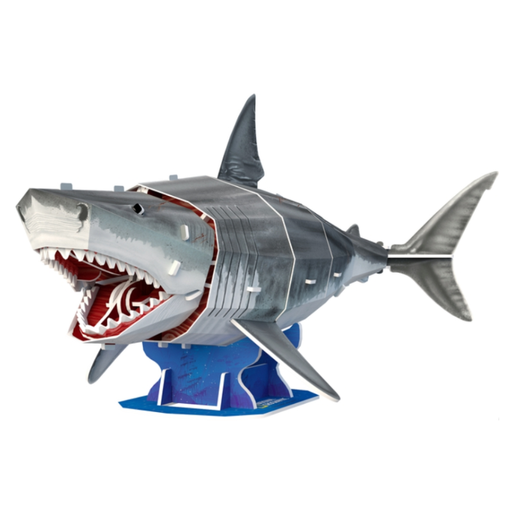
Why this product suits this profile: Designed for children aged 8 and over, this model offers an approachable introduction to building in three dimensions with its 72 pieces. The shark design is ideal for children's bedrooms, family activities or a themed collection.
The number of pieces, dimensions of 38 × 13,2 × 14,7 cm and manual assembly are clearly specified. No batteries or tools are required either.
72 pieces, card as the main material, tool-free assembly and a recommended age of 8 and over.
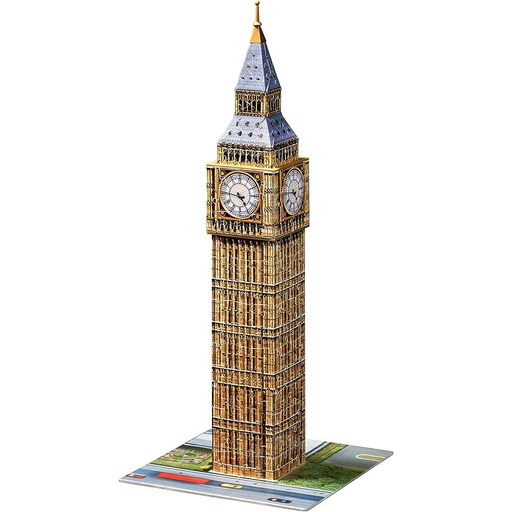
Why this product suits this profile: This landmarks puzzle recreates London's clock tower in miniature, using 216 numbered plastic pieces plus accessories. The instructions are available in several languages, including German.
Easy-Click technology is specified as the assembly system. The pieces connect without glue and can be sorted by number.
216 pieces, no glue, multilingual instructions and a completed model measuring 6 × 6 cm according to the product information.

Why this product suits this profile: This model is designed for teenagers and adults aged 14 and over. It combines a 3D wooden puzzle with a marble run, gears, switches, LED lighting and a USB-powered motor.
The functionality is clearly described: manual use or motor operation via USB. This makes it easier to decide before buying whether you are looking for a purely decorative model or a mechanical 3D puzzle.
Wood, ABS plastic and metal components; dimensions of 31,2 × 25,1 × 23 cm; USB cable included.
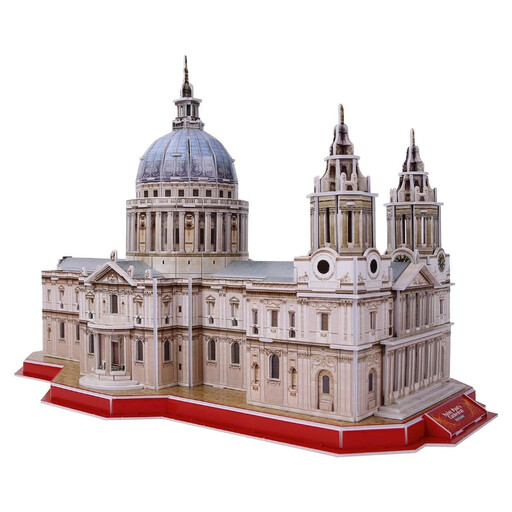
Why this product suits this profile: This 3D building puzzle consists of 131 pre-cut EPS foam boards and depicts St. Paul's Cathedral. Measuring 40,5 × 22,5 × 27 cm, it is easy to plan as a display model.
The material, number of pieces, dimensions and recommended age of 10 and over are specified. Assembly is manual and requires no additional tools.
131 pre-cut pieces, photo booklet, no batteries and a model designed for shared building and learning activities.
We have put together a complete, regularly updated list of products that fully meet these strict selection criteria and the safety regulations applicable in the EU.
The difficulty level depends on more than just the number of pieces. The shape of the pieces, numbering, instructions, material and additional functions all play a part. A model with an Easy-Click system and numbered pieces can make getting started easier. A mechanical 3D puzzle with gears, a marble run and a motor, on the other hand, requires more time and concentration.
Assembly time varies depending on the model and your experience. An assembly time of around 120 to 220 minutes is stated for the Empire State Building. For architectural models with lots of pieces, you should set aside a well-lit, uncluttered work surface and sort the components in advance.
Place the model on a stable, dry surface and protect it from high humidity and direct sunlight. Card, EPS foam and wood should not be immersed in water. Dust can generally be removed with a soft, dry cloth. For moving models, it is also advisable to check the tracks, gears and connections regularly.