
Lieferung heute & morgen

Qualitätsgarantie

Willkommens-Angebote freischalten: KOSTENLOSE Lieferung | Bis zu 80 % RABATT | Kostenlose 30-Tage-JoyPlus-Testphase
App herunterladen
3D wall panels represent a modern solution for modifying the visual texture and acoustic properties of interior spaces. Their three-dimensional surface design creates light and shadow effects, lending depth and character to walls. Simultaneously, depending on the material and construction, they can help reduce reverberation and improve speech clarity. This article analyses the technical criteria relevant to selecting 3D wall panels and presents specific product configurations.
The decision for a specific wall panel should be based on an analysis of material, function, and the intended application.
The material composition is a primary determinant of the panels' functional properties and aesthetics.
Wood Composites and Felt: This combination is frequently used for wood-look acoustic panels. The base often consists of a backing board made from recycled PET felt, a material with high sound-absorbing properties. Mounted on this are slats made of MDF (medium-density fibreboard) with a real wood veneer or a wood-effect finish. This construction refracts and absorbs sound waves, which reduces reverberation in the room. Such panels are suitable for environments where a warm, natural aesthetic and optimised room acoustics are required.
PVC (Polyvinyl Chloride): Panels made from PVC are known for their durability, light weight, and water resistance. The material can be moulded into a wide variety of geometric and organic shapes, allowing for significant design freedom. PVC panels are impervious to moisture and easy to clean. This makes them a practical option for areas with specific hygiene requirements or for creative DIY wall cladding in residential spaces.
Beyond pure aesthetics, 3D panels fulfil specific technical functions.
Acoustic Wall Treatment: The term soundproofing is often used incorrectly in this context. Acoustic panels primarily serve to absorb sound within a room, not to block sound transmission from the outside (soundproofing). They reduce reverberation (reverb) by converting sound energy into heat. This results in clearer acoustics and better speech intelligibility, which is particularly beneficial in offices, home cinemas, or recording studios. Effectiveness is determined by the material density (e.g., of the felt) and the slat structure.
Modern Wall Cladding: The three-dimensional structure is the core feature of modern wall cladding. The raised surface creates dynamic patterns that change with the light. This can be used to create accent walls in a living room with wall panels, visually elongate hallways, or highlight ceiling areas.
Installation is a crucial factor for practical implementation.
Installation Methods: The most common methods are bonding with a construction adhesive or screwing onto a wooden batten framework. Screwing offers the advantage of creating a cavity behind the panels, which can be filled with additional insulation material to enhance the sound-absorbing effect. Many products are designed as DIY wall cladding and can be cut to size and installed using standard tools.
Ceiling Panels: Many panels designed for walls can also be used as ceiling panels. This is particularly effective for improving room acoustics, as the ceiling is a large, unused reflective surface. Lightweight materials like PVC or acoustic panels with a felt backing are well-suited for this purpose.
The following products have been selected for their specific material properties and functional design.
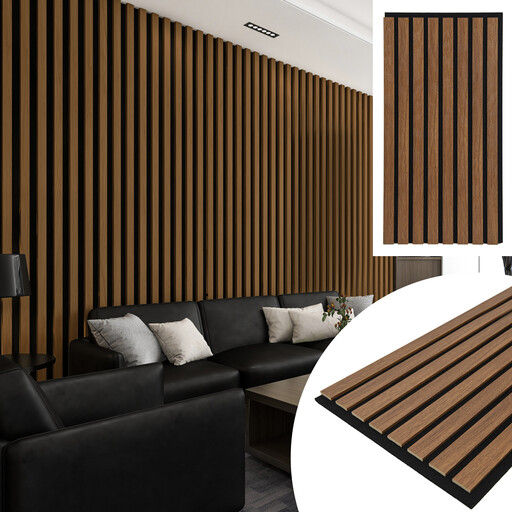
Why We Recommend This Product: This panel combines an aesthetic wood-look acoustic panel design with functional sound absorption. The construction consists of slats with a walnut veneer on a black MDF backer, which are mounted on a 9 mm thick, sound-absorbing felt made from recycled material. This multi-layered construction is engineered to effectively diffuse and absorb sound waves.
Pros:
Who It's For: This product is aimed at users who seek a noticeable improvement in the room acoustics of their home office, studio, or living room, while also valuing a high-quality appearance inspired by Scandinavian design.
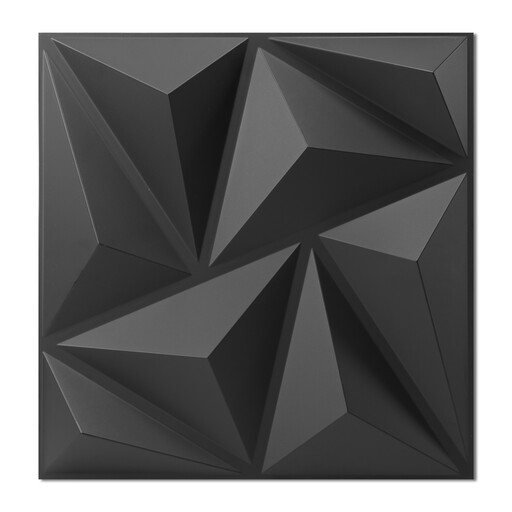
Why We Recommend This Product: These PVC panels are distinguished by their geometric texture and material properties. They offer a cost-effective and straightforward way to create accent walls. The material is waterproof and low-maintenance, which extends its use beyond dry living areas.
Pros:
Who It's For: Ideal for DIY enthusiasts and creative individuals looking for quick and impactful DIY wall cladding. Due to their water resistance, they are also an option for areas with higher humidity, such as near kitchens or in well-ventilated bathrooms, provided there is no direct water exposure.
The products featured represent two different approaches to wall design. While acoustic panels combine function and aesthetics, PVC panels offer maximum creative freedom for DIY projects. For a broader overview of designs and materials specifically conceived for living spaces, it is worth exploring further solutions.
Discover our full range of Living Room Wall Panels for additional inspiration and technical configurations.
1. How are 3D wall panels attached to the wall? Installation is typically done in one of two ways: by direct bonding with a suitable construction adhesive onto a clean, dry, and flat surface, or by screwing them onto a pre-installed wooden batten framework. The screw-on method is particularly recommended for acoustic panels to create a cavity behind the panel for additional insulation.
2. What effect do acoustic panels have on room sound? Acoustic panels improve room acoustics through sound absorption. They reduce reverberation, which is the persistence of sound after the source has stopped. This leads to a "drier" and clearer sound environment. Speech intelligibility is enhanced, and distracting echoes are minimised. They do not provide soundproofing, which is the blocking of sound transmission between rooms.
3. Can 3D panels made of PVC be painted? Yes, PVC panels can typically be painted to match the room's colour scheme. However, it is important to first clean the surface thoroughly and pre-treat it with a special plastic primer. Afterwards, a paint suitable for plastics (e.g., acrylic lacquer) can be applied. It is recommended to follow the panel manufacturer's instructions.