
Lieferung heute & morgen

Qualitätsgarantie

Willkommens-Angebote freischalten: KOSTENLOSE Lieferung | Bis zu 80 % RABATT | Kostenlose 30-Tage-JoyPlus-Testphase
App herunterladen
3D wood slat acoustic panels combine a textured wall finish with a surface that can absorb some of the sound in a room. They’re suitable for home offices, living rooms, conference rooms, podcast areas and music studios, among other spaces. However, it’s important to distinguish between room acoustics and genuine sound insulation: acoustic panels mainly reduce reflections and reverberation within a room. They won’t automatically stop noise travelling through a wall, ceiling or door.
So, don’t choose panels based on wood colour or 3D appearance alone. Size, wall area, backing, installation method and intended use are all important.
Terms such as soundproofing wall panels, “Noise Reduction” and “Sound Absorbing” can describe different properties. A felt backing and slatted design can affect sound reflections in a room. To genuinely reduce noise between two rooms, however, the wall construction, gaps, doors and, where appropriate, additional insulation materials are what matter.
If you want a quieter home office or less echo during video calls, you’re probably looking for a solution to reduce echo. If you want to block out neighbours or traffic noise, you’ll need a structural soundproofing solution.
A set of 4 might sound substantial, but the products featured here cover a total of just 0.72 m². Each panel measures 60 × 30 cm. A set of 20, by contrast, covers 3.6 m². Before buying, measure the wall and allow a little extra for trimming or edge adjustments.
Adhesive options can allow you to install the panels without drilling, but their suitability depends on the wall, adhesive and surface. Removing them from delicate wallpaper or freshly painted walls may leave marks. Screws provide a secure fixing but require drilled holes. If you rent, check the terms of your tenancy agreement and make sure the adhesive system is suitable.
For acoustic panels with felt backing, the backing is an important part of the construction. The options featured here combine an MDF core, a wood-effect surface and an acoustic felt backing. The MDF core helps the panels retain their shape, while the slats create a three-dimensional surface with vertical lines.
The product information also specifies MDF with low VOC content. This is a material specification, not a general guarantee of indoor air quality. If you’re buying for a room where air quality is a particular concern, also check the manufacturer’s information, certifications and ventilation guidance.
A set of 4 may be enough for a small area of wall behind your desk. For a larger wood slat wall covering, studio wall or conference room, a set of 20 is more practical. Depending on your room layout, you can arrange the panels side by side or in separate sections.
Before placing your order, check:
For acoustic panels for a home office, speech clarity and reducing echo are usually the main priorities. In a studio or podcast room, placement matters more: a single decorative feature wall won’t replace a properly planned acoustic treatment. Hard surfaces such as glass, tiles and bare walls can still cause reflections.
For an even effect, place the panels according to the main reflective surfaces, not just their appearance. And if you’re renting, there’s no guarantee that installation will be removable without leaving marks.
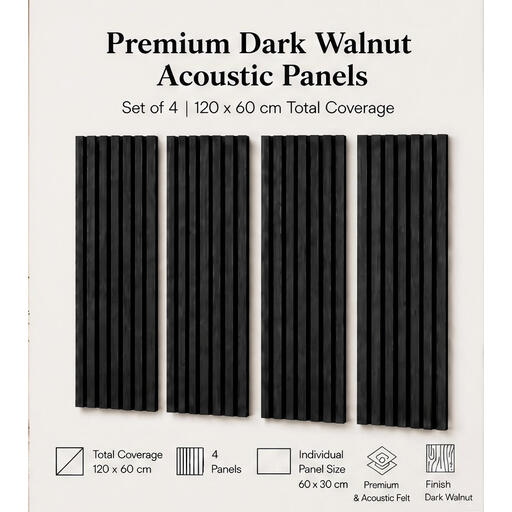
Why it suits this buyer: This compact set is a good fit for a limited wall area in a home office, behind a desk or in a small conversation nook.
The stated coverage of 0.72 m² makes it clear exactly how much you’re buying, helping you avoid overestimating the size of the set.
Four panels, each measuring 60 × 30 cm, with an MDF core, Grey Oak finish and felt backing.
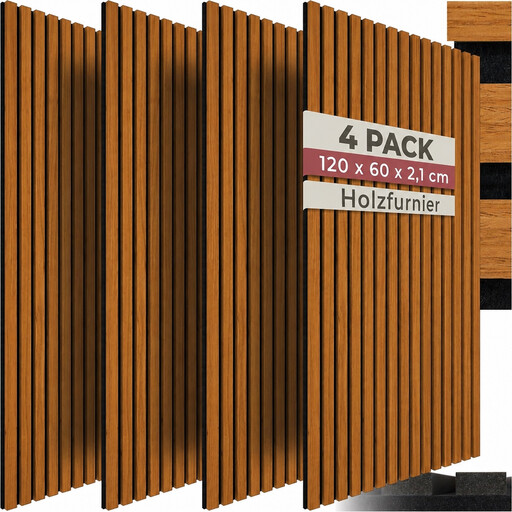
Why it suits this buyer: The walnut finish is ideal if you want to combine an acoustically focused wall design with a warm, dark wood colour.
The combination of MDF, a walnut finish and felt backing is clearly specified, so you don’t have to rely on a vague design description alone.
3D slats, 0.72 m² of coverage and two installation options: adhesive or screws.
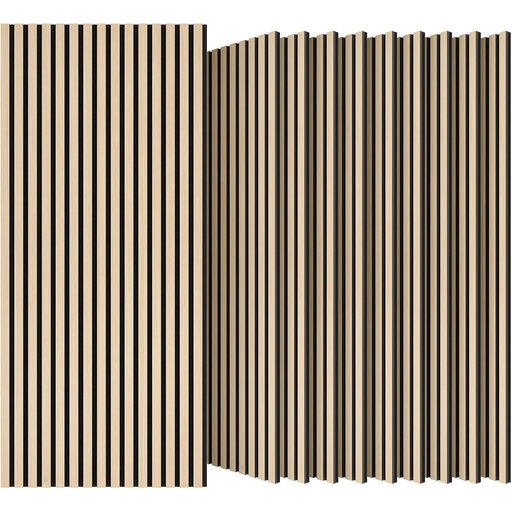
Why it suits this buyer: With 3.6 m² of coverage, this larger set is designed for studios, larger home office areas, conference rooms or feature walls.
The stated dimensions of 600 × 60 cm, or 3.6 m², make it easier to plan your space and reduce the risk of ordering too few panels.
20 individual panels with an oak finish, MDF core and felt backing, ideal for covering a continuous area of wall.
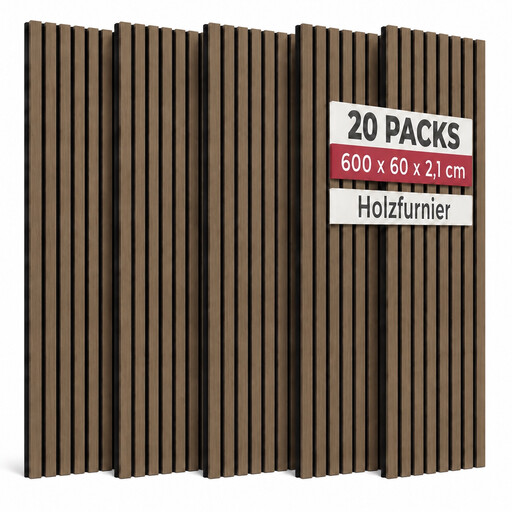
Why it suits this buyer: This set of 20 is suitable for larger areas in a studio, media room, office or living space with a dark wood look.
The clearly stated set size and individual panel dimensions make it easier to compare the area you need to cover with the product’s coverage before you buy.
3.6 m² of coverage, a dark walnut finish and an MDF and felt construction; designed for installation with adhesive or screws.
We’ve put together a complete, regularly updated list of products that meet these strict selection criteria and fully comply with the safety regulations in force in the EU.
Before installation, make sure the wall is dry, clean and as even as possible. If you’re using adhesive, it’s a good idea to test it in an inconspicuous spot first. For screw fixing, you’ll need wall plugs and screws suited to the type of wall; these aren’t automatically included with every set.
Clean the wood-effect surface with a dry or slightly damp, soft cloth. Moisture, harsh cleaning products and vigorous rubbing can damage the finish and felt. The panels’ lifespan also depends on humidity, sunlight, physical wear and the quality of the installation.
They’re primarily designed to improve room acoustics. The slatted design and felt backing can reduce reflections and reverberation within a room. They’re no substitute for structural sound insulation if you want to stop sound travelling through a solid wall, ceiling or door.
It depends on the size of the room, the furniture and the reflective surfaces. A set of 4 covers 0.72 m² for the options mentioned here, while a set of 20 covers 3.6 m². For accurate planning, start by measuring the wall area you want to cover.
Adhesive installation can avoid drilling, but it won’t necessarily leave no marks when removed. The surface, adhesive system and type of wallpaper all affect the result. Before installing the panels, consider your tenancy agreement, the condition of the wall and how you’ll remove them later.