
Lieferung heute & morgen

Qualitätsgarantie

Willkommens-Angebote freischalten: KOSTENLOSE Lieferung | Bis zu 80 % RABATT | Kostenlose 30-Tage-JoyPlus-Testphase
App herunterladen
In professional environments, efficiency critically depends on the ability to quickly locate and prioritise information. Physical documents, from contracts and technical literature to case files, require a precise and reliable marking system. The Post-it Flags 680 series, also known as 3M Marking Strips, presents a specialised solution for this requirement. Unlike conventional paper sticky notes, these Index Tabs are based on a durable polyester film and an adhesive technology designed for repeated repositioning and residue-free removal. This article analyses the technical specifications and applications of the 680 series to provide a basis for an informed decision.
The selection of suitable index flags should be based on objective criteria that account for the specific use case. The following technical parameters are crucial:
The material base determines the durability and professional appearance of a marking strip.
The adhesive used is of central importance for protecting documents.
In an organised system, colours serve not for aesthetics but for functional classification. A well-designed colour-coding system accelerates workflows.
The physical dimensions and surface treatment are relevant for practical application.
Based on the technical criteria mentioned above, we present three variants of the 680 series, each designed for specific organisational needs.
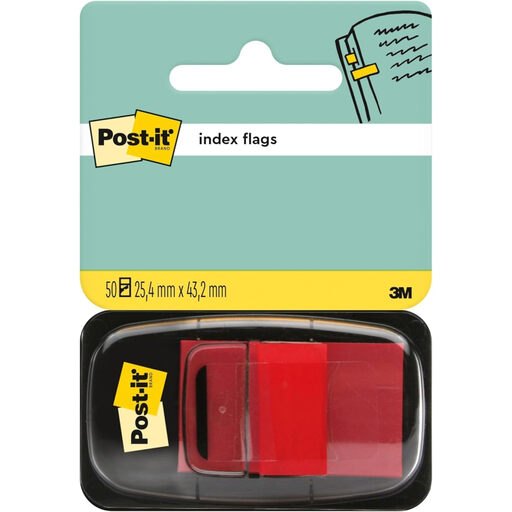
Why we recommend this product: The Post-it 680-1 model, with its red signal colour, is specialised for marking tasks of the highest priority. It acts as a visual stop sign in stacks of documents, immediately drawing attention to required actions such as signatures, corrections, or urgent reviews.
Advantages:
Who it's for: Law firms, notary offices, administrative departments, and editorial offices where documents circulate for approval, signature, or correction.
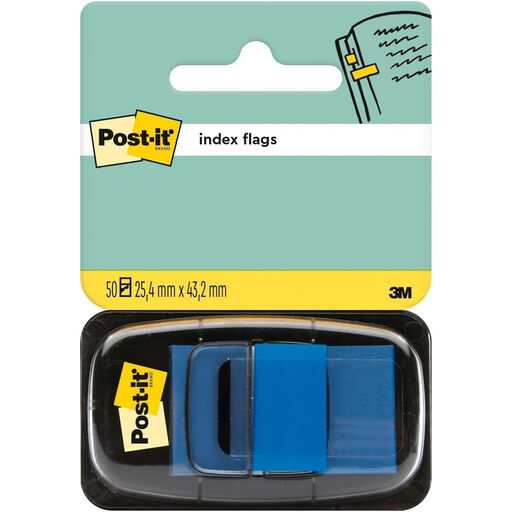
Why we recommend this product: The Post-it 680-2 model in blue is designed for logical organisation and long-term indexing. The colour blue represents information and reference, allowing for a clear separation between pure data points and action-relevant markings.
Advantages:
Who it's for: Researchers, academics, students, and all professionals who need to structure complex documents or extensive reference works and make them quickly navigable.
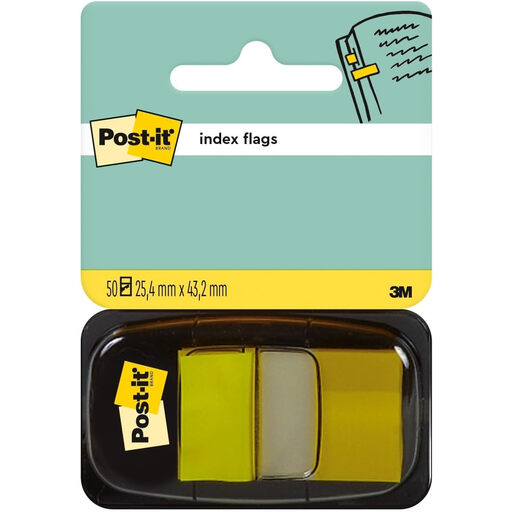
Why we recommend this product: The Post-it 680-5 model in yellow is used for visual prioritisation. The bright yellow colour attracts attention and is excellent for marking important passages, points needing clarification, or interesting sections without implying the urgency of red.
Advantages:
Who it's for: Students working through lecture notes, project managers marking milestones, and anyone who wants to highlight information for later processing or reference.
The Post-it Flags 680 series is highly specialised for indexing and marking. For more comprehensive organisational needs, such as labelling binders, addressing shipments, or marking property, a broader range of solutions may be required. In our main category, you will find a wide selection of Labels and other marking solutions.
1. Are Post-it Flags 680 reusable? Yes, the Post-it adhesive strips are designed to be repositioned multiple times. 3M's special adhesive technology allows them to be removed and reapplied without significant loss of adhesion or leaving residue on the document. However, for permanent indexing, a single placement is recommended.
2. Can you write on the 3M Marking Strips? Yes, the coloured, non-transparent part of the flags has a matte surface specially designed for writing. It can be easily written on with most ballpoint pens and permanent markers to add custom notes or categories.
3. What is the difference between Post-it Flags and conventional Post-it Notes? The main difference lies in the material and the intended application. Post-it Flags are made of a durable polyester film and primarily serve as Index Tabs for marking and referencing. Their adhesive area is transparent so as not to cover text. Post-it Notes, on the other hand, are made of paper and are intended for writing down longer messages or reminders.