
Lieferung heute & morgen

Qualitätsgarantie

Willkommens-Angebote freischalten: KOSTENLOSE Lieferung | Bis zu 80 % RABATT | Kostenlose 30-Tage-JoyPlus-Testphase
App herunterladen
A pop-up gazebo promises quick shelter from sun and rain—ideal for a garden party, festival, or a relaxing afternoon on the patio. But reality often tells a different story: a sudden gust of wind bends the frame, the supposedly waterproof fabric starts dripping through the seams after the first shower, or the roof is faded and brittle after just one summer.
The selection is vast, and many products advertise features that don't hold up in practice. To avoid a bad investment, it's crucial to know the typical weak points and pay attention to the right technical specifications.
Common Pitfalls When Buying a Pop-up Gazebo:
To avoid these problems, you should check three key parameters before buying. These determine the durability, functionality, and safety of your gazebo.
A truly weatherproof 3x3 waterproof gazebo is defined by two features. First, the water column rating, specified in millimetres (mm). This value describes the water pressure the material can withstand before moisture penetrates. For reliable rain protection, a rating of at least 1,500 mm should be the goal. Second, and just as important, are taped or sealed seams. Only when the seams are additionally sealed is the gazebo protected at its weakest points during prolonged rain.
The frame is the skeleton of the gazebo. A foldable garden tent with a robust scissor frame allows for a quick setup gazebo in just a few minutes. Pay attention to the material: powder-coated steel is heavier and often more stable, while aluminium is lighter and rust-proof. However, the crucial factors are the material thickness and the quality of the joints and connecting elements. Sturdy feet that can be anchored to the ground with pegs are essential for stability.
The quality of the roof and side panel material is often indicated in grams per square metre (g/m?). Higher-quality polyester (PES) with a density of 140 g/m? or more is more tear-resistant and durable. A crucial quality feature is the garden tent with UV protection, indicated by the Ultraviolet Protection Factor (UPF). A UPF of 50+ means that less than 2% of UV radiation penetrates the fabric. This not only protects your skin but also the material itself from fading and becoming brittle. A pop-up gazebo in anthracite or other darker colours often provides a naturally higher shade effect.
Based on these objective criteria, we have identified models that are well-suited for specific use cases.
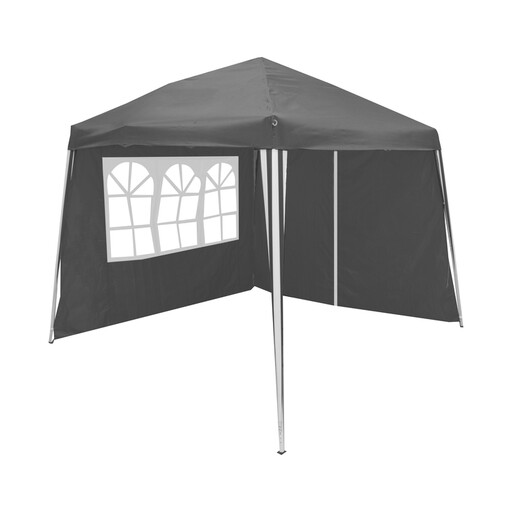
Why this model is a good fit: Ideal for home and garden owners looking for a straightforward and reliable solution for family gatherings or as a patio cover. The standard 3x3 m size and included side panels offer flexible uses for the typical 3x3 party tent.
This model addresses the problem of inadequate protection with a certified UPF 50+ UV protection according to the EN 13561:2015 standard and a robust polyester fabric (140 g/m?), ensuring durability and safety.
Two included side panels for flexible wind and sun protection. The anthracite grey colour (RAL 7016) is modern and less susceptible to showing dirt.
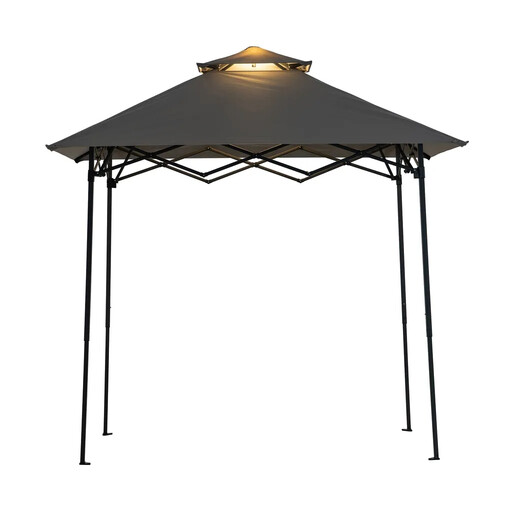
Why this model is a good fit: Perfect for BBQ enthusiasts who need a dedicated, weather-protected grilling area. The slightly more compact size and special features are tailored to this specific use case.
Instead of an unstable standard roof, this model features a double-tiered roof design. This provides excellent ventilation, allowing smoke and heat from grilling to escape efficiently, while also increasing wind stability.
Includes a magnetic, remote-controlled LED light for evening BBQ events. The height is adjustable to ensure sufficient headroom over the grill.
Why this profile fits: Festival-goers need a compromise between low weight, a small pack size, and maximum durability. A typical Festival Gazebo must be quick to set up and take down and withstand unpredictable weather.
Instead of choosing a heavy model designed for the garden, festival-goers should look for a low total weight and a high-quality carrying bag. Also crucial are extra-sturdy guy ropes and pegs to withstand the "wind tunnel" atmosphere of open fields.
A good model for this purpose often has a lighter aluminium frame and comes with a complete set of mounting hardware for various surfaces (soil, gravel).
We have compiled a complete, up-to-date list of products that fully meet these strict selection criteria and safety requirements.
Gravity alone is not enough. Always use the included pegs to anchor the feet to the ground. Additionally, the guy ropes should be attached to the corners of the roof and anchored diagonally outwards into the ground. In case of strong winds or storm warnings, a pop-up gazebo should be taken down as a precaution to prevent damage.
The lifespan heavily depends on the material quality (fabric density, UV protection) and the frequency of sun exposure. A high-quality roof with UPF 50+ protection can last several years with seasonal use. Cheaper models without UV protection can become brittle after just one or two summers. Always store the fabric dry and clean when not in use to extend its lifespan.
Pop-up gazebos are designed for temporary, not permanent, use. Leaving one up all summer as a semi-permanent structure is not recommended. Continuous exposure to the elements (UV radiation, wind, rain) significantly accelerates the wear and tear on the fabric and frame and can lead to sudden failure. For a permanent shelter, fixed gazebos or pergolas are the more suitable choice.