
Lieferung heute & morgen

Qualitätsgarantie

Willkommens-Angebote freischalten: KOSTENLOSE Lieferung | Bis zu 80 % RABATT | Kostenlose 30-Tage-JoyPlus-Testphase
App herunterladen
A 4-in-1 hand blender is designed to replace several kitchen appliances: puréeing soups, preparing baby food, chopping ingredients and whisking eggs or cream. In practice, though, the number of attachments alone doesn’t determine how useful it will be day to day. Motor power, build quality, ease of use and cleaning all affect whether your electric hand blender becomes a regular kitchen essential or is left in the cupboard after a few uses.
A 600 W hand blender can be powerful enough for soups, sauces, cooked vegetables and soft fruit. However, wattage mainly describes the electrical power the appliance draws. It doesn’t tell you on its own how efficiently it processes ingredients. The blade design, power transmission, run time and ability to adjust the speed are just as important.
For nuts, frozen ingredients or larger quantities, a traditional jug blender with a large container is often a better choice. A multi-function hand blender is particularly handy, however, if you want to blend directly in a pan or a tall, narrow beaker.
A hand blender with a whisk, chopper and measuring beaker can handle a range of tasks. Still, check that the attachments really suit the way you cook. A small container is suitable for herbs, onions or smaller portions, while a larger measuring beaker can be more practical for soups, sauces and smoothies.
Also check how the attachments are fitted. A hand blender with a detachable shaft is easier to clean and store. With clip-on or twist-lock connections, the attachment should fit securely and come off without needing too much force.
Dried-on food can get stuck beneath the blade attachment or around the coupling. Removable parts are therefore useful for everyday use. The motor unit should generally never be submerged in water and should only be wiped clean with a damp cloth.
Hot soups can splash and cause scalds. Use a low speed, keep the hand blender fully immersed in the liquid and follow the instructions in the relevant user manual. When preparing baby food, clean all parts that come into contact with food thoroughly before and after use.
For typical household tasks, a 600 W motor can offer a good balance between power and energy consumption. Two speed settings make the appliance easy to use. More settings or a pulse function allow you to adjust the speed more precisely, for example when gently combining ingredients or chopping firmer foods.
Run time matters too. Briefly blending one portion puts different demands on the appliance from using a chopper for a longer period. Stick to the maximum operating time given in the manual and let the motor cool down if needed.
A hand blender with a chopper should have a sturdy container, a lid that closes securely and a blade attachment that fits properly. When chopping meat, onions or vegetables, make sure you follow the recommended filling capacity. Oversized pieces can make processing more difficult and put unnecessary strain on the motor.
The whisk is designed for eggs, cream and light cake mixtures. It won’t replace a powerful hand mixer for heavy doughs. Before buying, also check which parts are listed as dishwasher-safe.
A hand blender with a 500 ml chopper takes up little space and is suitable for smaller portions. A hand blender with an 800 ml measuring beaker gives you more room for soups, sauces or drinks. The markings on the beaker make measuring easier, but they don’t replace kitchen scales for recipes that require precise quantities.
For plastic containers, follow the guidance on temperature, microwave use and cleaning. Materials that come into contact with food must be suitable for their intended purpose. Read the product information and the safety instructions supplied before using the appliance for the first time.
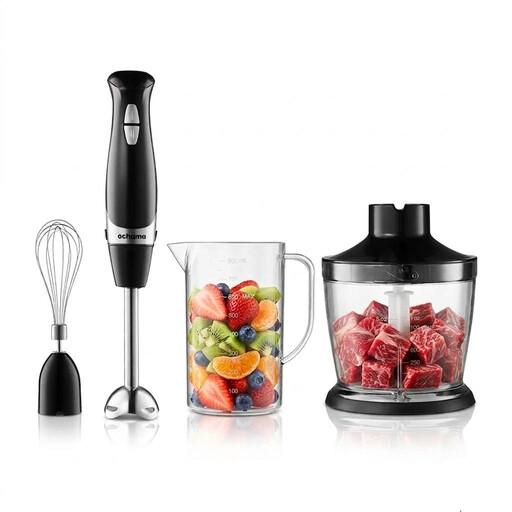
Why this product suits this profile: This electric hand blender combines a 600 W motor with a whisk, meat chopper, 500 ml chopper and 800 ml measuring beaker. It’s well suited to everyday tasks in small and medium-sized households.
The accessories and container sizes are clearly specified, so you can check before buying whether they’ll suit your household.
600 W, two speed settings and removable components for different types of food preparation.

Why this product suits this profile: This model offers variable speed, a pulse function, a whisk, a masher, a chopper and a detachable blending shaft. It’s designed for households that regularly use a variety of food preparation methods.
You’re not limited to a single speed. This lets you process ingredients gently or more thoroughly, depending on what you’re preparing.
Several attachments, variable speed control and a detachable blending shaft, according to the product description.
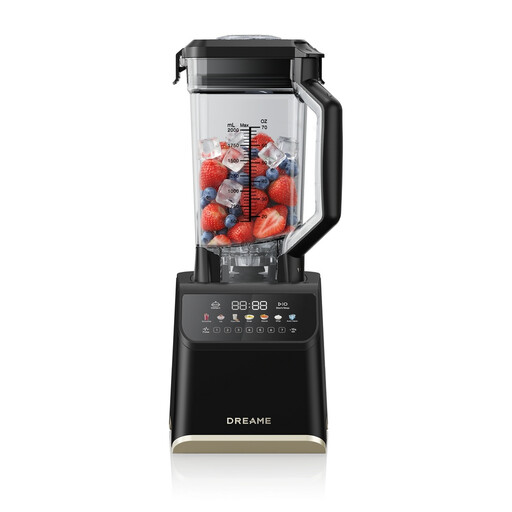
Why this product suits this profile: For larger quantities or frequent use, a jug blender can be a good alternative to a hand blender. This model has a 2.0-litre container, a 700 ml beaker and nine programmes.
The container is designed for larger portions, so you won’t need to work in lots of small batches when preparing food for the family.
2,000 W according to the product information, nine programmes, and 2.0-litre and 700 ml containers.
We’ve put together a complete, regularly updated list of products that meet these strict selection criteria and the safety requirements in force in the EU.
A hand blender for soups and baby food can finely purée cooked vegetables, fruit and other soft ingredients. Use only suitable foods, follow the temperature guidance, and clean the blades, beaker and attachments thoroughly. For every preparation, follow the manufacturer’s instructions on filling capacity and operating time.
Its lifespan depends on how often you use it, how you clean and store it, and how you handle hard ingredients. Overloading the appliance, allowing the blade to become blocked or running it without enough ingredients can put strain on the motor and coupling. Clean a hand blender with a detachable shaft soon after use and dry it thoroughly.
The cost depends on the appliance’s power, how long it runs and your electricity tariff. A 600 W appliance running for ten minutes uses around 0.1 kWh. Hand blenders are usually only used for a few minutes at a time, so actual running time matters more than wattage alone. To calculate your individual cost, multiply the energy used in kilowatt-hours by your own unit rate.