
Lieferung heute & morgen

Qualitätsgarantie

Willkommens-Angebote freischalten: KOSTENLOSE Lieferung | Bis zu 80 % RABATT | Kostenlose 30-Tage-JoyPlus-Testphase
App herunterladen
The search for a 4-person camping tent often ends in frustration. The packaging promises room for four, but in reality, everyone is packed in like sardines with no space for gear. Or the tent advertised as "waterproof" gives way during the first serious downpour. These and other marketing pitfalls lead to unnecessary expenses and a ruined outdoor experience. Before you make a decision, it's crucial to know the most common flaws, which often only become apparent after the purchase.
4-person pop-up tent, manufacturers advertise a setup time of mere seconds. While the main structure may go up quickly, properly securing it with pegs and guy lines—essential for stability in wind—takes significantly longer.To avoid a bad purchase, you should focus on verifiable technical specifications rather than marketing promises.
A tent's resistance to rain depends on two factors. The water column rating (or hydrostatic head) indicates how much water pressure the fabric can withstand before water penetrates. For typical European or North American weather, a rating of 2,000 mm for the outer flysheet is a good benchmark for reliable rain protection. A waterproof family tent benefits from ratings around 3,000 mm.
At least as important are sealed or taped seams. At the seams, the material is punctured by stitching, creating potential entry points for water. A high-quality seal closes these gaps and is a clear sign of quality that should be explicitly mentioned in the product description.
A tent with standing height (from approx. 1.80 m / 5'11") fundamentally changes the camping experience. Being able to change clothes or move around upright inside the tent is a significant comfort gain, especially during longer stays or bad weather.
A tunnel tent with a vestibule offers a clear separation between sleeping and living areas. The vestibule serves as a protected storage space for wet shoes and equipment or as a lounge area during rain, keeping the sleeping area clean.
Most modern tents are made of polyester. It is lightweight, dries quickly, and is relatively inexpensive. Pay attention to the fabric density, indicated in denier (D). A higher D-rating (e.g., 150D) means a more robust material. An outdoor tent with UV protection is particularly important in the summer. A special coating (often specified as UV30, UV50, etc.) not only protects the occupants from harmful radiation but also slows down material degradation from sun exposure.
Based on these objective criteria, we have identified models that are suitable for specific user profiles and their requirements.
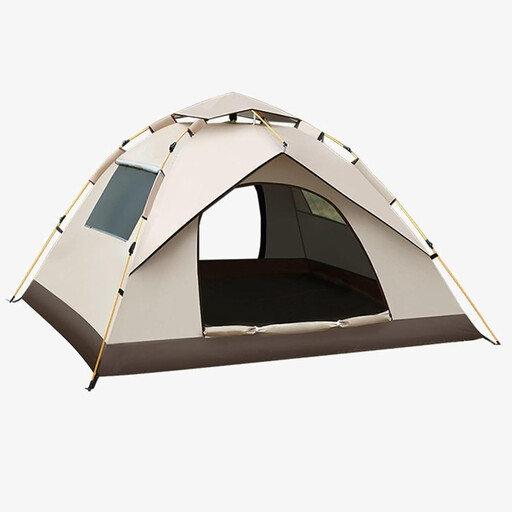
Why it's a good fit: Perfect for users looking for a `pop-up tent for festivals` or spontaneous weekend trips. The focus is on an extremely fast and uncomplicated setup.
It addresses the unrealistic setup time trap with a hydraulic system that erects the tent body in minutes. The capacity is realistic for 2-3 people, counteracting the "person count" trap.
The two-layer design allows for flexible use: the outer flysheet can be used separately as a sunshade. The 3,000 mm water column rating provides solid protection.
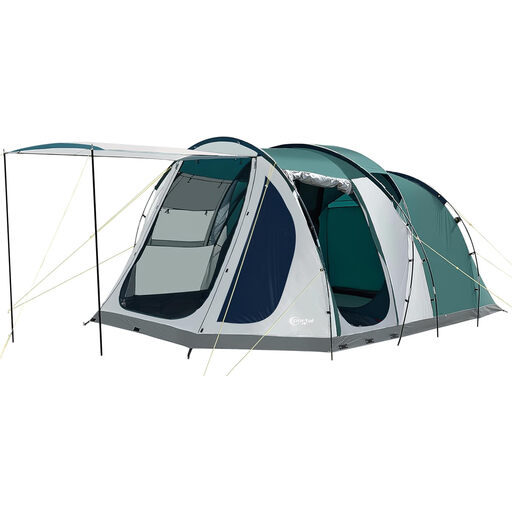
Why it's a good fit: Designed for families who value comfort and a clear separation of space. The standing height and separate living area make it ideal for longer camping holidays.
It solves the "person count" trap by being a 5-person tent that offers realistic space for a family of four plus gear. The combination of a 3,000 mm water column rating and a fully sewn-in groundsheet comprehensively addresses the "waterproof" myth.
The clearly separated living area (5.8 m? / 62 sq ft) and the full standing height of 200 cm (6'7") offer a level of comfort not found in compact dome tents.

Why it's a good fit: This `glamping tent` is the choice for groups and families seeking a stylish camping experience with an exceptional sense of space and a social atmosphere.
With an impressive center height of 3 meters and a very large floor area, it completely avoids the space trap. It offers a genuine sense of roominess rather than just a place to sleep.
The extraordinary standing height of 300 cm (9'10") and the open tipi design create a social hub for the group. The material is also flame-retardant and offers UV30 protection.
We have compiled a complete, up-to-date list of products that fully meet these strict selection criteria and safety regulations.
1. How much space does a 4-person tent really need? A good rule of thumb is the "N+1" rule: for N people with gear, you should choose a tent rated for N+1 people. For a family of four, a 5- or 6-person tent is often the more comfortable choice to ensure enough space for equipment and freedom of movement.
2. What does the "water column" rating on a tent mean? The water column (or hydrostatic head) is a unit of measurement for the waterproofness of technical fabrics. It indicates how high a column of water (in millimeters) can be placed on the material before moisture penetrates. A value of 1,500 mm is considered rainproof, while a rating of 3,000 mm or more means the material is suitable for heavy and persistent rain.
3. How do I properly care for my tent to make it last? Clean the tent after each use with a damp cloth (without harsh detergents). Let it air dry completely before packing it away to prevent mildew. Store it in a cool, dry place, and ideally not in its tightly compressed stuff sack, to preserve the coating and fabric.