
Lieferung heute & morgen

Qualitätsgarantie

Willkommens-Angebote freischalten: KOSTENLOSE Lieferung | Bis zu 80 % RABATT | Kostenlose 30-Tage-JoyPlus-Testphase
App herunterladen
A tent that pitches itself in seconds—it's a tempting idea for many casual campers and festival-goers. But the reality after buying a pop-up or instant tent often looks different: instead of relaxing nights outdoors, you're left with damp sleeping bags and frustration over poor quality. The market is flooded with products whose marketing promises don't hold up to real-world use.
As your Joybuy Product Recommendation Officer, I'm here to help you identify the features that truly matter. We'll shine a light on the three most common traps buyers fall into and show you what to look for to find a reliable and durable tent.
Many tents are advertised with impressive features, but the devil is in the details. These three points most often lead to disappointment:
To avoid these pitfalls, you should check three core technical specifications before buying. These determine whether a tent is suitable for your needs.
A tent fabric's waterproofness is measured in millimetres of hydrostatic head (mm). This value describes the water pressure the material can withstand before moisture penetrates. For typical weather in Central Europe, the following guidelines apply:
Don't just rely on the person count. Check the exact dimensions (length x width x height). As a rule of thumb: for comfortable camping, subtract one person from the manufacturer's rating. A 3-person tent is often the better choice for two adults, while a family tent for four people should be genuinely spacious. Also, pay attention to the height—can you sit up straight inside? Is there a vestibule (apsis) for wet footwear and luggage?
Although often used interchangeably, there are differences between quick-pitch systems:
Instead of a one-size-fits-all recommendation, we're presenting models tailored to specific user profiles.
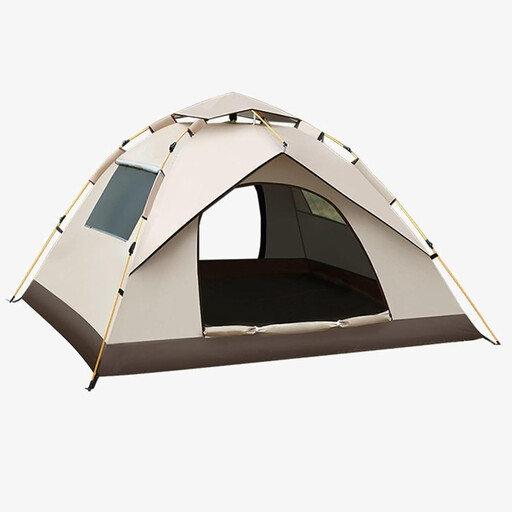
Why This Fits Their Persona: Ideal for weekend trips or short getaways where a quick setup and reliable weather protection are top priorities. It offers realistic space for two to three people plus gear.
According to the manufacturer, the flysheet has a waterproof rating of up to 3,000 mm, thus avoiding the poor waterproofing trap. The design, with two doors and two windows, effectively counters the condensation trap.
The automatic hydraulic system allows for setup in about a minute. The double-wall construction with a removable flysheet allows for flexible use, such as a sunshade on its own.

Why This Fits Their Persona: A specialised solution for solo travellers who value comfort and thoughtful details and don't want to carry unnecessary weight or bulk.
This tent avoids the misleading capacity trap by being clearly designed as a one-person solution. It doesn't try to be more than it is and serves its purpose precisely.
The design is combined with a cot-style bed, which increases sleeping comfort and protects from ground cold. Practical details like shoe pockets and a lantern hook are integrated.
As you gear up for your trip, don't forget the essential details. Explore our range of personal bags to keep your valuables organised.
Waterproofness doesn't depend on the tent type (pop-up, tunnel, etc.) but solely on the quality of the material and its construction. Pay attention to the waterproof rating (hydrostatic head) in millimetres. A rating of 2,000 mm or higher for the flysheet, along with sealed seams, are indicators of a reliably waterproof tent suitable for typical Central European conditions.
Packing it down, especially folding it correctly back into its original circular shape, is the biggest challenge for many users. It's advisable to practice the folding process at home before your first trip. Watching the manufacturer's video tutorial is highly recommended. Models with an automatic frame often have an advantage here, as takedown is usually more intuitive than twisting the flexible poles of a classic pop-up tent.
The lifespan of an instant tent depends heavily on the frequency of use, care, and the quality of its components. The biggest enemies of tent fabric are UV radiation and improper storage. To maximise its lifespan, never pack the tent away while damp, protect it from prolonged, intense sunlight, and always store it clean and dry in a dark place. The quality of the poles and zippers also plays a crucial role.