
Lieferung heute & morgen

Qualitätsgarantie

Willkommens-Angebote freischalten: KOSTENLOSE Lieferung | Bis zu 80 % RABATT | Kostenlose 30-Tage-JoyPlus-Testphase
App herunterladen
Choosing a new hob is a long-term investment in your kitchen. A 4-zone standalone induction hob promises fast, safe, and energy-efficient cooking. However, the market is filled with models whose marketing promises often create more confusion than clarity. Many buyers invest in features they never use or overlook critical technical details that lead to problems later on. This guide will help you identify the essential features and make an informed decision that fits your actual needs.
Before we dive into the technical details, let's highlight three common pitfalls that can lead to disappointment and unnecessary expense.
To avoid these pitfalls, focus on the following three core parameters. These will determine the performance, flexibility, and safety of your new hob.
A standalone hob with four zones typically has a total power rating between 6,000 and 7,400 watts (W). This high power output requires a dedicated connection (often a cooker connection unit) and must typically be protected by a 32-amp (A) fuse. The installation must be carried out by a qualified electrician to ensure safety and comply with warranty conditions. Before purchasing, verify that your kitchen's electrical system is designed for these requirements.
A standard 60 cm induction hob offers four round cooking zones. For users who frequently use large roasting pans, griddles, or elongated fish pans, an induction hob with a bridge function (also called a flex zone or CombiZone) is a worthwhile upgrade. This feature allows two individual cooking zones to be combined into one large, continuous heating area. This ensures that cookware is heated evenly, which is essential for optimal cooking results.
Precise temperature control is the key to successful cooking. Look for models with at least 9 power levels, which allow for fine adjustment of the heat. A very useful additional feature is a hob with a booster function. This function temporarily directs maximum power to a single cooking zone to, for example, bring large quantities of water to a boil in the shortest possible time. This saves time and makes the cooking process significantly more efficient.
Based on these objective criteria, we have identified several models suitable for different user profiles.
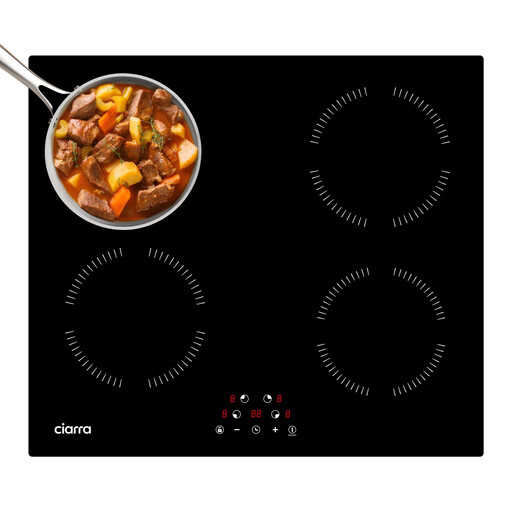
Why this model fits: This Ciarra hob offers a solid set of essential features for daily use. It focuses on core functions like four independent cooking zones and precise touch controls, without burdening the budget with rarely used extras. Ideal for families and first-time kitchen fitters.
The model deliberately omits complex smart features, instead offering reliable performance with 6000 W and 9 power levels. The focus is on a clear price-performance ratio.
Standard installation dimensions (560x490 mm) for straightforward installation or replacement. Includes all essential safety features like a child lock and residual heat indicator.
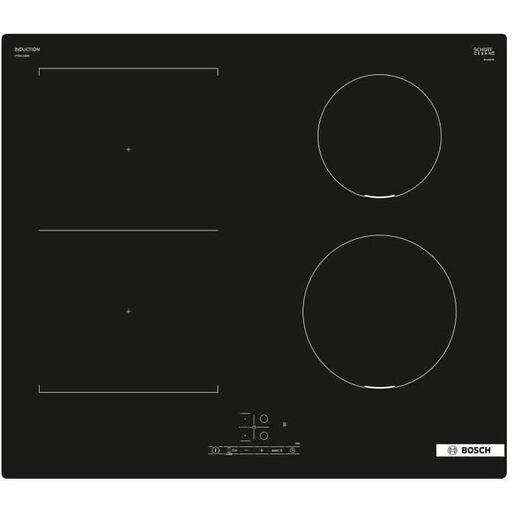
Why this model fits: This Bosch induction hob is designed for users who need more flexibility. The CombiZone allows for the use of large cookware, while the PowerBoost function delivers the speed needed for demanding dishes. A great choice for those who love to cook and do it often.
The CombiZone is a practical enhancement that offers real added value, rather than being a mere technical gimmick. The features are focused on improved cooking performance, not on unnecessary connectivity.
CombiZone for flexible cooking with roasting pans and large frying pans. The PowerBoost function speeds up boiling by up to 35% (according to the manufacturer, Bosch).
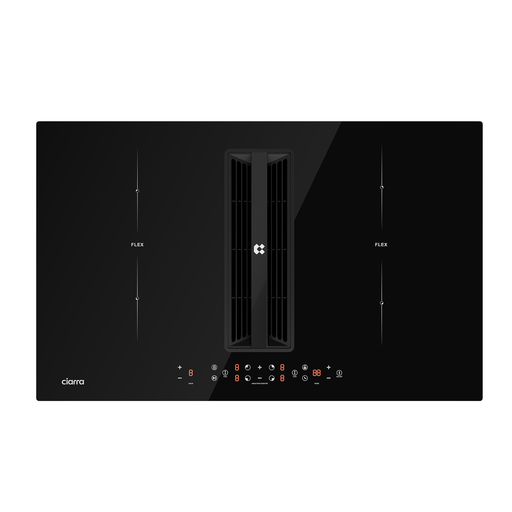
Why this model fits: This 2-in-1 solution is ideal for open-plan kitchens and cooking islands. The hob with a downdraft extractor draws vapours away directly at the pot, eliminating the need for a bulky hood above the cooking area. The result is a minimalist and modern aesthetic.
Here, the investment is in a concrete, functional design solution, not in abstract software. The integration of the hob and extractor elegantly solves a practical kitchen planning problem.
Space-saving 2-in-1 design with flex zones and integrated Plasma? air purification. Creates an unobstructed view and an open atmosphere in the kitchen.
We have compiled a complete, up-to-date list of products that fully meet these strict selection criteria and local safety regulations.
For induction hobs, you need cookware with a ferromagnetic base. You can easily test if your existing cookware is suitable with a magnet: if it sticks to the bottom of the pot or pan, the cookware is induction-compatible. Materials like cast iron, enamelled iron, and some special stainless steel alloys are generally suitable. Pots made of pure aluminium, copper, or glass will not work.
The actual electricity consumption depends heavily on individual usage frequency and the selected power levels. In general, induction technology is considered very energy-efficient because the heat is generated directly in the base of the pot, with very little energy lost to the surroundings. Compared to conventional ceramic or solid-plate hobs, cooking times and thus energy consumption can be significantly reduced.
Yes, absolutely. Due to the high power rating (usually over 6,000 W) and the need for a high-power connection, installation by a certified electrician is legally required in many regions. Improper installation poses a significant safety risk and will void the manufacturer's warranty and insurance coverage.