
Lieferung heute & morgen

Qualitätsgarantie

Willkommens-Angebote freischalten: KOSTENLOSE Lieferung | Bis zu 80 % RABATT | Kostenlose 30-Tage-JoyPlus-Testphase
App herunterladen
As a Joybuy Product Recommendation Officer, I see daily how choosing the right equipment can impact performance and enjoyment of the game. Since the switch from celluloid to plastic balls, selecting the right 40+ table tennis balls has become more complex for many players. The differences in material, quality, and intended use are crucial, whether you're training for your next competition or doing multi-ball practice at your club.
This guide is designed to help you make an informed decision. We'll highlight the key selection criteria and present a curated selection of balls suited for various needs—from official tournament play to intensive club training.
Choosing the right ball depends on your skill level and intended use. Here are three key points to consider in your decision.
The stars on a table tennis ball are a direct indicator of its quality and consistency.
Modern 40+ table tennis balls are made from ABS plastic (Acrylonitrile Butadiene Styrene). This material has replaced the former celluloid balls and offers several advantages:
Balls are available with or without a seam. Seamed balls are technologically more advanced and often offer better roundness and a more stable flight path, making them the preferred choice for competitions and high-level training.
Choosing the right pack size is a matter of economy and need.
Based on material, intended use, and quality standards, we have compiled a selection of balls that cover different player requirements.
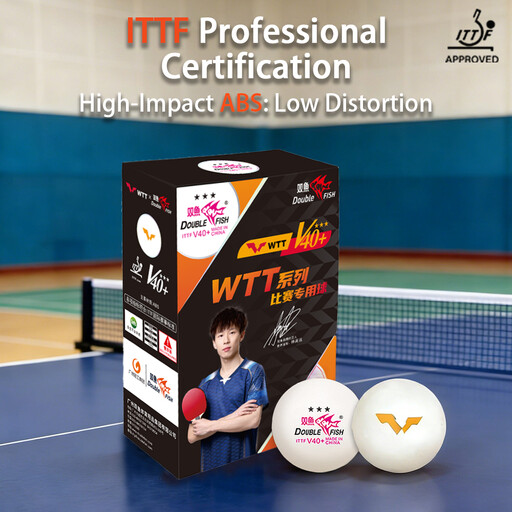
Why It Stands Out: This ball is the official choice for professional tournaments. Certified by the ITTF and serving as the official ball for WTT (World Table Tennis) events, the Double Fish V40+ offers a top-tier playing experience. Crafted from high-quality high-impact ABS material with a seamed construction, it guarantees precise roundness and a stable centre of gravity.
Advantages:
Who It's For: For ambitious competitive athletes and serious club players seeking a ball with official tournament characteristics for their matches and training.
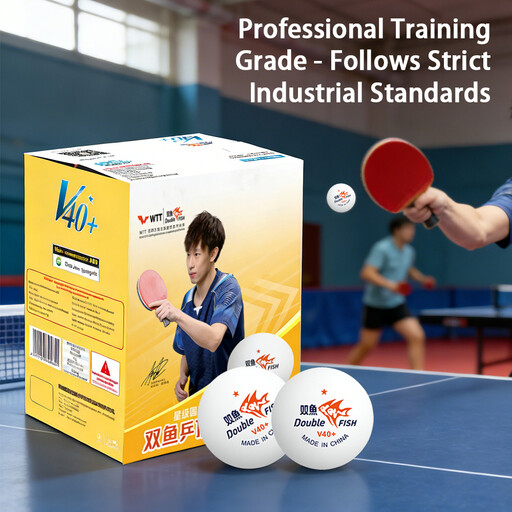
Why It Stands Out: This ball is specifically designed for demanding training sessions. It combines a seamed ABS polymer structure with high-density material to create a balance of elasticity and robustness. The precise weighting prevents centre-of-gravity deviations and ensures controllable landings.
Advantages:
Who It's For: Ideal for club table tennis balls, coaches, and players who need a reliable and durable ball in large quantities for daily, intensive training.
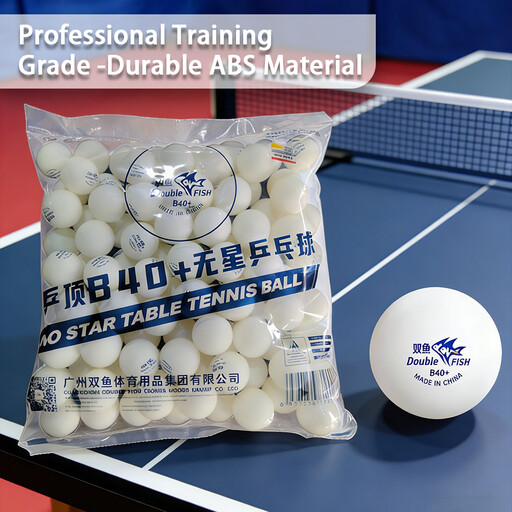
Why It Stands Out: The B40+ is the workhorse for high-frequency training. Made from a new, wear-resistant ABS material, this ball is designed to endure tens of thousands of strokes in multi-ball training or with a ball robot. Despite having no stars, it offers classic roundness and a stable flight path.
Advantages:
Who It's For: Perfect for table tennis academies, schools, and clubs looking for an extremely durable and cost-effective ball for multi-ball training and use with ball robots.
Choosing the right ball is only one part of your equipment. A suitable racket can have just as significant an impact on your game. If the balls presented here don't exactly meet your needs, or if you're looking to upgrade all your equipment, there are other alternatives to explore.
Explore our full range of Tennis Rackets & Balls to find the right gear for your game.
1. What does "40+" mean for table tennis balls? The "40+" designation indicates the ball's diameter in millimetres. Following a rule change by the ITTF, the official table tennis ball was changed from 40 mm to a slightly larger diameter (between 40.00 mm and 40.60 mm). These balls are marked as "40+" and are the current standard in competitive table tennis.
2. Do ABS plastic balls play differently than the old celluloid balls? Yes, there are noticeable differences. ABS plastic balls are generally slightly slower and generate less spin than celluloid balls. However, they have a higher and more consistent bounce. Players often need to slightly adjust their technique, especially when executing topspins and serves. In return, they are significantly more durable and safer.