
Lieferung heute & morgen

Qualitätsgarantie

Willkommens-Angebote freischalten: KOSTENLOSE Lieferung | Bis zu 80 % RABATT | Kostenlose 30-Tage-JoyPlus-Testphase
App herunterladen
If you are looking for a 400 mg magnesium supplement, you will find magnesium tablets, effervescent tablets, direct granules and sustained-release products with very different formulations. However, the figure “400 mg” alone is not enough to compare two products properly. Important factors include the magnesium compound, the actual daily serving, added vitamins and the format of the supplement.
With products intended for sport, physical exertion or mental stress in particular, three common purchasing misconceptions can lead to unnecessary expense.
The packaging may state either the amount of the magnesium compound or the amount of elemental magnesium. For comparison purposes, it is the amount of elemental magnesium per daily serving that matters. A product containing “1,422 mg magnesium glycinate” does not therefore automatically provide 1,422 mg of pure magnesium.
Look for tables showing details such as “magnesium per tablet” or “per daily dose”. For example, the products in this selection state 400, 500 or 600 mg of magnesium per serving.
High-strength magnesium may be of interest to adults with increased requirements. However, higher amounts may have a laxative effect in sensitive individuals. Several products mention this in their product information, particularly where they provide more than 250 mg of magnesium per day.
A higher dosage is therefore not automatically the right choice. Anyone already taking other magnesium supplements should consider their total intake and must not exceed the recommended daily dose.
Effervescent tablets need to be dissolved in water and often contain sweeteners, acidity regulators or flavourings. Magnesium direct granules, on the other hand, can be taken without water, but may also contain sweeteners such as sorbitol or aspartame. Where aspartame is used, the warning that it is a source of phenylalanine is relevant.
Even with vegan magnesium and gluten-free or lactose-free products, it is worth checking the full ingredients list. “Free from declarable allergens” does not mean that the formulation contains no processing aids or other additional ingredients.
The form of magnesium affects the formulation, capsule size and individual tolerability. Magnesium oxide often allows a high stated magnesium content in a compact tablet. Magnesium citrate is commonly used in capsules or combination formulations. Magnesium bisglycinate is bound to the amino acid glycine and is often found in vegan capsule products.
This does not allow for a definitive ranking. If you have a sensitive digestive system, it is sensible to check the warnings and serving size, and to pay attention to how your body reacts. If you prefer a particular compound, compare the ingredients lists directly.
Practical products can be taken once daily. This applies to many 400 mg or 600 mg tablets, as well as sustained-release and direct products. With capsules, the daily serving may consist of two capsules. This should be taken into account when comparing prices: it is not the number of capsules but the number of daily servings that shows how long the pack will last.
With a sustained-release magnesium product, delayed release is stated as a product feature. It does not replace checking the dosage or the warnings.
Magnesium with B vitamins may appeal to people who prefer a combined formulation. According to authorised nutrition claims, magnesium contributes to normal muscle function, the normal functioning of the nervous system and normal energy-yielding metabolism. Depending on the product, vitamin B6, B12, B1, niacin and folic acid may provide further authorised benefits.
Additional minerals such as potassium, calcium, iron or zinc are not necessary for everyone. Anyone with a medical condition or taking medication regularly should seek medical advice before using potassium or iron supplements.

Why this product suits this profile: One effervescent tablet a day, dissolved in 250 ml of water, provides a clearly stated 400 mg serving. According to the product information, the formulation is gluten-free and lactose-free, and contains several B vitamins as well as vitamins C and E.
The daily serving is stated directly on the label. This makes it easier to compare the dosage with other magnesium tablets.
400 mg of magnesium per tablet; labelled gluten-free and lactose-free; taken as a drink.
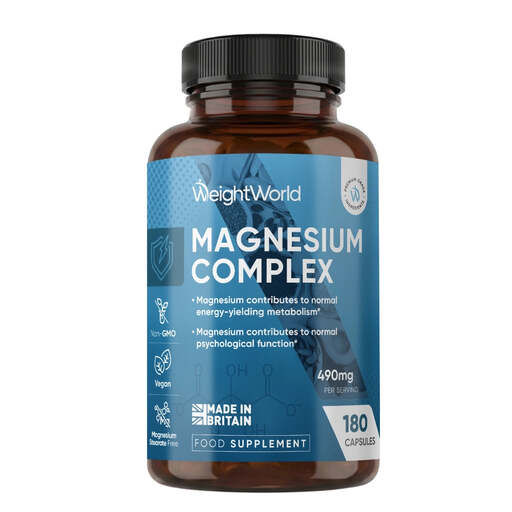
Why this product suits this profile: These capsules combine magnesium citrate, magnesium bisglycinate, magnesium malate and magnesium oxide. The stated daily serving consists of two capsules, and the pack contains 180 capsules.
The individual magnesium forms are clearly listed in the ingredients. This allows you to assess the formulation according to your personal preferences.
Four magnesium compounds; plant-based capsule shell; according to the product information, free from gluten, lactose and soya.
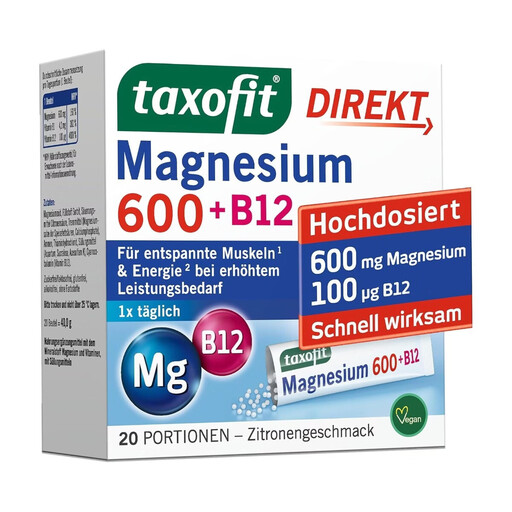
Why this product suits this profile: According to the product information, the direct granules provide 600 mg of magnesium as well as vitamins B1 and B12 per sachet. They are placed directly on the tongue without water and are described as a vegan, sugar-free, gluten-free and lactose-free formulation.
The individual sachets help prevent inaccurate dosing when you are out and about. The references to sorbitol and aspartame should be checked before buying.
No-water format; 20 individual servings; added B vitamins for people interested in a combined formulation.

Why this product suits this profile: In addition to 400 mg of magnesium, one tablet contains 400 mg of potassium as well as iron, zinc, chromium and vitamins B6 and B12, according to the label. It is suited to people who want to combine several nutrients in one tablet.
The additional minerals are clearly stated. If you are taking potassium or iron, have an existing medical condition or have other concerns, it is sensible to seek individual advice before use.
400 mg of magnesium; potassium and other micronutrients; labelled vegetarian, gluten-free and lactose-free.
We have put together a complete, regularly updated list of products that fully meet these strict selection criteria and the safety regulations applicable in the EU.
For many products, 400 mg is equivalent to around 107% of the European Nutrient Reference Value. However, the appropriate amount depends on your diet, the product labelling and your individual circumstances. High-strength supplements may have a laxative effect in sensitive individuals.
There is no one-size-fits-all answer. Magnesium oxide, magnesium citrate and magnesium bisglycinate differ in their formulation and tolerability. The important factors are the stated amount of elemental magnesium, the daily serving and the ingredients list.
Magnesium effervescent tablets are dissolved in water and are suitable for taking at home. Direct granules do not require water and are designed for use on the go. However, you should check for sweeteners and warnings such as the presence of a source of phenylalanine.