
Lieferung heute & morgen

Qualitätsgarantie

Willkommens-Angebote freischalten: KOSTENLOSE Lieferung | Bis zu 80 % RABATT | Kostenlose 30-Tage-JoyPlus-Testphase
App herunterladen
A dead battery, especially in a large-displacement vehicle like an SUV, RV, or truck, is more than just an inconvenience. It's a complete standstill that disrupts plans and costs valuable time. A powerful 4000A jump starter power bank promises a quick, self-reliant solution. However, the market is flooded with devices whose specifications often create more confusion than clarity. Before you make a decision, it's crucial to understand the common pitfalls that can lead to a poor purchase.
As your Joybuy Product Recommendation Officer, I'll help you decode the technical specs and identify the features that truly matter for reliable performance.
Many users invest in a device that fails at the critical moment. This is often due to exaggerated marketing claims or misunderstood technical data.
To make an informed decision, focus on these three core features that define a powerful and safe car jump starter.
Instead of relying solely on peak current, look for the manufacturer's explicit statement on which engine sizes the device is suitable for. A high-quality 4000A jump starter should clearly specify that it is designed for gasoline engines of any displacement and for jump-starting diesel engines up to 10L. This information is a practical indicator of its actual performance and reliability, especially for jump-starting trucks and RVs.
The ability to quickly recharge not just other devices but also itself is a critical advantage. A 100W fast-charging booster can be fully recharged in just over an hour using a compatible charging adapter (often included). This is especially important for users who depend on rapid operational readiness. At the same time, such a device serves as a fully-fledged power bank with jump-starting capabilities, able to power laptops, tablets, and smartphones at high speed.
A modern jump starter must have comprehensive safety mechanisms. These include protection against reverse polarity, over-current, over-charging, and short circuits. A clear jump starter with an LED indicator or display is essential. It should unambiguously show the booster's charge level and confirm a correct connection to the vehicle's battery. This minimises user error and enhances safety for both the user and the vehicle's electronics.
Here are three recommendations tailored to different user profiles and their specific needs.
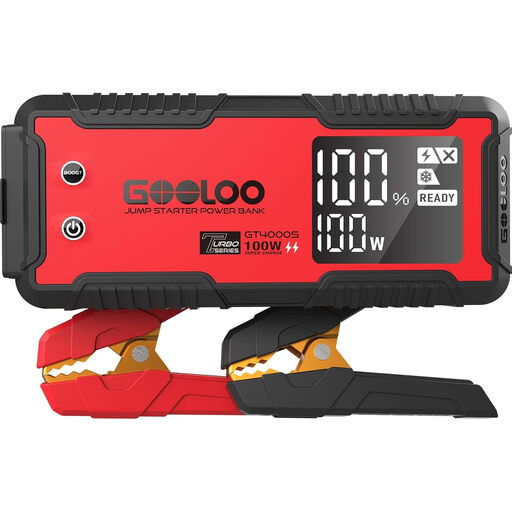
Why it's a match: Engineered for maximum power and efficiency. Ideal for workshops, roadside assistance services, or owners of RVs and trucks who cannot compromise on reliability and depend on rapid recharging.
Addressing the slow charging issue: Thanks to its 100W two-way fast-charging capability, the unit is fully charged in about 1.2 hours and ready for action again.
Combines 4000A peak current with the power to start diesel engines up to 10.0L. The informative 3.2-inch LED screen clearly displays all relevant status information.
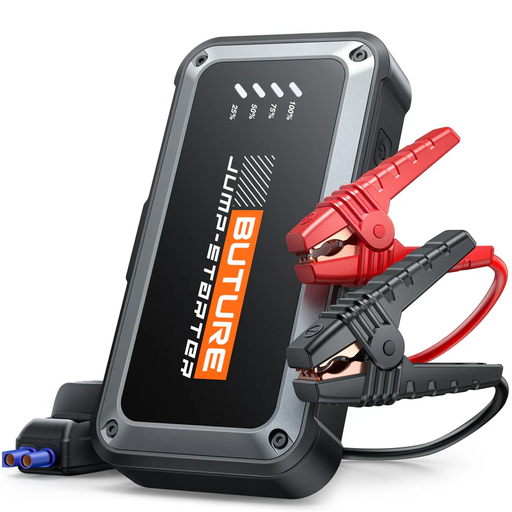
Why it's a match: A well-balanced solution for drivers of larger cars, SUVs, or light commercial vehicles who need a powerful and versatile emergency kit for breakdowns and outdoor activities.
Addressing unrealistic performance claims: Instead of just advertising peak current, the manufacturer provides a clear suitability for gasoline engines up to 9.0L and diesel engines up to 8.5L.
Offers 3-in-1 functionality as a jump starter, 16800mAh power bank, and a versatile LED light in a compact and lightweight (0.370 kg) package.
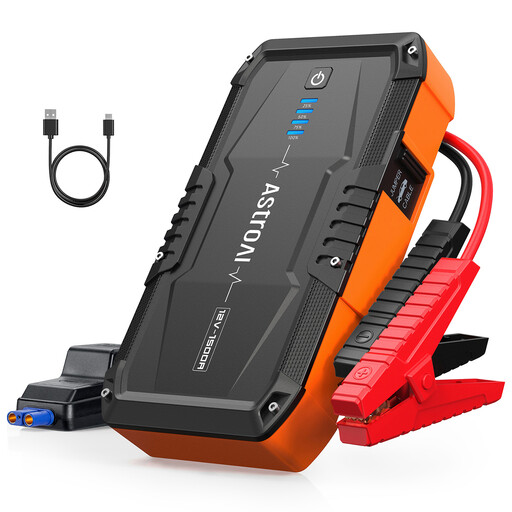
Why it's a match: For drivers of standard cars and smaller SUVs who want a reliable and safe emergency jump starter for occasional use, without paying for peak power they don't need.
Addressing the safety issue: Integrates 8 protection mechanisms, including reverse polarity and over-current protection, and uses high-quality metal clamps for a secure connection and durability.
Features a "BOOST" mode to start even deeply discharged batteries. Its power is rated for gasoline engines up to 6.0L and diesel engines up to 3.0L.
We have compiled a complete, up-to-date list of products that fully meet these strict selection criteria and all relevant safety standards.
Even when not in use, a lithium battery will lose its charge over time. It is recommended to fully charge the device every 3 to 6 months. This ensures the battery remains in good condition and can deliver full power in an emergency.
Yes, it is perfectly safe. A smart jump starter only delivers as much current as the vehicle's starter motor requests. The integrated protection circuits prevent any overload of the vehicle's electronics. Using a more powerful device on a smaller car poses no risk.
The "Boost" or "Override" button is designed for situations where the vehicle's battery is so deeply discharged (often below 3 volts) that the jump starter cannot detect it automatically. Pressing this button manually forces the current flow for a short period to enable the starting process. This feature should be used with caution and only after double-checking that the clamps are connected correctly.