
Lieferung heute & morgen

Qualitätsgarantie

Willkommens-Angebote freischalten: KOSTENLOSE Lieferung | Bis zu 80 % RABATT | Kostenlose 30-Tage-JoyPlus-Testphase
App herunterladen
The baggage policies of budget airlines can be a challenge. In particular, the rule for the free small personal item, which must fit under the seat in front of you, creates uncertainty for many travellers. A bag with the exact dimensions of 40x20x25 cm is often the solution to bypass extra fees on airlines like Ryanair.
This article serves as a practical guide. We will present a selection of compliant luggage and provide you with objective criteria to help you choose the right under-seat bag.
Selecting the right piece of luggage depends on more than just its dimensions. Two other factors are crucial for making an informed decision.
Every gram counts when cabin baggage weight limits are low. A lightweight bag allows you to pack more. Materials like polyester or Oxford fabric offer a good balance of low weight and high durability. Look for a water-resistant coating to protect the contents in bad weather. Ideally, the bag's own weight should be well under one kilogram.
Consider how you prefer to carry your luggage. A carry-on backpack distributes weight evenly across both shoulders and keeps your hands free—an advantage at passport control or when navigating the airport. A classic 40x20x25 flight bag (holdall) often offers a large, flexible main compartment. Regardless of the type, adjustable straps, sturdy zips, and a rear sleeve for sliding over a trolley handle (trolley sleeve) are extremely practical features for a travel bag for flights.
Here is a selection of luggage tailored to the needs of budget-conscious travellers.
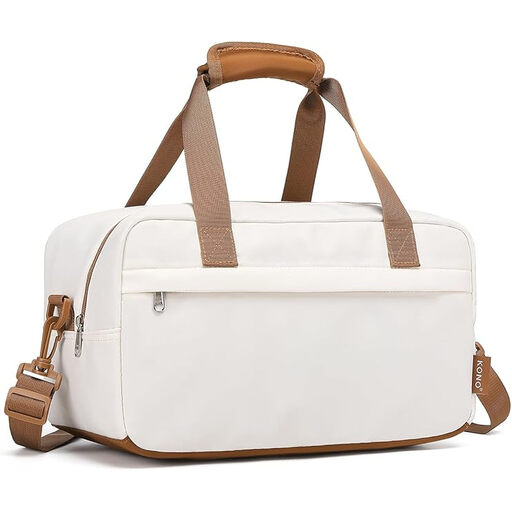
Why it stands out: This onboard bag from Kono is consistently designed to meet the dimensions for a small personal item. Its construction from lightweight Oxford fabric and its simple, functional layout make it a hassle-free companion for short trips.
Pros:
Who it's for? For travellers looking for a classic, lightweight, and functional bag for weekend getaways or as a supplement to their main luggage.

Why it stands out: This Kono carry-on backpack combines compliant dimensions with the ergonomic comfort of a rucksack. Its thoughtful compartment design, including a padded tech sleeve, is geared towards the needs of modern travellers.
Pros:
Who it's for? Ideal for travellers who value comfort and keeping their hands free. Especially suitable for those who need to transport tech devices like a laptop or tablet securely.
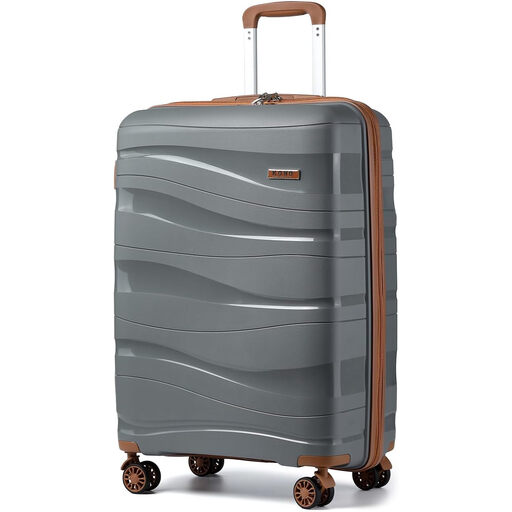
Why it stands out: This model is an option for travellers who are willing to pay a fee for a larger carry-on to get more volume and the protection of a hardshell case. With its dimensions of 56 x 39 x 20.5 cm, it is approved as overhead cabin baggage on many airlines.
Pros:
Who it's for? For travellers who need a robust and secure trolley for longer trips (3-5 days) and are willing to book a fare that includes a larger carry-on (e.g., "Priority & 2 Cabin Bags").
In addition to the right hand luggage, smaller organiser pouches for valuables and documents are often useful. If you'd like to complete your travel setup with a matching small bag, you can find a selection of practical models in our Brown Pouch Bag category.
This refers to the maximum external dimensions (height x width x depth) that a piece of luggage can have to qualify as a free "small personal item" on certain airlines, most notably Ryanair. It must fit completely under the seat in front of you.
The checks can be very strict and often take place right at the gate. Staff typically use a metal frame (sizer) that the luggage must fit into. If it doesn't fit, a fee will be charged to check the bag at the gate, which is significantly higher than booking it in advance.
Both options have their merits. A carry-on backpack is more comfortable to carry, especially over long distances in the airport. A flight bag (holdall) is often lighter and more flexible for packing bulkier items like an extra pair of shoes, thanks to its large main compartment. The decision depends on your personal priorities and packing style.