Cups and a few everyday dishes
You want to wash a few dishwasher-safe cups along with the dishes used on a hob. Consider whether you regularly have enough dishes for a full 45 cm load, or whether a countertop model would better suit your needs.


A 45 cm dishwasher is worth considering if space is limited and you regularly have enough dishes for a full load. If you only have a few cups to wash, a countertop model may suit the way you use it better. The German Environment Agency points out that slimline appliances use more electricity and water per item than larger appliances running with a full load. You’ll also need to consider the right type of appliance, the actual height of your cups and how usable the basket layout is.
You want to wash a few dishwasher-safe cups along with the dishes used on a hob. Consider whether you regularly have enough dishes for a full 45 cm load, or whether a countertop model would better suit your needs.
You have limited floor space or a narrow built-in space. Check the appliance type and its full dimensions before comparing extra features.
You want to fit tall cups in with plates or cookware. In that case, the actual height of the top basket and the basket layout matter more than the place-setting capacity alone.
First, measure the space or built-in recess, then work out how often you can fill the appliance with a typical load.
| Consideration | What to check when buying | Who it matters most to |
|---|---|---|
| Fit and appliance type | Check the full appliance dimensions, recess, furniture door, plinth, door clearance and connections for the specific model. | If I have limited space or a fixed recess, the appliance needs to fit along with its front panel and door clearance. Around 33% of consumers would put fit and appliance type first. |
| Space for cups and dishes | Check the care instructions for your cups, usable top-basket height and basket layout. | I want to fit my tall cups in with plates or cookware, so I check the interior rather than just the place-setting capacity. Around 27% of consumers would prioritise their cup and loading needs. |
| Energy and water use | Compare electricity use per 100 Eco cycles and water use per Eco cycle, and consider how full your usual loads are. | If I’m thinking about ongoing electricity and water use, how often I can run a full load matters too. Around 20% of consumers would focus on consumption based on how they expect to use the appliance. |
| Noise and washing routine | Compare the noise emissions and Eco programme duration for the specific model. | If my kitchen is within earshot or I need my cups back by a certain time, I consider the noise level and programme duration. Around 20% of consumers would weigh up noise and washing routines first. |
Freestanding, built-under and integrated appliances have different requirements for the recess and furniture door.
Check the full appliance dimensions and installation diagram for the exact model against your kitchen. Remember to check the plinth, door clearance and connections too.
Depending on your kitchen, delivery, installation or alterations to the kitchen front may involve extra work.
The stated capacity doesn’t tell you how tall your cups are or how much room will be left for cookware at the same time.
Measure your tallest cups and check the top-basket height, cup racks and adjustment options for the specific appliance.
The German Environment Agency says the energy-saving benefit of larger appliances depends on running a full load. According to the Agency, slimline appliances use more electricity and water per item than larger appliances running with a full load.
Choose the appliance size to suit your typical load and compare Eco figures on the same basis. More frequent cycles may use extra electricity, water and detergent.
Freestanding 45 cm models are available for narrow spaces; the SPS4HKW49E is one documented example.
The range includes freestanding and integrated 45 cm models; the BDFS26040XQ is freestanding.
The SR93EX25LE is a fully integrated 45 cm model for a planned kitchen layout.
The BKR PAS is a semi-integrated 45 cm appliance for a suitably fitted kitchen.
A countertop model may be an alternative if you only have a few cups to wash and a 45 cm appliance wouldn’t fit or wouldn’t be filled regularly.
The selection includes freestanding 45 cm appliances and one 60 cm built-under model. Check that the type and size suit your space and the amount of washing-up you usually have.
 No image available
This freestanding 45 cm model is worth considering if you have limited width and regularly have enough washing-up for a suitable load.
Beko lists efficiency class C, an adjustable-height top basket and 44 dB(A) for this model.
 No image available
This freestanding 45 cm model is an option if you have limited space and are looking for an appliance with capacity for nine place settings.
The product name lists six programmes and a silver finish.
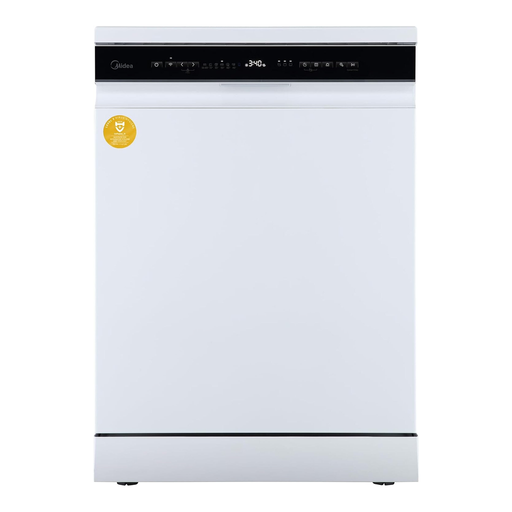 No image available
This freestanding 45 cm appliance may suit you if you have a narrow space and regularly have a load for ten place settings.
The product name also lists a cutlery basket, an adjustable-height top basket and efficiency class C.
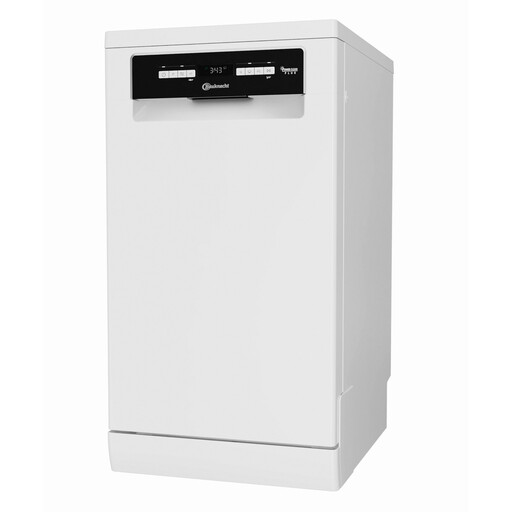 No image available
This freestanding 45 cm model is an option for narrow spaces, provided ten place settings match the size of your usual load.
The product name lists efficiency class D.
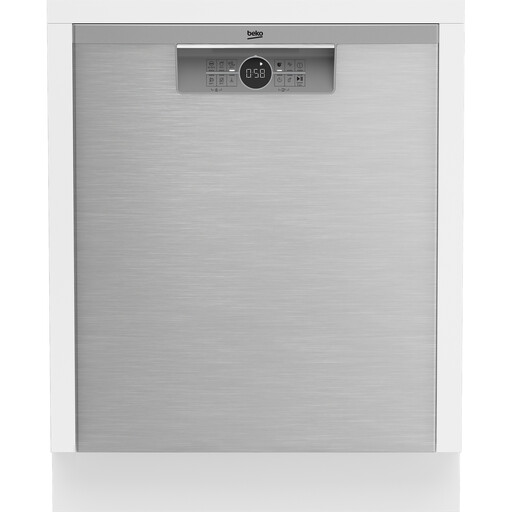 No image available
This larger built-under model is only suitable if you have a suitable kitchen layout and enough width; it isn’t a slimline 45 cm model.
The product name lists efficiency class B.
Check the care instructions for each cup. The glass-and-fork symbol indicates that an item is suitable for contact with food, but on its own it doesn’t confirm that it’s dishwasher-safe.
Check the appliance dimensions and recess, as well as the appliance type, furniture door and connections, against the installation instructions for the specific model. For example, the Siemens SR93EX25LE is fully integrated, while the Bauknecht BKR PAS is semi-integrated.
The label shows electricity consumption in kWh per 100 Eco cycles and water consumption in litres per Eco cycle. It also gives the place-setting capacity, programme duration and noise level. Compare appliances on the same basis and take your expected use and your own tariffs into account, rather than assuming an efficiency class alone tells you how much money you’ll save.
The German Environment Agency recommends not rinsing dishes beforehand, particularly with warm water, and running the dishwasher on the Eco programme with a full load wherever possible.
Dishwashers use the EU energy label, with a scale from A to G. According to the European Union, the older plus-rating system has not been the current basis for comparing this product group since 2021. The label doesn’t require you, as a buyer, to choose a particular efficiency class.