Families with a narrow kitchen space
If everyday dishes pile up after family meals, your dishwasher needs to fit the space you have. Choose a design that suits your kitchen units and where you plan to put it.


A 45 cm dishwasher is a good option if there isn’t room in your kitchen for a 60 cm model. In that case, the key things to consider are the dimensions, design and whether it can handle the dishes left after a family meal. As well as measuring the space, check that the baskets can accommodate the pots and plates you use regularly. If you have room for a 60 cm model and can run it fully loaded regularly, the German Environment Agency recommends this width for households of two or more, based on the balance between capacity and electricity and water consumption.
If everyday dishes pile up after family meals, your dishwasher needs to fit the space you have. Choose a design that suits your kitchen units and where you plan to put it.
If you regularly want to load larger pots as well as plates, glasses and cutlery, check the basket layout and how easy it is to load. The place-setting capacity alone won’t tell you whether all your own dishes will fit together.
If you use your dishwasher regularly, check its Eco programme consumption figures and duration. Noise levels can also matter if your kitchen is next to living areas.
A good fit if: you don’t need a cabinet door on the front and the available space, appliance height and depth are suitable.
The trade-off: Its narrower width takes up less space, but the basket layout still needs to suit your dishes. A freestanding appliance cannot automatically be integrated into your kitchen units.
A good fit if: you have a suitable space for a built-in appliance and the design works with your cabinet door.
The trade-off: The cabinet door dimensions, plinth and door movement also need to work with your kitchen. Place-setting capacity is no substitute for checking that large plates and pots will fit.
A good fit if: you have a 60 cm space and can run the appliance fully loaded regularly. The German Environment Agency recommends this width for households of two or more.
The trade-off: A larger appliance needs more space. The German Environment Agency’s recommendation does not guarantee the consumption figures of any particular model.
| Buying priority | What should you look for? | Who is this most important to? |
|---|---|---|
| Fit and design | Check the appliance height, width and depth against the available space. For built-in models, also check the cabinet door dimensions and plinth. | If I have a narrow space or a particular style of cabinet door, the appliance needs to fit it exactly. Around 36% of consumers say fit is their main priority. |
| Room for dishes and pots | Check the place-setting capacity, cutlery storage and adjustable upper basket, and think about the largest items you wash regularly. | If I want to fit larger pots and bowls in after a meal, the actual basket layout matters most to me. Around 29% of consumers say loading capacity is their top priority. |
| Electricity and water consumption | Compare kWh per 100 Eco cycles and litres per Eco cycle using the same label basis, and take capacity into account. | If I use my dishwasher regularly, I want to consider the stated Eco consumption figures alongside its usable capacity. Around 21% of consumers say running costs are their main concern. |
| Programme duration and noise | Compare the Eco programme duration and noise emissions. Check whether the appliance has the quick or timed functions you want. | If I need my dishes again soon or my kitchen is next to living areas, the running time and operating noise matter in my day-to-day life. Around 14% of consumers prioritise how the appliance runs. |
Appliance height, depth, front and plinth vary by design and model. The right width alone doesn’t confirm that the appliance will fit your kitchen.
Before ordering, compare the dimensions of the specific appliance with the available space and existing cabinet door.
Large cookware can take up more basket space than the stated capacity suggests.
Check the baskets, adjustable upper basket and cutlery storage against the items you wash regularly.
For households of two or more, the German Environment Agency highlights the efficiency of a fully loaded 60 cm appliance in terms of capacity compared with consumption.
If a 60 cm model fits your kitchen, include it in your comparison. Then compare the Eco figures of the models that fit, using the same basis.
Bosch offers slimline freestanding models across several ranges. The SPS6EMI21E is one example of a 45 cm model.
Siemens also offers slimline fully integrated appliances. The SR61IX05KE is one example for kitchens with a suitable cabinet door.
Beko offers slimline semi-integrated built-in appliances. The BDSS28040XQ is one example, with an adjustable upper basket and cutlery drawer.
Miele offers 45 cm under-counter appliances. The G 5940 SCU SL is one example, with a cutlery drawer and an adjustable basket layout.
The SlimLine range includes different 45 cm designs. Depending on the version, you’ll find an adjustable upper basket or a cutlery drawer.
The Joybuy products below are freestanding dishwashers in the 45 cm class. Compare their stated capacity and features with the dishes you use every day.
 No image available
A freestanding 45 cm model for kitchens where a slimline appliance is a good fit.
9 place settings; five programmes; adjustable upper basket; 9 l water per Eco cycle; 47 dB. Freestanding, not listed as an integrated appliance with a cabinet door.
 No image available
A freestanding slimline model for comparing basket layouts as well as width.
10 place settings; energy efficiency class C; adjustable upper basket and cutlery drawer. Freestanding, not listed as an integrated appliance with a cabinet door.
 No image available
A freestanding 45 cm model with a cutlery drawer and adjustable basket, giving you useful features to compare.
9 place settings; six programmes; 44,8 cm wide; Eco and intensive programmes. Freestanding, not listed as an integrated appliance with a cabinet door.
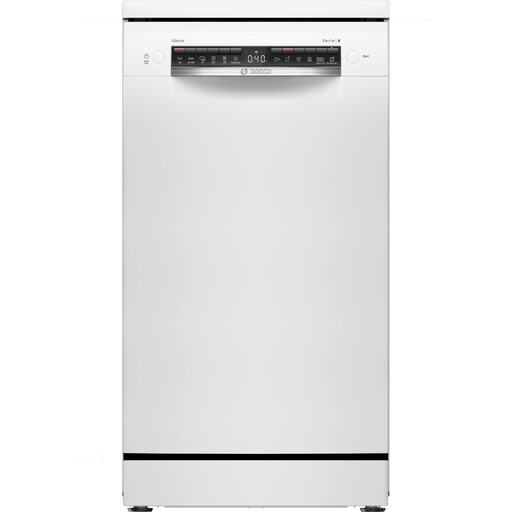 No image available
A freestanding 45 cm model for comparing capacity and basket features.
10 place settings; energy efficiency class E; Vario Flex basket system. Freestanding, not listed as an integrated appliance with a cabinet door.
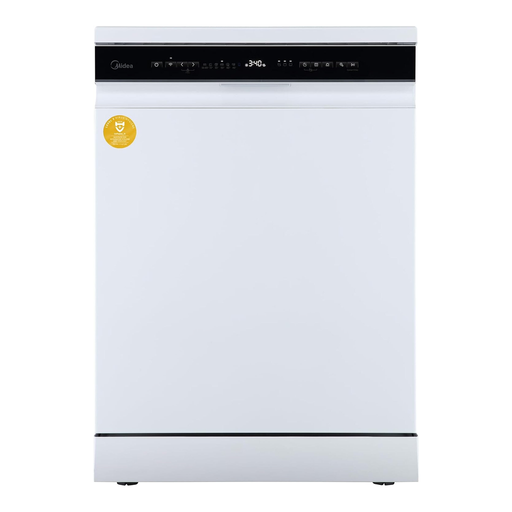 No image available
A freestanding 45 cm model whose stated capacity you can compare with the way you load your dishwasher.
10 place settings; energy efficiency class C; cutlery basket; adjustable upper basket. Freestanding, not listed as an integrated appliance with a cabinet door.
Not necessarily. The capacity on the energy label is a comparison figure. Check whether your usual pots will fit alongside plates, glasses and cutlery. A cutlery drawer can free up space in the lower basket.
Measure the available space for height, width and depth. For integrated models, also check the cabinet door and plinth against the dimensions for the specific model. Different designs have different requirements.
Yes, if you have a 60 cm space and can run the appliance fully loaded regularly. The German Environment Agency recommends this width for households of two or more, based on the balance between capacity and electricity and water consumption. This doesn’t guarantee the consumption figures of any individual model.
The German Environment Agency recommends running the Eco programme with a full load whenever possible, and not rinsing dishes with warm water beforehand. Top up the special salt regularly to soften the water, or use a suitable tablet.
New household dishwashers must meet EU energy labelling requirements, and the energy label must also be visible in online listings. The scale runs from A to G and includes information such as Eco consumption, programme duration and noise.