Households with different breakfast times
If you need your bowls again before the next full load, compare small-load options and programme times. The number of place settings alone doesn’t tell you how well a dishwasher handles smaller loads.


First, choose a 45 cm design that suits your kitchen, then test it with your own bowls to make sure the basket height and layout work for you. If you need the bowls again before your next meal, compare the specific quick or small-load programmes. If you can save up your dishes, compare full Eco loads and their stated consumption figures instead. A half-load function alone does not prove that each bowl uses less energy or water.
If you need your bowls again before the next full load, compare small-load options and programme times. The number of place settings alone doesn’t tell you how well a dishwasher handles smaller loads.
With a 45 cm design, the appliance and installation dimensions, door panel and basket layout all need to suit the available space and your bowls. Check the dimensions of the specific model.
If you have enough bowls, you can plan for full Eco loads. The German Environment Agency recommends using the Eco programme and only running the dishwasher when it’s full.
Best if: You only have a few bowls after breakfast and can’t save them up until you have a full load.
Consider: A half-load function doesn’t prove that each item uses less energy or water than in a full Eco load.
Best if: You need the same bowls again before your next meal and the specific programme suits the job.
Consider: Manufacturers’ claims about faster cycles don’t replace a comparison of programme times, load size and drying performance.
Best if: You have enough dishes to save up your bowls and usually run the machine when it’s full.
Consider: Energy label figures apply to the Eco programme, not automatically to quick programmes or small loads.
| Buying priority | What to look for | Who is it most relevant to? |
|---|---|---|
| Small loads between meals | Check whether the model has a half-load function and what programme data applies to it. | If I need a few bowls again between breakfast times, I want to know whether there’s a suitable programme for them. Around 33% of consumers put small loads between meals first. |
| Space for your own bowls | Measure your largest bowls and check the basket height, layout and clearance for the spray arms. | If my wide or deep bowls need to fit in the baskets alongside other dishes, the actual layout matters more than the number of place settings. Around 27% of consumers prioritise having a suitable place for their bowls. |
| Design and available space | Decide whether you want a freestanding, semi-integrated or fully integrated appliance, then compare its full dimensions. | If the available space calls for a particular slimline design, the height and depth must fit your kitchen too. Around 20% of consumers prioritise finding an appliance that fits their kitchen space. |
| Consumption on Eco loads | Compare energy use per 100 Eco cycles, water use per Eco cycle and programme duration on a like-for-like basis. | If I can save up my dishes, I want to compare the models’ Eco figures and take into account how often I use the machine. Around 20% of consumers prioritise consumption on full Eco loads. |
The stated capacity doesn’t tell you whether wide or deep bowls will fit in the suggested arrangement.
Check the basket height and possible layouts with your own bowls before deciding based on the number of place settings.
The stated energy and water figures apply to the Eco programme. They aren’t automatically the figures for a half load or quick programme.
Only compare programmes on the same measurement basis, and consider how often you’d actually run small loads.
Running the machine more often can affect your running costs; the specific programme, how you use it and your current tariffs all matter.
A width of 45 cm alone doesn’t tell you whether the height, depth and installation type will suit the space you have in mind.
Measure the space for the appliance or installation and check what delivery and connection services are included in the specific offer before ordering.
Delivery and installation may cost extra; the services included and their cost depend on the offer.
The semi-integrated 45 cm DSS28021X is an option if you want to wash smaller loads and adjust the space for bowls.
The semi-integrated 45 cm SR53ES02LD may suit buyers looking for fast programmes and a visible control panel.
The fully integrated 45 cm SPV2HKX42E offers an installation solution with a flexible basket.
The freestanding 45 cm MDWEF1034DW-WE is an alternative if you don’t need an integrated door panel.
The fully integrated 45 cm GV583C10 may suit households that want to reuse their dishes sooner.
These models are freestanding 45 cm dishwashers for narrower spaces. Before choosing one, check that its design, dimensions and basket layout suit your kitchen and breakfast bowls.
 No image available
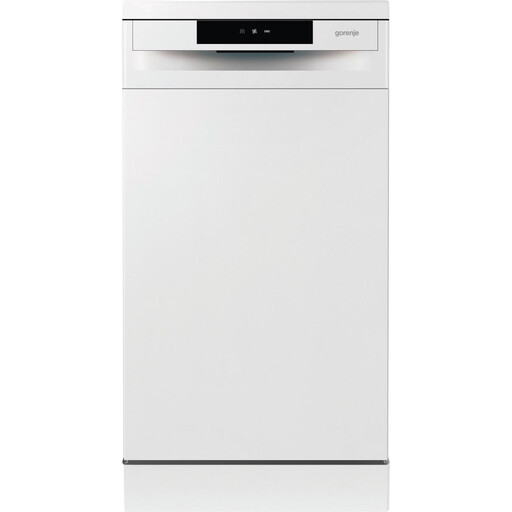
If you need your bowls again soon, check the listed Quick and 1-hour programmes for their duration and recommended load.
Freestanding, 45 cm wide, 9 place settings and 5 programmes.
 No image available
This slimline freestanding design is an option if you’re looking for an appliance that doesn’t need an integrated door panel. Check the basket layout with your bowls.
10 place settings, energy rating C and stainless steel look.
 No image available
If you need your bowls again before your next meal, check whether the listed Short programme suits your load and the time you need them.
Freestanding, 6 programmes and delay start.
 No image available
If you want to fit different bowls and other dishes together in the basket, check whether the Vario-Flex basket system described suits your load.
With Vario-Flex basket system and energy rating E.
 No image available
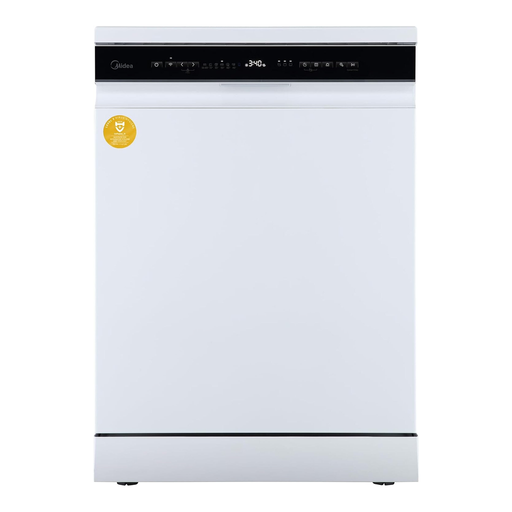
The Quick programme may be useful if you need your bowls again soon. Check its specific duration and whether it’s suitable for your load.
Appliance dimensions: 850 × 450 × 600 mm (height × width × depth). Midea also lists Prewash and a Quick programme.
No. The German Environment Agency advises against pre-rinsing, especially with warm water. Remove any large food scraps, then follow your appliance’s instructions for loading and care.
No. The name of a small-load function doesn’t mean that electricity or water use is halved. EU energy label figures apply to the Eco programme; compare other programmes only using relevant programme data.
Check the design and full appliance and installation-space dimensions, and follow the installation instructions for the specific model. Also check the offer to see whether delivery, connection and, where applicable, removal of your old appliance are included.
The European Commission lists the energy efficiency class, energy use per 100 Eco cycles, water use per Eco cycle, capacity, programme duration and noise level as details shown for household dishwashers. Compare the information on the label for the specific model.
No. Official information on the German Electrical and Electronic Equipment Act (ElektroG) states that old electrical appliances must be taken separately to authorised collection points or take-back services. Whether take-back or collection is available with your purchase depends on the legal requirements and the specific arrangement.