Which solution is right for you?

Households that wash lunch boxes regularly

If you want to load lunch boxes and lids alongside your other dishes, check the care instructions for each item. The glass-and-fork symbol indicates that an item is suitable for contact with food; it does not mean it is dishwasher-safe (Consumer Advice Centre).

Kitchen renovations with a planned 45 cm niche

If you’re planning an integrated solution, decide whether you want the appliance to remain visible or sit behind a furniture front. Dimensions vary by model and type (Bosch Home Appliances Germany).

Households with a permanent free-standing space

If you don’t want to use a built-in niche, a slimline freestanding model could suit a dedicated space. Check the full appliance dimensions and the connection requirements for the model you’re considering (Midea Germany).

What should you look for when buying?

45 cm freestanding dishwasher

A good fit if: you’ll have a suitable free-standing space after the renovation.

Consider: the space will need to remain available for the appliance and its connections.

45 cm under-counter dishwasher

A good fit if: you’re planning a suitable niche beneath the worktop without a continuous furniture front.

Consider: the niche, plinth, door movement and connections must all work with the dimensions of the specific appliance (Bosch Home Appliances Germany).

45 cm fully integrated dishwasher

A good fit if: your kitchen design includes a suitable built-in space with a furniture front.

Consider: the furniture front and installation dimensions need to be factored into your kitchen plans; features vary by model.

What matters when buying What to check Who is it particularly important to?
Loading lunch boxes and lids Check that the dimensions of each item work with the rack layout and that the spray arms can rotate freely. The glass-and-fork symbol only confirms suitability for contact with food (Consumer Advice Centre). If I want to wash lunch boxes and lids regularly alongside my other dishes, getting the load to fit matters most to me. Around 29% of consumers put lunch-box loading first.
Appliance type and kitchen dimensions Check the niche, furniture front, plinth, door opening and connection positions against the documentation for the specific model. When planning my renovation, I want to avoid choosing an appliance type or dimensions that won’t fit the intended space. Around 29% of consumers put a good built-in fit first.
Eco consumption Compare kWh per 100 Eco cycles and litres per Eco cycle on the same label basis; the Eco figure does not automatically describe other programmes (Consumer Advice Centre; European Commission). If I use my appliance regularly, I want to factor its stated Eco consumption into my decision. Around 24% of consumers say running costs are their main buying priority.
Free-standing space Decide on the appliance’s location after the renovation, then check its dimensions and the manufacturer’s requirements for water, drainage and electrical connections. If I don’t want to use a built-in niche, I need a permanent space that suits the appliance. Around 18% of consumers put a flexible installation location first.

Common buying misconceptions

  • “45 cm wide” doesn’t automatically mean “fits your kitchen”

    Even slimline built-in appliances can differ in depth. The Bosch SPV6EMX09E is listed as measuring 815 × 448 × 550 mm, while the Bosch SPU4HMS13E measures 815 × 448 × 573 mm (Bosch Home Appliances Germany).

    Check the full dimensions of the model against your final kitchen plans, including the niche, plinth, furniture front and door opening.

  • The glass-and-fork symbol doesn’t mean an item is dishwasher-safe

    The symbol indicates that an item is suitable for contact with food. It doesn’t tell you whether a lunch box, its lid or any other components can go in the dishwasher (Consumer Advice Centre).

    Check the dishwasher and care instructions for each item separately.

  • Eco figures don’t apply to every programme

    The figures on the EU energy label refer to the Eco programme. They aren’t automatically the consumption figures for quick or intensive programmes (European Commission; Consumer Advice Centre).

    Compare appliances using the same label figures, and look separately at any other programmes you use frequently.

Brands and relevant example models

Bosch

The example models listed include slimline fully integrated and under-counter dishwashers.

  • Bosch lists energy class B, 8.7 l of water per Eco cycle and an adjustable rack system for the SPV6EMX09E.
  • The SPU4HMS13E is an under-counter model with different dimensions. These details apply to these models, not to all Bosch dishwashers (Bosch Home Appliances Germany).

Beko

The BDIS38040Q is an example of a fully integrated 45 cm model.

  • For this model, Beko lists 10 place settings, 8.9 l of water per Eco cycle, energy class C, an adjustable upper basket and a cutlery drawer.
  • The stated features don’t confirm that specific lunch boxes will fit or dry in a particular way (Beko Germany).

Miele

The G 5790 SCVi SL is a fully integrated 45 cm model designed for a kitchen with a furniture front.

  • The product details list energy class C, 44 dB, a cutlery drawer and AutoOpen.
  • The model’s features don’t tell you whether your lunch boxes will fit in the arrangement you choose (Miele Germany).

Midea

The MDWEF1034DW-WE is an example of a slimline freestanding model for a designated space.

  • Midea lists 10 place settings, 44 dB and dimensions of 850 × 450 × 600 mm for this model.
  • Before planning your kitchen, check the dimensions and features against the documentation for the specific version on offer (Midea Germany).

Joybuy products

The slimline freestanding dishwashers below could suit a permanent, designated space. Before choosing one, check that its dimensions and connection requirements work with the planned location after your renovation.

Gorenje GS520E15W dishwasher

Gorenje GS520E15W

Described as a freestanding model for a designated space.

45 cm; 9 place settings; 5 programmes; stainless steel interior; AquaStop; self-cleaning filter; white.

View at Joybuy

Beko BDFS26040XQ slimline freestanding dishwasher

Beko BDFS26040XQ

Described as a freestanding slimline model for a suitable space.

45 cm; 10 place settings; energy class C; stainless steel finish.

View at Joybuy

Exquisit EGSP52109-E-030E dishwasher

Exquisit EGSP52109-E-030E

Described as a freestanding model for a designated space.

45 cm; 9 place settings; 6 programmes; silver; Eco and intensive programmes; delay start.

View at Joybuy
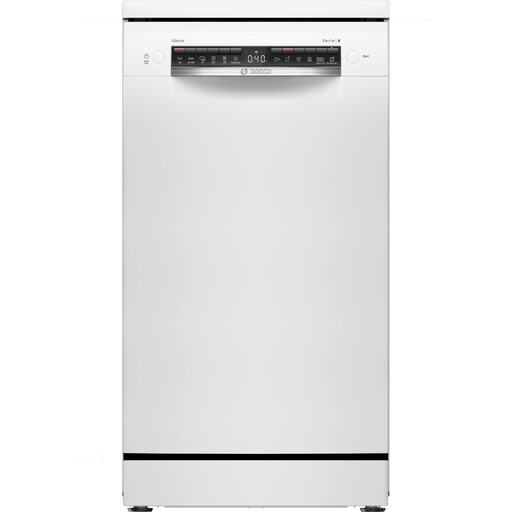
Bosch SPS4HKW49E Series 4 dishwasher

Bosch SPS4HKW49E Series 4

Described as a 45 cm freestanding model; the specific installation must suit the space available.

45 cm; energy class E.

View at Joybuy
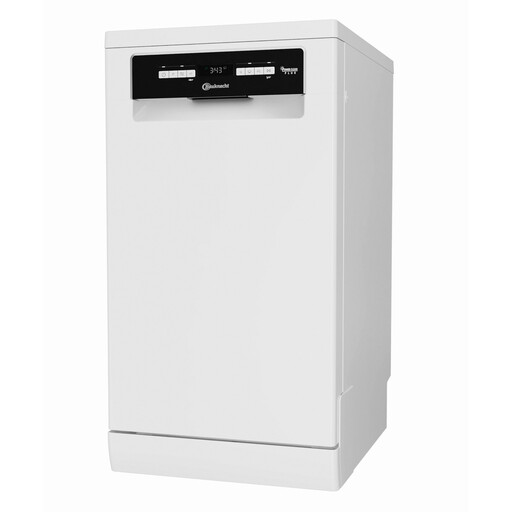
Bauknecht BSFO 3035 PF dishwasher

Bauknecht BSFO 3035 PF

Described as a freestanding model for a suitable space.

45 cm; 10 place settings; energy class D.

View at Joybuy

Frequently asked questions

Does the glass-and-fork symbol mean my lunch box is dishwasher-safe?

No. The symbol indicates that an item is suitable for contact with food; it doesn’t mean it is dishwasher-safe. Check the separate dishwasher and care instructions for the lunch box, lid and any other components (Consumer Advice Centre).

How do I compare the energy consumption of two dishwashers?

First, compare the kWh per 100 Eco cycles and litres per Eco cycle on the same EU label basis. To estimate your own electricity costs, you’ll also need to make an assumption about the number of washes you run each year and your electricity rate; Eco figures don’t automatically describe other programmes (Consumer Advice Centre; European Commission).

What should I bear in mind when installing and loading the dishwasher?

Check that the location and connections match the instructions for the specific appliance, and load it so that the spray arms can rotate freely. Joybuy’s product details also recommend cleaning the filter regularly in line with the instructions; check the guidance for the model you choose.

Which energy label and warranty details matter when buying in Germany?

The EU energy label for household dishwashers uses classes A to G and displays Eco consumption figures (European Commission). When buying from a trader in the EU, you are generally entitled to at least two years of legal protection from the date you receive the goods; this is separate from any additional manufacturer’s guarantee (Your Europe, European Union).

What should I do with my old dishwasher?

An old electrical appliance must be handed over to an authorised collection point, such as a local recycling centre or a retailer that is required to accept it (Federal Environment Ministry). Check separately whether collection can be arranged with your order.