
Lieferung heute & morgen

Qualitätsgarantie

Willkommens-Angebote freischalten: KOSTENLOSE Lieferung | Bis zu 80 % RABATT | Kostenlose 30-Tage-JoyPlus-Testphase
App herunterladen
Finding the right 4K Action Cam can quickly become overwhelming. The market is flooded with models promising impressive specifications. But not every camera delivers on its promises. As your Joybuy Product Recommendation Officer, I'll help you identify the crucial features and avoid marketing traps, so you can make an informed decision for your adventures.
Before we dive into the features worth looking for, it's important to know the most common problems that often only become apparent after the purchase.
To avoid buyer's remorse, focus on these three verifiable technical features.
A 4K sports camera should not only achieve 4K resolution (3840 x 2160 pixels) but do so at a suitable frame rate.
Look for the term 6-axis gyro stabilisation. Unlike basic software stabilisation, this system uses a physical gyroscopic sensor to compensate for movement and vibrations in real-time across six axes (up/down, left/right, forward/backward, plus rotation). The result is significantly smoother video without the image quality suffering from aggressive cropping.
Check the IP rating or the manufacturer's depth specification carefully.
Instead of making a one-size-fits-all recommendation, we've identified models tailored to specific user profiles.
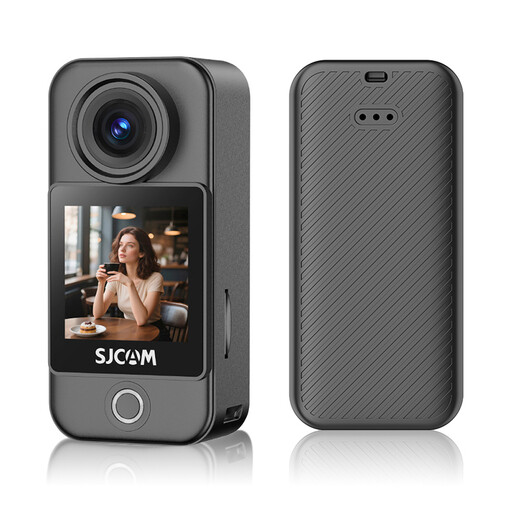
Why it's a match: As an extremely compact action camera weighing only 54g, it's ideal for vloggers and travellers looking for a discreet and hassle-free vlogging camera. It's easy to mount and won't get in the way during activities.
The product description clearly states that the 30m waterproof rating is only achieved with the included case. The 6-axis gyro stabilisation is explicitly mentioned, not just a vague marketing buzzword.
Its ultra-compact size (6.8×3.2×2.6 cm) and low weight make it one of the most portable 4K cameras on the market. Includes a 64GB memory card.
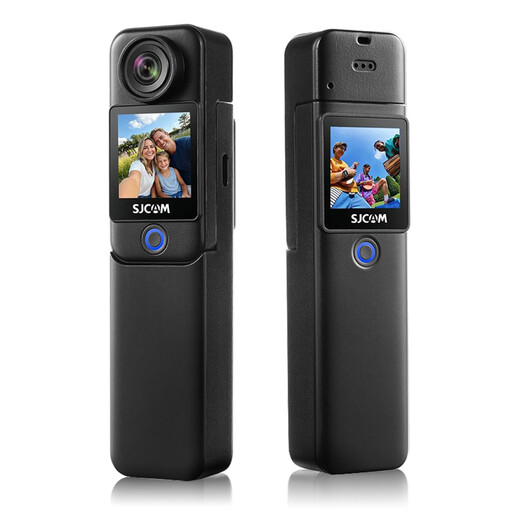
Why it's a match: Ideal for users who need to go long periods without charging, such as on motorcycle tours or multi-day hikes. The modular design with an extra battery in the grip is the key factor here.
This model directly addresses the battery life trap by offering a concrete solution. The stated runtime of up to 460 minutes at 4K/30fps is explicitly achieved by using the grip with the extra battery.
The combination of the main and extra battery provides one of the longest recording times in this camera class, making it a strong GoPro alternative for endurance use.
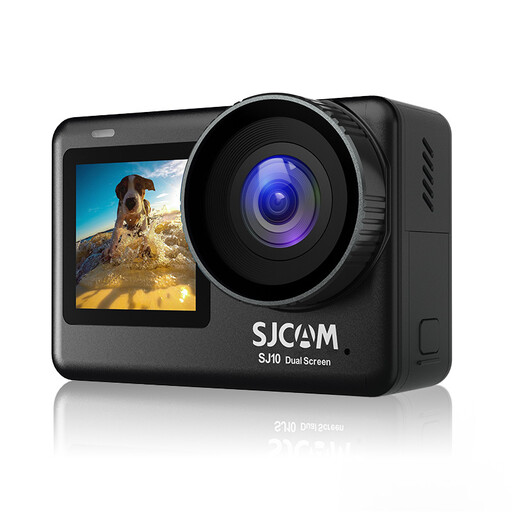
Why it's a match: With dual screens (a large rear touchscreen and a front selfie screen) and 4K recording at 60 fps, this model is aimed at users who want maximum control and flexibility, whether for vlogs or action-packed sports footage.
The camera provides clear, distinct specs for its waterproofing: 5m without a case and 30m with a case. The 6-axis stabilisation and 4K/60fps capability are verifiable technical features, not empty promises.
The dual-display system offers a practical benefit that many cameras in this price range lack. The ability to record 4K at 60 fps ensures exceptionally smooth action scenes.
While a dedicated action camera offers specialised features, some users prefer the convenience of a single device. A modern, rugged, and waterproof smartphone can also be a viable option for capturing everyday adventures.
For some adventures, a rugged, waterproof smartphone can be a practical all-in-one solution. Discover models designed for outdoor use that can withstand the elements.
1. How long does a 4K action cam battery really last during continuous recording? The actual battery life heavily depends on your settings. For continuous 4K recording at 30 fps with image stabilisation enabled, most models last between 60 and 90 minutes. Models with larger or external batteries can significantly exceed this. It's always wise to carry a spare battery.
2. Is an expensive GoPro always a better choice than a GoPro alternative? Not necessarily. While leading brands often excel in software and ecosystem integration, many alternatives offer a very competitive price-to-performance ratio. Models like those from SJCAM also integrate high-quality components like 6-axis stabilisation and powerful sensors, and can be the more suitable and budget-friendly choice for many users.
3. Do I always need an extra case for underwater recording? For shallow-water recording (e.g., in a pool or snorkelling a few metres deep), the native waterproofing of many modern cameras is sufficient. However, for deeper dives (typically over 10 metres), a dedicated underwater housing is essential to protect the camera from high water pressure. Always check the manufacturer's specifications for maximum depth.