
Lieferung heute & morgen

Qualitätsgarantie

Willkommens-Angebote freischalten: KOSTENLOSE Lieferung | Bis zu 80 % RABATT | Kostenlose 30-Tage-JoyPlus-Testphase
App herunterladen
With so many models and technical specifications on the market, the search for the right 4K action cam can quickly become overwhelming. Whether for your next holiday, capturing peak athletic performances, or as a rugged vlogging camera, the requirements are as individual as the adventures themselves. This guide is designed to provide you with a clear overview, explain the most important purchasing criteria, and present a selection of cameras for various applications. Our goal is to give you an informed basis for your decision, grounded in objective features.
Before you decide on a model, you should be familiar with a few technical fundamentals. These criteria will help you find the camera that truly fits your needs.
A 4K resolution is now standard, delivering detailed, sharp footage. However, you should also pay attention to the frame rate (fps – frames per second). A high frame rate of 60 fps or more enables smooth playback and stunning slow-motion shots. Some models even offer higher resolutions like 5.3K, which provides more flexibility for post-production and cropping videos without losing quality.
For action-packed shots, an effective camera with image stabilisation is essential. Electronic Image Stabilisation (EIS) is common in modern action cameras and ensures that shaky movements, such as those from mountain biking or skiing, are digitally compensated for. Durability is just as important. Many cameras today are already waterproof to a certain depth without an additional housing, making them suitable as a waterproof camera for use in the rain or on snorkelling trips. For deeper dives, a special underwater camera or a corresponding housing is often required. Its suitability as a helmet camera also depends on its weight, shape, and the available mounting options.
Battery life is a crucial factor, especially on longer trips without access to power. Check the manufacturer's specifications for recording time under realistic conditions, for example, with 4K recording enabled. Some models offer swappable batteries or are optimised for operation in cold temperatures. Storage capacity is also relevant. High-resolution videos require a lot of space, so support for large, fast microSD cards (U3/V30 standard or higher) is important. Some cameras also feature internal storage as a backup.
Here, we present three models that are suited for different user groups due to their specific features.
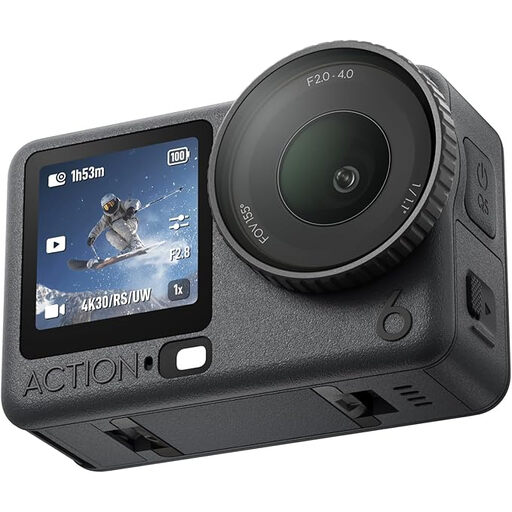
Why it stands out: The Osmo Action 6 is distinguished by its technical flexibility. The variable aperture allows it to adapt to changing light conditions, making it particularly appealing to vloggers and content creators who film during both day and night. The large sensor and integrated storage offer additional convenience.
Pros:
Who is it for? This model is a great choice for content creators and vloggers who are looking for a versatile sports camera with high image quality in various lighting conditions and who value practical features like internal storage and long battery life.
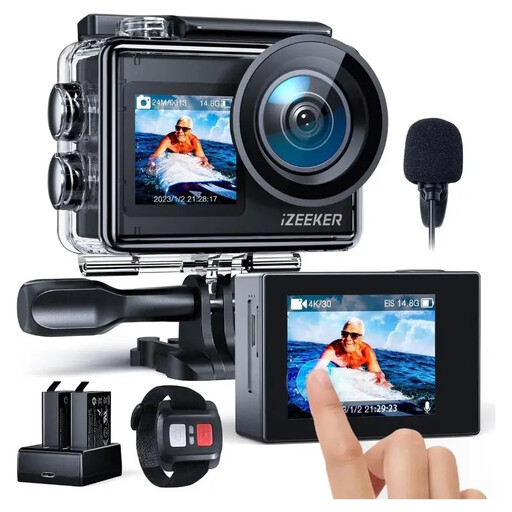
Why it stands out: The iZEEKER iA200 offers a comprehensive package at an accessible price point. With 4K video, a dual display, and a large accessory kit including a remote control and waterproof housing, it's ready for a wide range of activities right out of the box.
Pros:
Who is it for? The iZEEKER iA200 is aimed at beginners and budget-conscious users who are looking for a fully-equipped action camera for hobbies like cycling, hiking, or snorkelling and want to benefit from the extensive accessory package.
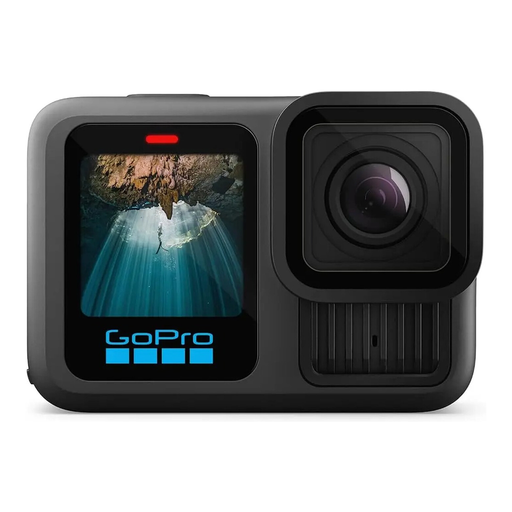
Why it stands out: The GoPro HERO13 Black is positioned in the high-end performance segment and is aimed at users with professional demands. With a video resolution of up to 5.3K at 60 fps and advanced HyperSmooth 6.0 stabilisation, it delivers high-level footage. Compatibility with interchangeable lenses opens up additional creative possibilities.
Pros:
Who is it for? This camera is designed for demanding amateurs and professional content creators who need maximum image quality, fluid stabilisation, and advanced manual settings for their projects.
The models presented here already cover a broad spectrum. If you haven't found the right device for your specific needs or would like to compare other alternatives, you can find a larger selection in our [best digital camera](https://www.joybuy.de/explore/beste-digitale-kamera/XAbBl03Y) category.
1. Do I need a special memory card for a 4K action cam? Yes, a fast and reliable microSD card is required for recording 4K video. Look for cards with a UHS Speed Class 3 (U3) or Video Speed Class 30 (V30) rating or higher. These ensure that the large amounts of video data can be written without interruptions or errors.
2. What is the difference between optical and electronic image stabilisation? Electronic Image Stabilisation (EIS) is a software-based solution that digitally crops and shifts the image to compensate for shake. It is very common in action cameras and has become extremely effective. Optical Image Stabilisation (OIS) is a mechanical system where the sensor or lens is mounted on a movable platform. OIS is technically more complex and less common in the rugged, compact bodies of action cameras.
3. How important is waterproofing without an additional housing? Native waterproofing offers great convenience. You can use the camera spontaneously in the rain, at the beach, or while snorkelling without having to mount a housing first. This makes the camera more practical for everyday use. However, for deeper dives or as extra protection against impacts, a special underwater housing is still recommended, as it often offers greater pressure resistance and better protection.